

For readers searching for low-fee index funds for beginners, I’d put Index Fund Investing for Beginners: A Six-Level Guide to VOO, VTI, and the 3-Fund Portfolio first for its concrete fund and portfolio focus. Index Investing for Absolute Beginners stands out for readers who want a gentle introduction, while Index Fund and ETF Investing for Beginners can help compare common investment structures. These are books and guides, not funds themselves, so they explain how to evaluate investments rather than provide a fund account or guaranteed outcome. The main tradeoff is whether you need a simple starting framework, broader investing basics, or focused help comparing ETFs and mutual funds. Read on for my full comparison of all 15 guides and the type of beginner each one may suit.

Get smart everyday buys delivered free with Prime
- Fast, free delivery on millions of items
- Prime Video, Amazon Music and more included
- Member-only deals all year
Key Takeaways
- The strongest starting points are specific about the learning path: the VOO, VTI, and three-fund guide connects beginner concepts to recognizable portfolio approaches, while broad titles can leave readers with more decisions to make.
- Beginner-friendly does not always mean index-fund focused: several titles cover ETFs, mutual funds, or investing more broadly, which can help with context but may be less direct for someone who only wants an index-fund primer.
- Clear comparisons matter more than claims of wealth-building: guides that explain fund types, portfolio construction, and long-term habits offer more practical decision support than a title built around an attention-grabbing promise.
- Specialized angles bring tradeoffs: the AI-focused guide may appeal to readers curious about new tools, but a beginner should not mistake AI-assisted ideas for personalized financial advice.
- The title alone cannot establish fund costs or investment quality: these 15 products are educational books, not index funds, so readers still need to verify expense ratios, account fees, and fund details before investing.
| Index Fund Investing: A Comprehensive Beginner’s Guide to the Basics and Effective Methods |  | Best for a Broad Introduction | Title: Index Fund Investing: A Comprehensive Beginner’s Guide to the Basics and Effective Methods | ASIN: 1075286727 | Subject: Index fund investing | VIEW LATEST PRICE | See Our Full Breakdown |
| Index Fund Investing for Beginners: A Six-Level Guide to VOO, VTI, and the 3-Fund Portfolio |  | Best for a Clear Portfolio Framework | Title: Index Fund Investing for Beginners: A Six-Level Guide to VOO, VTI, and the 3-Fund Portfolio | ASIN: B0HB9P7QJ1 | Format: Book | VIEW LATEST PRICE | See Our Full Breakdown |
| Index Funds: The 12-Step Recovery Program for Active Investors |  | Best for Active Investors Rethinking Their Approach | Title: Index Funds: The 12-Step Recovery Program for Active Investors | ASIN: 1955026939 | Subject: Index funds | VIEW LATEST PRICE | See Our Full Breakdown |
| Index Investing for Absolute Beginners: Grow Your Wealth Without Picking Stocks |  | Best for Avoiding Individual Stock Picks | Title: Index Investing for Absolute Beginners: Grow Your Wealth Without Picking Stocks | ASIN: B0FRRFKPVB | Subject: Index investing | VIEW LATEST PRICE | See Our Full Breakdown |
| The Smart Path to Wealth: A Beginner’s Guide to Long-Term Financial Freedom with Index Investing |  | Best for Long-Term Planning | Title: The Smart Path to Wealth: A Beginner’s Guide to Long-Term Financial Freedom with Index Investing | ASIN: B0F6BDZBKB | Format: Book | VIEW LATEST PRICE | See Our Full Breakdown |
| Investing in Index Funds: Foundations of Index-Based Investing |  | Best for Core Concepts | Format: Book | Subject: Index-based investing | Stated focus: Foundations of index investing | VIEW LATEST PRICE | See Our Full Breakdown |
| Common Sense Investing With Index Funds |  | Best for a Simple Long-Term Mindset | Subject: Index fund investing | Stated approach: Straightforward, low-effort investing | Stated goal: Building wealth and pursuing financial freedom | VIEW LATEST PRICE | See Our Full Breakdown |
| ETFs, Index Funds & Mutual Funds: The Absolute Beginner’s Guide to Investing |  | Best for Comparing Fund Types | Format: Book | Intended audience: Absolute beginners | Topics named: ETFs, index funds, and mutual funds | VIEW LATEST PRICE | See Our Full Breakdown |
| Index Fund Investing in Your Hoodie: A Beginner’s Guide to Passive Investing |  | Best for a Casual Introduction | Subject: Index fund investing | Stated audience: Beginner investors | Stated approach: Passive investing | VIEW LATEST PRICE | See Our Full Breakdown |
| Exchange-Traded Funds For Dummies |  | Best for ETF-Focused Beginners | Subject: Exchange-traded funds | Stated audience: Not specified | Format: Not specified | VIEW LATEST PRICE | See Our Full Breakdown |
| Index Fund and ETF Investing for Beginners: How to Build Long-Term Wealth with Simple, Low-Cost Portfolios |  | Best for Simple Portfolio Building | Subject: Index funds and ETF investing | Intended audience: Beginner investors | Approach: Simple portfolio building | VIEW LATEST PRICE | See Our Full Breakdown |
| Index Funds vs. ETFs vs. Mutual Funds: A Beginner’s Guide to Investing |  | Best for Comparing Fund Types | Subject: Index funds, ETFs, and mutual funds | Intended audience: Beginner investors | Primary focus: Comparison of investment options | VIEW LATEST PRICE | See Our Full Breakdown |
| How to Invest in Index Funds for Beginners: A Guide to Building Wealth with Low-Cost ETFs |  | Best for Hands-Off ETF Investing | Subject: Index funds and ETFs | Intended audience: Beginner investors | ETF focus: Low-cost ETFs | VIEW LATEST PRICE | See Our Full Breakdown |
| How to Invest in Index Funds Using Free AI: The Smarter Way to Win with Index Funds and ETFs | 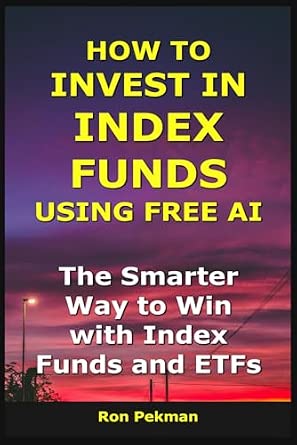 | Best for AI-Curious Investors | Subject: Index funds and ETFs | Distinct focus: Using free AI tools | Intended audience: Not specified | VIEW LATEST PRICE | See Our Full Breakdown |
| Index Investing for Dummies |  | Best for a Broad Index-Investing Introduction | Subject: Index investing | Format: Book | Audience: Not specified | VIEW LATEST PRICE | See Our Full Breakdown |
| low-fee index funds for beginner | Format | Subject |
|---|---|---|
| Index Fund Investing: A Compre | Not specified | Index fund investing |
| Index Fund Investing for Begin | Book | — |
| Index Funds: The 12-Step Recov | Not specified | Index funds |
| Index Investing for Absolute B | Not specified | Index investing |
| The Smart Path to Wealth: A Be | Book | — |
| Investing in Index Funds: Foun | Book | Index-based investing |
| Common Sense Investing With In | Not specified | Index fund investing |
| ETFs | Book | — |
| Index Fund Investing in Your H | Not specified | Index fund investing |
| Exchange-Traded Funds For Dumm | Not specified | Exchange-traded funds |
| Index Fund and ETF Investing f | Not provided | Index funds and ETF investing |
| Index Funds vs. ETFs vs. Mutua | Not provided | Index funds, ETFs, and mutual funds |
| How to Invest in Index Funds f | Not provided | Index funds and ETFs |
| How to Invest in Index Funds U | Book | Index funds and ETFs |
| Index Investing for Dummies | Book | Index investing |
More Details on Our Top Picks
Index Fund Investing: A Comprehensive Beginner’s Guide to the Basics and Effective Methods
This title’s broad promise makes it a reasonable starting point for readers who want an introduction to index investing before choosing a specific fund. Compared with Index Fund Investing for Beginners: A Six-Level Guide to VOO, VTI, and the 3-Fund Portfolio, it does not signal a focus on particular funds or a named portfolio structure. That may suit readers who want general concepts first, but it also leaves the guide’s practical coverage hard to judge from the available details. The supplied information does not identify fund fees, account setup, tax topics, or the book’s format, so I would not treat the title alone as evidence of hands-on instruction. It earns this role for its broad beginner framing, with limited evidence about how directly it teaches low-fee fund selection.
Pros:- Explicitly aimed at beginners
- Promises coverage of both foundational concepts and investing methods
- Broad framing may help readers who have not chosen a fund type yet
Cons:- Available information does not identify specific funds or portfolio strategies
- No supplied details confirm coverage of fees, taxes, or account setup
- Format and other technical details are not provided
Best for: New investors who want a general introduction to index fund basics before comparing specific funds or portfolio approaches
Not ideal for: Readers seeking clearly documented guidance on fund expense ratios, account selection, or a step-by-step portfolio plan
- Title:Index Fund Investing: A Comprehensive Beginner’s Guide to the Basics and Effective Methods
- ASIN:1075286727
- Subject:Index fund investing
- Audience:Beginners
- Stated scope:Basics and effective methods
- Format:Not specified
Our verdict“Choose this for a general first introduction, but prefer the VOO-and-VTI-focused guide if you want a named portfolio framework.”
Index Fund Investing for Beginners: A Six-Level Guide to VOO, VTI, and the 3-Fund Portfolio
This is the most specific fit for a beginner who wants examples tied to recognizable funds and a concrete portfolio approach. Its stated focus on VOO, VTI, and the 3-fund portfolio gives readers more to compare than the broad framing of Index Fund Investing: A Comprehensive Beginner’s Guide to the Basics and Effective Methods. That specificity can help translate passive-investing ideas into choices, though the supplied information does not say how the book weighs fund fees, diversification, or the differences between the two named funds. The “six-level” structure may provide a staged learning path, but no chapter details are available to verify how it works. I’d rank it ahead of more general guides for readers seeking a portfolio template, while treating the title as a topic signal rather than proof of detailed fee analysis.
Pros:- Names VOO and VTI as core topics
- Includes the 3-fund portfolio as a specific framework
- Designed for beginner investors
- Part of a named investing book series
Cons:- Supplied details do not explain how the funds or portfolio are compared
- No confirmation of expense-ratio, tax, or account guidance
- The six-level structure is not described beyond the title
Best for: Beginners who want to compare VOO and VTI and learn about a three-fund portfolio in one focused guide
Not ideal for: Readers who want verified expense-ratio comparisons, detailed tax guidance, or instruction beyond the listed portfolio topics
- Title:Index Fund Investing for Beginners: A Six-Level Guide to VOO, VTI, and the 3-Fund Portfolio
- ASIN:B0HB9P7QJ1
- Format:Book
- Series:The Everyday Investor’s Library
- Series number:2
- Topics:VOO, VTI, and the 3-fund portfolio
- Audience:Beginner investors
Our verdict“Pick this if you want a beginner guide anchored to VOO, VTI, and a three-fund framework rather than a broad overview.”
Index Funds: The 12-Step Recovery Program for Active Investors
This book takes a different route from beginner guides that start with fund selection: its stated audience is active investors reconsidering their approach. That makes it a potentially useful fit for readers who already buy individual stocks and want to examine the case for index funds. Compared with Index Investing for Absolute Beginners: Grow Your Wealth Without Picking Stocks, its framing is less about introducing a novice to investing and more about changing an existing habit. The “12-step” language suggests a staged argument, but the supplied description does not explain the steps or confirm practical advice on choosing low-fee funds. That gap matters for readers who need actionable comparisons of expenses, diversification, and account options. I’d keep it distinct from introductory primers: its strongest apparent use is prompting a shift in mindset, not serving as a fully documented fund-selection manual.
Pros:- Addresses active investors directly
- Frames index funds as an alternative to active investing
- Uses a stated step-based approach
- Offers a different angle from beginner primers focused on stock-picking alternatives
Cons:- Available information does not describe the steps or practical content
- No supplied details confirm guidance on low-fee fund comparisons
- May be less suited to readers with no prior investing experience
Best for: Stock pickers and frequent traders who are open to replacing an active approach with index fund investing
Not ideal for: First-time investors who need clearly specified instructions on fund costs, account setup, and portfolio construction
- Title:Index Funds: The 12-Step Recovery Program for Active Investors
- ASIN:1955026939
- Subject:Index funds
- Stated audience:Active investors
- Approach:12-step program framing
- Format:Not specified
Our verdict“Choose this if you already invest actively and want a guide framed around reconsidering that strategy, not a detailed beginner manual.”
Index Investing for Absolute Beginners: Grow Your Wealth Without Picking Stocks
The clearest appeal here is its plain-language promise: learn about index investing without having to choose individual stocks. That makes it more directly approachable for a true novice than Index Funds: The 12-Step Recovery Program for Active Investors, which speaks to people already using an active strategy. For a beginner weighing low-fee funds, avoiding stock selection can simplify the decision, but it does not by itself explain how to compare fees, select a diversified fund, or build an appropriate portfolio. The supplied details confirm the broad subject and audience, not the book’s depth or specific examples. I’d place it ahead of an active-investor-focused title for someone starting from scratch, while ranking the VOO-and-VTI guide higher for readers who want named funds and a portfolio structure.
Pros:- Explicitly targets absolute beginners
- Explains an approach that avoids selecting individual stocks
- Provides a clear, accessible entry point into index investing
Cons:- No supplied details identify funds or portfolio examples
- Fee, tax, and account guidance are not confirmed
- The available description does not establish the depth of instruction
Best for: First-time investors who want an introduction to passive investing without choosing individual company stocks
Not ideal for: Readers looking for confirmed fee comparisons, named fund recommendations, or a detailed portfolio allocation plan
- Title:Index Investing for Absolute Beginners: Grow Your Wealth Without Picking Stocks
- ASIN:B0FRRFKPVB
- Subject:Index investing
- Audience:Absolute beginners
- Stated approach:Investing without picking individual stocks
- Format:Not specified
Our verdict“Choose this for an accessible introduction to investing without stock picking, but look to the VOO-and-VTI title for a more specific portfolio framework.”
The Smart Path to Wealth: A Beginner’s Guide to Long-Term Financial Freedom with Index Investing
This guide connects index investing with a longer-term financial goal, making it a better match for readers who want to place low-cost funds within a broader wealth-building plan. The supplied description explicitly mentions low-cost index funds, giving it a closer fit to this roundup’s fee-conscious focus than Index Investing for Absolute Beginners: Grow Your Wealth Without Picking Stocks, whose available details emphasize avoiding individual stocks. The tradeoff is specificity: there are no supplied examples of funds, expense ratios, account types, or planning steps, so I can’t judge how directly it helps a reader act on its low-cost premise. Compared with the VOO-and-VTI guide, this title appears broader and more goal-oriented, while offering less evidence of a defined portfolio framework. It suits readers seeking a long-range perspective, not shoppers looking for verified fund-by-fund comparisons.
Pros:- Aimed at beginners
- Explicitly focuses on low-cost index funds
- Frames investing around long-term financial planning
- Connects index investing to a broader wealth-building goal
Cons:- No specific funds or fee figures are provided in the available details
- Portfolio construction and account guidance are not confirmed
- The supplied description does not establish how practical the planning advice is
Best for: Beginner investors who want to connect low-cost index investing with a long-term financial plan
Not ideal for: Readers who need named fund comparisons, expense-ratio details, or a clearly specified starter portfolio
- Title:The Smart Path to Wealth: A Beginner’s Guide to Long-Term Financial Freedom with Index Investing
- ASIN:B0F6BDZBKB
- Format:Book
- Topic:Index investing
- Audience:Beginners
- Stated focus:Low-cost index funds
- Planning emphasis:Long-term financial planning
Our verdict“Pick this for a long-term, low-cost investing perspective, but choose the VOO-and-VTI guide if you want a named portfolio framework.”
Investing in Index Funds: Foundations of Index-Based Investing
This book’s clearest fit is foundational learning: its stated focus is the principles of index-based investing, a useful starting point before a beginner chooses funds or account types. Compared with ETFs, Index Funds & Mutual Funds: The Absolute Beginner’s Guide to Investing, which explicitly covers several fund structures, this title appears narrower and more centered on index investing itself. That focus may help readers who want a direct introduction rather than a broad survey, but the available description does not identify specific topics, examples, or practical portfolio instructions. I would treat it as an introductory companion, not a source for verifying current fund fees or choosing a particular investment. Its role in this roundup is conceptual grounding; readers seeking step-by-step implementation should favor a guide with more detail about its contents.
Pros:- Explicitly centers index-based investing rather than investing in general.
- A foundations-oriented focus can give beginners a starting vocabulary.
- Book format suits readers who prefer a continuous introduction over scattered online explanations.
Cons:- The available description does not specify practical lessons or covered topics.
- No fund examples, fee information, or portfolio guidance are provided in the product details.
- Less clearly suited to comparing ETFs and mutual funds than the broader beginner guide in this roundup.
Best for: New investors who want a focused introduction to the foundations of index-based investing before comparing specific funds.
Not ideal for: Readers who need documented guidance on fund selection, account setup, fee comparisons, or a step-by-step portfolio plan.
- Format:Book
- Subject:Index-based investing
- Stated focus:Foundations of index investing
- Intended audience:Not specified
- Fund types covered:Not specified
- Practical examples:Not specified
Our verdict“Choose it for a focused introduction to index-investing concepts, but look elsewhere for a clearly specified, hands-on fund-selection guide.”
Common Sense Investing With Index Funds
This pick makes the most sense for readers drawn to a straightforward, long-term case for index funds. Its description connects index investing with building wealth and pursuing financial freedom, while also arguing that a low-effort approach can outperform many amateur and professional investors. That emphasis distinguishes it from Investing in Index Funds: Foundations of Index-Based Investing, which is framed around foundational concepts rather than a wealth-building message. The tradeoff is that the available details do not say whether this book explains how to compare expense ratios, choose between ETFs and mutual funds, or assemble a portfolio. Beginners should treat its performance claims as a broad argument, not a promise about future results. I’d shortlist it for motivation and a simple investing philosophy, while pairing it with a source that spells out the mechanics and risks.
Pros:- Focuses specifically on index fund investing.
- Connects a straightforward approach with long-term wealth building.
- Addresses financial freedom as a motivating goal.
- Presents index funds as a low-effort alternative to active decision-making.
Cons:- The product details do not identify specific fund-selection or portfolio instructions.
- The stated outperformance argument is not a guarantee of investment results.
- No format or technical details beyond the title are provided.
Best for: Beginning investors who want a plain-language case for long-term index investing and a low-maintenance approach to building wealth.
Not ideal for: Readers seeking a detailed fee comparison, fund-by-fund recommendations, or a clearly described portfolio-building tutorial.
- Subject:Index fund investing
- Stated approach:Straightforward, low-effort investing
- Stated goal:Building wealth and pursuing financial freedom
- Performance theme:Discusses index funds outperforming many amateur and professional investors
- Format:Not specified
- Specific funds covered:Not specified
Our verdict“Pick this for a simple, long-term argument for index funds, not as your sole guide to comparing fees or building a portfolio.”
ETFs, Index Funds & Mutual Funds: The Absolute Beginner’s Guide to Investing
Its main advantage is breadth for a first-time investor. The title explicitly covers ETFs, index funds, and mutual funds, giving beginners a route to learn the basic distinctions before settling on a structure. That makes it a more direct fit for comparing fund categories than Common Sense Investing With Index Funds, whose description emphasizes the long-term case for index investing rather than a three-way overview. The breadth comes with a limitation: the available details do not confirm how much the book explains fees, tax treatment, trading mechanics, or portfolio construction. Since low fees are the focus of this roundup, I would use this as an orientation guide only if its chapters actually address costs, then verify expense ratios and account rules using current sources. It is the strongest match here for a beginner who is still sorting out terminology, not a confirmed fee-comparison manual.
Pros:- Explicitly names ETFs, index funds, and mutual funds as subjects.
- Targets absolute beginners, matching readers who are still learning basic terminology.
- Its comparative scope may help readers frame questions before choosing a fund structure.
Cons:- The available product details do not confirm how fees or other costs are covered.
- No specific portfolio method, fund examples, or account guidance is provided.
- A broad introduction may offer less depth on index investing than a focused title.
Best for: First-time investors who want an introductory comparison of ETFs, index funds, and mutual funds before choosing what to research further.
Not ideal for: Readers who already understand fund structures and need specific, verified guidance on expense ratios or portfolio implementation.
- Format:Book
- Intended audience:Absolute beginners
- Topics named:ETFs, index funds, and mutual funds
- Stated purpose:Beginner’s guide to investing
- Fee coverage:Not specified
- Specific funds covered:Not specified
Our verdict“Choose it if you need an initial overview of fund types, but confirm that it covers costs before relying on it for low-fee decisions.”
Index Fund Investing in Your Hoodie: A Beginner’s Guide to Passive Investing
This is the most casual-sounding entry in the group, aimed at beginner investors and centered on passive investing and wealth building. Its place in the Comfy Trading & Investing series gives it a distinct identity, though the available details do not explain whether that translates into a particular teaching style or level of detail. Compared with ETFs, Index Funds & Mutual Funds: The Absolute Beginner’s Guide to Investing, this title is more focused on passive index investing, while the other explicitly names multiple fund types. That focus could suit someone who already knows they want a passive approach, but the description offers no specifics about fees, fund choices, or portfolio construction. I’d treat it as a possible introductory read, not a dependable source for selecting low-cost funds without checking its contents and supplementing it with current fund information.
Pros:- Explicitly aimed at beginner investors.
- Focuses on passive investing rather than active stock selection.
- Connects index funds with building wealth.
- Identified as part of the Comfy Trading & Investing series.
Cons:- The product details do not describe its chapters, examples, or teaching method.
- No fee, fund-selection, or portfolio guidance is specified.
- The casual positioning does not establish how much technical depth it provides.
Best for: A beginner who prefers a casual, passive-investing introduction and wants to explore index funds as a long-term approach.
Not ideal for: Readers who need verified details on expense ratios, named funds, or specific steps for building and maintaining a portfolio.
- Subject:Index fund investing
- Stated audience:Beginner investors
- Stated approach:Passive investing
- Series:Comfy Trading & Investing
- Format:Not specified
- Fee guidance:Not specified
Our verdict“Consider it for an accessible-sounding introduction to passive index investing, but not as your only source for low-fee fund decisions.”
Exchange-Traded Funds For Dummies
This title is the ETF-specific option in the batch, so it may suit a beginner who has already narrowed the search to exchange-traded funds. That narrower focus separates it from ETFs, Index Funds & Mutual Funds: The Absolute Beginner’s Guide to Investing, which explicitly covers several fund structures. An ETF guide could help readers focus their questions on one category, but the available description does not say whether it covers index-tracking ETFs, expense ratios, trading costs, or how to compare funds. Those details matter for a roundup centered on low-fee index funds: an ETF is not automatically an index fund, and an index-tracking ETF is not automatically the lowest-cost choice. I’d use this as a possible ETF primer, then verify its coverage and consult current fund disclosures before making decisions.
Pros:- Centers its subject on exchange-traded funds.
- The title signals an introductory reference style for readers new to ETFs.
- Its narrower scope may help ETF-focused learners avoid an overly broad initial overview.
Cons:- The product details do not confirm coverage of index-tracking ETFs or fund fees.
- It may not address mutual funds or index funds outside the ETF category.
- No specific portfolio guidance, examples, or format details are provided.
Best for: Beginners who specifically want to learn about ETFs and are prepared to check whether the book covers index-tracking funds and their costs.
Not ideal for: Readers seeking a clearly described, broad guide to index funds and mutual funds or a confirmed comparison of expense ratios.
- Subject:Exchange-traded funds
- Stated audience:Not specified
- Format:Not specified
- Index ETF coverage:Not specified
- Fee coverage:Not specified
- Mutual fund coverage:Not specified
Our verdict“Choose it if your learning goal is ETFs specifically, but verify that it covers index tracking and fees before using it for low-cost fund choices.”
Index Fund and ETF Investing for Beginners: How to Build Long-Term Wealth with Simple, Low-Cost Portfolios
This guide is the most direct match for a beginner who wants to build a straightforward portfolio rather than compare every investment wrapper. Its focus on simple, low-cost portfolios and long-term wealth building speaks to the core choices new investors face: keeping costs down and sticking with a plan. Compared with Index Funds vs. ETFs vs. Mutual Funds: A Beginner’s Guide to Investing, this title appears more focused on putting a portfolio together than weighing three fund formats. That narrower emphasis may help readers seeking a practical starting point, but the supplied description gives no chapter details, examples, or specific fund strategies to judge. It is a reasonable shortlist pick for investors who want a simple framework, not a substitute for checking fund fees and account rules themselves.
Pros:- Explicitly aimed at beginner investors
- Focuses on simple, low-cost portfolios
- Connects index and ETF investing with long-term wealth building
Cons:- The available description does not specify portfolio examples or fund-selection criteria
- No technical details are provided about the book’s length, format, or publication information
Best for: New investors who want an introductory framework for assembling a low-cost, long-term portfolio without stock picking.
Not ideal for: Readers who need detailed comparisons of mutual funds, ETFs, and index funds, or concrete portfolio examples; those details are not specified in the available description.
- Subject:Index funds and ETF investing
- Intended audience:Beginner investors
- Approach:Simple portfolio building
- Investment horizon:Long-term wealth building
- Format:Not provided
Our verdict“Choose this guide if you want a beginner-oriented introduction centered on simple, low-cost portfolio building rather than a broad comparison of fund types.”
Index Funds vs. ETFs vs. Mutual Funds: A Beginner’s Guide to Investing
For a beginner unsure what the labels on investment accounts mean, this title has the clearest comparison remit in the group: it covers index funds, ETFs, and mutual funds together. That makes it a useful complement to Index Fund and ETF Investing for Beginners, which is described more around building a simple portfolio than comparing all three formats. The comparison angle could help readers distinguish the investment strategy from the vehicle used to hold it, a useful step before choosing funds. Its stated focus also includes long-term wealth building. The tradeoff is that the available product information does not say how detailed the comparisons are, whether costs and account mechanics are covered, or whether sample portfolios are included. Buyers wanting a specific low-fee plan should check for that coverage before relying on it.
Pros:- Compares three common investment options in one guide
- Designed for beginner investors
- Includes long-term wealth building as a stated topic
Cons:- Available details do not confirm coverage of expense ratios, trading mechanics, or tax considerations
- No portfolio examples or specific low-cost fund strategies are identified
Best for: First-time investors deciding whether to learn about index funds, ETFs, and mutual funds side by side before selecting an account or fund.
Not ideal for: Readers who already understand fund formats and want a focused, step-by-step low-cost portfolio recipe; the description does not confirm that level of detail.
- Subject:Index funds, ETFs, and mutual funds
- Intended audience:Beginner investors
- Primary focus:Comparison of investment options
- Additional topic:Long-term wealth building
- Format:Not provided
- Specific fund examples:Not provided
Our verdict“Pick this guide if your first decision is understanding how index funds, ETFs, and mutual funds differ, not following a specified portfolio plan.”
How to Invest in Index Funds for Beginners: A Guide to Building Wealth with Low-Cost ETFs
This title makes the clearest promise for a beginner who wants a hands-off approach and is especially interested in low-cost ETFs. Compared with Index Fund and ETF Investing for Beginners, whose description emphasizes simple portfolios across index funds and ETFs, this guide foregrounds ETFs and passive investing. That sharper focus may suit someone who prefers a straightforward, low-maintenance method over a broad survey of investment products. The stated goal of building long-term wealth fits the roundup, but the available description does not identify particular funds, expense-ratio guidance, or portfolio examples. That limits how confidently a reader can assess its practical depth. I would place it ahead of a general investing primer only for buyers who already want an ETF-centered, low-intervention approach.
Pros:- Explicitly aimed at beginners
- Calls out low-cost ETFs as a focus
- Promotes a hands-off approach to long-term investing
Cons:- The description does not name specific ETFs or provide expense-ratio details
- No information confirms whether the book includes portfolio examples or account setup guidance
Best for: New investors who want an introductory, low-maintenance approach to investing through low-cost ETFs.
Not ideal for: Readers seeking detailed guidance on mutual funds, fund comparisons, or named portfolio allocations; those features are not confirmed in the product information.
- Subject:Index funds and ETFs
- Intended audience:Beginner investors
- ETF focus:Low-cost ETFs
- Investment approach:Hands-off investing
- Stated goal:Building long-term wealth
- Format:Not provided
Our verdict“Choose this if you want a beginner guide with a specifically hands-off, ETF-centered approach and do not need confirmed fund-by-fund examples.”
How to Invest in Index Funds Using Free AI: The Smarter Way to Win with Index Funds and ETFs
This is the most technology-focused option in the batch, built around using free AI tools alongside index funds and ETFs. That sets it apart from How to Invest in Index Funds for Beginners, which is described as a hands-off investing guide rather than an AI-centered one. The angle may appeal to readers who want to explore how digital tools can support research or learning. But the product details do not explain which tools it covers, how it handles AI limitations, or whether the advice keeps fees and long-term discipline at the center. For a beginner choosing low-fee funds, that uncertainty matters: AI assistance does not itself identify a suitable fund or guarantee sound advice. I would treat this as a specialized supplement, not the most reliable first guide based on the information available.
Pros:- Combines an index fund and ETF topic with a distinct AI-tool focus
- Specifically mentions free AI tools
- May interest readers seeking technology-assisted learning
Cons:- Available information does not identify the AI tools or explain how they are used
- No details confirm coverage of fund fees, portfolio construction, or AI-related limitations
Best for: AI-curious beginners who want to explore free AI tools as a possible aid while learning about index funds and ETFs.
Not ideal for: Readers looking for a clearly documented low-fee portfolio method, specific AI workflows, or a traditional step-by-step investing primer.
- Subject:Index funds and ETFs
- Distinct focus:Using free AI tools
- Intended audience:Not specified
- Named tools:Not provided
- Format:Book
- ASIN:B0FP5F4993
Our verdict“Consider this as a niche companion if you want to explore AI tools, but choose a more clearly specified beginner guide for a dependable low-fee investing framework.”
Index Investing for Dummies
Index Investing for Dummies is the broadest-sounding title here, but the supplied description provides only its subject: index investing. That makes it harder to rank as a targeted guide to low-fee funds for beginners than the more specific Index Funds vs. ETFs vs. Mutual Funds: A Beginner’s Guide to Investing, which explicitly promises a comparison of fund types. The recognizable title signals an introductory reference, yet the available data does not verify its topics, examples, or treatment of costs. It may suit readers who want a general entry point to index investing, but buyers should check the book’s edition and contents before relying on it for current fund details. Without confirmed coverage of fees or portfolio construction, it is less directly aligned with this roundup’s central decision.
Pros:- Directly addresses index investing
- Presented as a book
- May serve readers seeking a general introductory reference
Cons:- The available description gives no specific coverage of fees or low-cost fund selection
- No edition, publication details, or portfolio examples are provided
Best for: Readers seeking a general introductory book on index investing who are willing to verify the edition and contents before purchase.
Not ideal for: Beginners who need confirmed, current guidance on expense ratios, ETF mechanics, or a specific low-cost portfolio; the provided description does not establish that coverage.
- Subject:Index investing
- Format:Book
- Audience:Not specified
- Specific fund types:Not provided
- Fee guidance:Not provided
- ASIN:047029406X
Our verdict“Choose this for a broad index-investing introduction only after checking its edition and contents for the current fee and fund-selection guidance you need.”

How We Picked
I compared these 15 books as educational resources for people learning about low-fee index funds, not as investment products. I prioritized how directly each title signals coverage of index investing, whether it appears aimed at beginners, and whether its stated scope could help readers understand fund choices, ETFs, mutual funds, or portfolio construction. A guide with a clear index-fund focus and a practical learning path ranks ahead of one whose title promises a broad introduction or emphasizes a specialized hook.
The ranking also reflects scope and likely usefulness at the point of decision: readers need to learn what they are buying, how common fund structures differ, and which questions to ask before opening an account. Broad investing guides can be helpful, but they rank lower for this specific search if index funds are only one topic among many. Since the available information is limited to the listed titles, I do not infer author credentials, specific lessons, accuracy, or fund recommendations that the titles do not establish.
| low-fee index funds for beginner | Format |
|---|---|
| Index Fund Investing: A Compre | Not specified |
| Index Fund Investing for Begin | Book |
| Index Funds: The 12-Step Recov | Not specified |
| Index Investing for Absolute B | Not specified |
| The Smart Path to Wealth: A Be | Book |
| Investing in Index Funds: Foun | Book |
| Common Sense Investing With In | Not specified |
| ETFs | Book |
| Index Fund Investing in Your H | Not specified |
| Exchange-Traded Funds For Dumm | Not specified |
| Index Fund and ETF Investing f | Not provided |
| Index Funds vs. ETFs vs. Mutua | Not provided |
| How to Invest in Index Funds f | Not provided |
| How to Invest in Index Funds U | Book |
| Index Investing for Dummies | Book |
Factors to Consider When Choosing Low-fee Index Funds For Beginners
Choosing a book is only the first step: the right guide should help you ask better questions about an actual fund and your investing setup. I’d match the book to what you still need to learn, then check its explanations against current fund documents and account terms.
Choose a guide that matches your knowledge gap
Start by naming the question that is holding you back: what an index tracks, how ETFs differ from mutual funds, or how a portfolio might be assembled. A book that covers every investing topic may feel accessible but can spend less time on the issue you need to solve. Conversely, a narrow guide may move quickly through basics you have not learned yet. Check the contents or sample pages before choosing, rather than relying on the title alone. If you are unsure, favor a resource that defines terms and builds concepts in order. Treat the book as a learning aid, not a complete plan tailored to your finances.
Separate a fund’s expense ratio from your full cost
A low expense ratio is only one part of what an investor may pay. Account charges, transaction costs, bid-ask spreads, and taxes can affect the overall experience, depending on the account and fund. Beginners often focus on a single fee figure because it is easy to compare, then miss costs that appear elsewhere. Learn where each cost is disclosed and check the fund provider’s current documents before making a decision. A book can teach the vocabulary, but its examples may not reflect current terms. Compare like with like: funds tracking similar markets and held in similar account types.
Understand what an index does and does not include
An index fund follows a defined index, so its holdings and risks depend on that index’s rules. Two funds described as broad-market options may cover different companies, regions, or segments. Do not assume that a familiar index name means complete diversification or that a larger number of holdings automatically makes one fund suitable for you. Look at the fund’s benchmark, holdings, and concentration before deciding what role it could play. Beginners can also mistake recent performance for a reason to choose one index over another. A useful guide should help you focus on exposure and purpose rather than headlines.
Compare ETFs and mutual funds by how you will invest
ETFs and mutual funds can both provide index exposure, but their trading and account mechanics differ. ETF shares generally trade during market hours, while mutual fund orders are typically priced once daily; minimums and automatic-investing options can also vary by provider. These details matter if you plan to invest a fixed amount regularly or prefer not to make trade-time decisions. Do not pick a structure just because one sounds more advanced or more popular. Check the rules of the brokerage account you plan to use, including fractional-share support and recurring purchases. A beginner guide that compares these mechanics may be more useful than one that treats the terms as interchangeable.
Use portfolio examples as frameworks, not prescriptions
A three-fund portfolio or a single broad-market fund can make investing easier to understand, but neither is automatically right for every reader. Your time horizon, comfort with market declines, other savings, and need for accessible cash all affect what approach may fit. Examples in books are teaching tools, not personalized recommendations. Avoid changing a portfolio simply because a guide presents a different allocation or a newer strategy. Before investing, decide how you will respond to volatility and when you will review your plan. Consistency and a clear purpose can matter more than adding extra funds for the sake of complexity.
Check whether the advice is current and appropriately cautious
Fund fees, brokerage features, tax rules, and product availability can change, so verify time-sensitive details outside a book. Pay attention to whether a guide distinguishes general education from individual financial, tax, or legal advice. Be cautious of titles or claims that imply a method guarantees wealth or can reliably beat the market. AI tools may help organize research, but their outputs can be incomplete or wrong and should not replace official fund materials. Cross-check factual claims with provider documents and relevant regulators. If your circumstances involve complex taxes, debt, or retirement decisions, consider qualified advice rather than relying on a beginner book alone.
Frequently Asked Questions
Are any of these 15 products actual low-fee index funds?
No. The listed products are books and educational guides about index funds, ETFs, and investing; they are not funds you can purchase as investments. Use them to learn terminology and compare approaches, then research actual funds through current provider documents and your brokerage. Check the benchmark, expense ratio, other account-related costs, holdings, and tax information. A book’s title or examples do not confirm that a fund is currently available or suitable for you.
Which guide should I choose if I want to build a simple portfolio?
The title that explicitly covers VOO, VTI, and a three-fund portfolio is the clearest match for that learning goal. Still, the title alone does not show how deeply the book explains diversification, risk, or account choices, so review its contents before buying. A portfolio example should help you understand tradeoffs, not dictate a personal allocation. Compare its framework with your time horizon, risk tolerance, and existing savings before applying any ideas.
Should I choose a book about index funds or one that compares ETFs and mutual funds?
Choose an index-fund-focused guide if your main need is understanding market indexes and portfolio approaches. A comparison guide may be more useful if you are still deciding how ETFs and mutual funds work or which structure fits your account habits. These topics overlap, but a broad comparison may offer less depth on index investing itself. If both questions matter, check the contents and pick the book that addresses your immediate decision first.
Can a beginner rely on a book to identify the cheapest fund?
A book can explain how to compare costs, but it cannot reliably name the cheapest available choice for every account and date. Fees, trading costs, account charges, and product availability can change, and the lowest expense ratio alone does not settle whether a fund fits your needs. Verify current figures in official fund documents and check your brokerage’s terms. Compare funds with similar exposure so the cost comparison is meaningful.
Is an AI-focused investing guide a good first book for a beginner?
It may suit someone who specifically wants to learn how AI tools can support investment research, but it is not automatically the clearest introduction to index funds. A beginner should first understand fund structure, diversification, costs, and the limits of market predictions. AI output can omit context or contain errors, so verify any fund details with authoritative sources. If your main goal is a simple, low-fee portfolio, a guide centered on foundational index investing may be a more direct first read.
Conclusion
For the best overall starting point, I’d choose Index Fund Investing for Beginners: A Six-Level Guide to VOO, VTI, and the 3-Fund Portfolio because its title signals a practical route from basics to familiar portfolio examples. The best value in learning scope is Index Fund and ETF Investing for Beginners for readers who want index funds and ETFs covered together, while the best premium-style pick for a broad, long-term perspective is The Smart Path to Wealth—though its title does not establish how much fund-level detail it provides. For the best gentle entry, consider Index Investing for Absolute Beginners; for readers with a specific interest in research tools, the AI-focused guide is the specialized choice, with extra fact-checking needed. I would skip any book whose scope does not match the question you need answered, and I would verify all fund costs and details before investing.