TL;DR

Get smart everyday buys delivered free with Prime
- Fast, free delivery on millions of items
- Prime Video, Amazon Music and more included
- Member-only deals all year
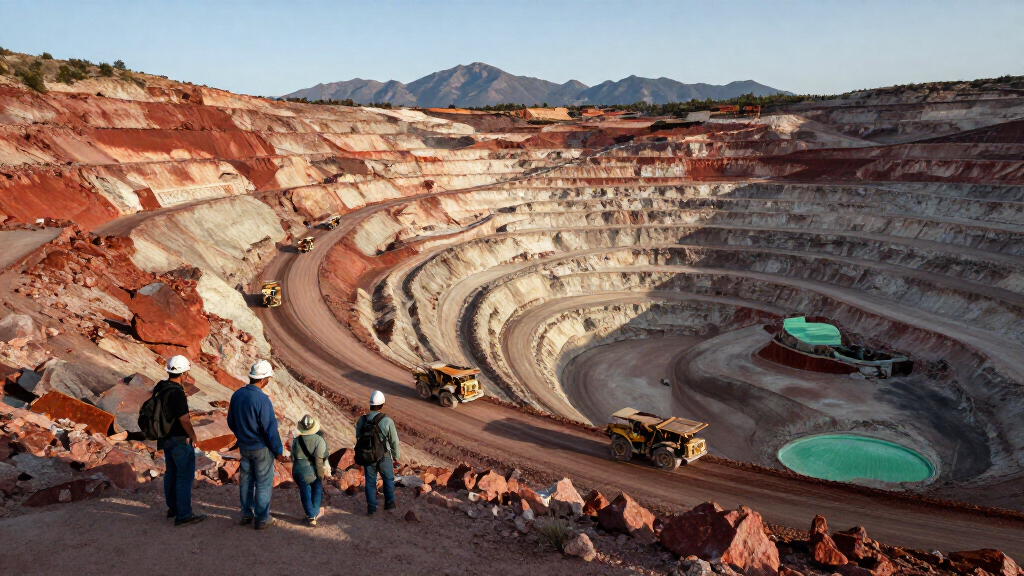
Freeport-McMoRan approved a $4.5 billion expansion of its Bagdad mine in Arizona, targeting annual copper production of more than 400 million pounds, an increase of about 225 million pounds. Initial production is planned for mid-2030 after roughly three and a half years of construction; the project’s cost is about $1 billion above a 2023 estimate.
Freeport-McMoRan has approved a $4.5 billion expansion of its Bagdad copper mine in Arizona, a project designed to lift annual copper production by about 225 million pounds to more than 400 million pounds. The company targets initial production in mid-2030, adding a major planned source of U.S. copper as the government seeks to strengthen domestic mineral supply.
The expansion would make Bagdad the second-largest copper mine in the United States, behind Freeport’s Morenci operation, according to The Northern Miner’s report. Freeport also expects molybdenum output to rise by 12 million pounds a year, bringing annual production above 20 million pounds. The company said the project is expected to reduce long-term unit net cash costs by 20%.
Planned work includes new concentrating facilities able to process 115,000 tonnes of ore per day, along with a crusher, conveyor and expanded site infrastructure. Construction is expected to take about three and a half years. Freeport described the expansion as a brownfield project, meaning it builds on an existing mine and infrastructure rather than developing an entirely new site.
The approved capital cost is about $4.5 billion, compared with a $3.5 billion estimate prepared in 2023. Freeport attributed the increase to cost escalation, changes in project scope and revised estimates after additional engineering, according to its third-quarter filing cited in the report. The company says project economics are supported at a copper price of about $4 per pound.
More Copper From an Existing U.S. Mine
If the project meets its production target, it would add a substantial volume of copper to U.S. mine output and expand a domestic operation with existing facilities and an established workforce. Copper is used in electrical infrastructure, manufacturing and military equipment, making mine supply relevant to industrial demand and government efforts to reduce reliance on overseas processing.
The project is also significant for its scale and timing: the additional output is not expected immediately. Freeport’s target is mid-2030, so the approval is a commitment to future production rather than a near-term change in available supply. The planned increase in molybdenum output adds another domestically produced metal used in industrial applications.
For Freeport, the company says the larger operation could benefit from economies of scale and lower long-term unit costs. Those are company expectations, not guaranteed results. Construction spending, operating performance and future copper prices will affect the project’s eventual economics.
Products Worth Considering

FLEXISPOT 36-Inch Standing Desk Converter, Black

FLEXISPOT 60-Inch Executive Standing Desk with Drawers and CPU Cabinet

Canon imagePROGRAF PRO-1100 17-Inch Professional Wireless Inkjet Photo Printer
As an affiliate, we earn on qualifying purchases.
Bagdad Fits Freeport’s U.S. Network
Bagdad is part of a broader Freeport U.S. business that includes seven copper operations, according to the report. The company also operates a smelter and rod mill in Miami, Arizona, and a refinery and rod mill in El Paso, Texas. The Bagdad expansion would add mine production within that existing domestic network.
The mine’s reserve base is a key part of the investment case. Freeport says existing reserves support more than 80 years of operations. That figure describes the company’s stated reserve outlook; it does not mean the expansion itself will necessarily operate for that entire period.
The approval comes amid U.S. policy efforts to encourage domestic mineral production. A March 2025 minerals order from President Donald Trump directed agencies to expedite priority projects and expanded access to Defence Production Act authorities for domestic mineral production, including copper. The administration has framed copper supply as a national-security concern, citing its role in infrastructure, manufacturing and defense.
Import dependence remains part of the picture. The report cites U.S. Geological Survey data showing net imports supplied 57% of U.S. refined-copper consumption in 2025. For 2021–24, Chile accounted for 68% of refined copper imports and Canada for 16%. The administration says China controls more than half of global copper smelting capacity; that figure concerns processing capacity, not the sources of U.S. copper imports.
““This low-risk brownfield project builds on Bagdad’s substantial reserve base, long operating history, existing infrastructure and experienced workforce to deliver new U.S. copper and molybdenum production.””
— Kathleen Quirk, Freeport-McMoRan CEO
Costs, Schedule and Output Risks
The approval sets out Freeport’s current plan, but actual construction costs and timing may change. The estimate has already risen from $3.5 billion in 2023 to $4.5 billion, which the company attributed to cost escalation, scope changes and further engineering. The report does not specify how much of the increase came from each factor.
It is also not yet clear whether the project will meet its mid-2030 production target or deliver the forecast output and 20% reduction in long-term unit net cash costs. Those figures are company projections. Future copper prices, construction execution and operating conditions could affect the economics; the reported $4-per-pound price supporting project economics is not a guarantee of returns.
The approval’s direct effect on national import dependence is also uncertain. The expansion would raise U.S. mine production, but the source does not quantify how much of Bagdad’s output would supply U.S. smelters or how it would change refined-copper imports. Mine production and refined-metal availability are related but not identical measures.
Construction Before Mid-2030 Output
Freeport’s next major step is to move into the planned construction phase, which the company expects to last about three and a half years. The schedule points to initial production in mid-2030. Progress against that timetable, any updates to the capital budget and the build-out of the concentrator, crusher, conveyor and supporting infrastructure will indicate whether the project remains on plan.
Investors and local communities will also be watching for further company disclosures on construction milestones, spending and expected production ramp-up. Freeport shares were reported down 0.3% to $61.60 in Wednesday morning U.S. trading, giving the company a market value of about $86 billion at that time. That snapshot does not establish how investors will value the project over the longer term.
Key Questions
How much will the Bagdad expansion cost?
Freeport approved a project with estimated capital costs of $4.5 billion. That is about $1 billion above the $3.5 billion estimate prepared in 2023. The company attributed the increase to cost escalation, scope changes and revised estimates after additional engineering.
How much copper is Bagdad expected to produce?
Freeport targets annual copper production of more than 400 million pounds after the expansion, an increase of about 225 million pounds. The target is a company projection, not current production.
When is the expanded mine expected to begin production?
Freeport is targeting initial production in mid-2030, following about three and a half years of construction. The schedule could change as the project proceeds.
What other metal will the expansion produce?
The company expects annual molybdenum production to rise by 12 million pounds to more than 20 million pounds.
Will the project end U.S. reliance on copper imports?
The expansion is expected to add U.S. mine production, but the available information does not show that it will end or quantify how much it will reduce import dependence. The report says net imports supplied 57% of U.S. refined-copper consumption in 2025; refined copper imports and domestic mine output are distinct measures.
Source: northernminer.com