This checklist is for investors who want a clearer routine for tracking decisions, learning market concepts, and keeping important portfolio details together. It includes a few tools and learning aids, plus practical advice for planning around dividends and recording market observations.

Get smart everyday buys delivered free with Prime
- Fast, free delivery on millions of items
- Prime Video, Amazon Music and more included
- Member-only deals all year
The sections follow the role each item can play: calculations, learning, recordkeeping, spreadsheet modeling, dividend dates, and analysis notes. The product names are the only details available for the picks, so use each description as a starting point and confirm features and compatibility with the seller before buying.
Start with the task that feels hardest to manage, then check whether a tool fits your current workflow. Consider where you will use it, how you prefer to record information, and whether you already have a system that covers the same need. Add tools gradually and keep your tracking routine simple enough to maintain.
Financial calculator
A calculator can be useful when your tracking routine includes calculations you want to work through directly. The listed pick is the HP Prime G2 Graphing Calculator with Color Touch Display, CAS, and Exa. Its product name identifies it as a graphing calculator and mentions a color touch display and CAS, but the name is truncated at “Exa.” Check the complete listing and documentation to confirm the exact model and included capabilities before deciding whether it suits your work.
A common buying mistake is choosing a calculator based on a feature label without checking whether it supports the calculations, inputs, and workflow you actually use. Consider whether you need a handheld device, whether you are comfortable with its interface, and whether your existing spreadsheet or calculator already handles the same tasks. If you expect to use it alongside other tools, confirm any required connections or compatibility from the manufacturer’s information.
Think about where you will use and store it, and verify the dimensions and any included accessories in the listing. A graphing calculator may be more involved than a basic calculator, so review the manual or available product materials before relying on it for regular tracking. Treat calculations as one part of your process, and keep the assumptions behind important investment decisions recorded separately.
What to look for:
- Confirm the complete product name and exact model
- Review the stated calculator functions in the full listing
- Check dimensions and included accessories
- Consider whether its interface fits your routine
- Confirm any compatibility needs from official documentation
HP Prime G2 Graphing Calculator with Color Touch Display, CAS, and Exam Approval

The HP Prime G2 is a programmable graphing calculator featuring a 3.5-inch multi-touch color display, advanced graphing, and CAS capabilities. It is exam-approved for standardized tests like SAT, IB, and AP, and includes wireless connectivity and expandable memory for classroom use.
Pros:
- Large high-resolution multi-touch color display for interactive graphing
- Exam-approved for standardized tests, suitable for various math courses
- Wireless connectivity and app integration enhance classroom collaboration
- Expandable memory for storing programs and images
Cons:
- Complex features may require a learning curve for new users
- Higher price point compared to basic calculators
- Battery life may vary with extensive use
Best for: Investors who prefer a dedicated graphing calculator
Not ideal for: People whose existing tools already cover their calculation needs
Bottom line: Confirm the complete model details and functions before adding it to your tracking setup.
Stock market almanac
The listed pick is the Stock Exchange Board Game: Educational Stock Market Strategy Game for, with the product name ending mid-phrase. A board game can serve as a learning aid for people who want to explore market-related ideas in a shared, hands-on setting. The title describes it as educational and strategy-focused, but it does not provide enough detail to establish its rules, contents, or intended age range.
Before buying, find the complete listing and check the game description, components, player count, and age guidance. A frequent mismatch is expecting a game to function as a portfolio tracker or a source of current market information. The name alone does not establish that it reflects live markets or teaches any particular investing approach. Review the instructions or publisher details to understand what participants actually do during play.
Consider who will use it and whether the format fits your learning style. Check the box dimensions and any space needed for setup if you plan to play at home or bring it to a group. If you are selecting it for a classroom or family, make sure the listed age guidance and rules fit the intended players. Keep lessons from a game distinct from decisions about real investments, and verify financial information independently.
What to look for:
- Locate the full product name and description
- Check the listed player count and age guidance
- Review the rules and included components
- Confirm that the learning format suits the intended players
- Treat game content separately from real investment decisions
Stock Exchange Board Game: Educational Stock Market Strategy Game for Ages 10+

A family-friendly board game based on real stock market principles, designed to introduce players to finance and money management. It offers family, strategy, and team play for 2–6 players, with no prior stock knowledge or advanced math required.
Pros:
- Introduces finance and money management through play
- Includes family, strategy, and team play options
- Supports 2–6 players
- Does not require prior stock knowledge or advanced math
Cons:
- Contains small parts and poses a choking hazard
- Designed for indoor play
Best for: Learners who enjoy exploring strategy through a game
Not ideal for: Investors seeking a tool to record a real portfolio
Bottom line: Review the full listing and rules to understand what this educational game includes.
Investment journal
An investment journal can give decisions and observations a consistent place to live. The pick is Investment Journal: Basic Workbook to Record and Track Investments; its name describes it as a basic workbook for recording and tracking investments. Before choosing it, inspect the available preview or listing to see how entries are organized and whether the fields match the details you want to keep.
A common mistake is buying a journal without deciding what information belongs in it. Consider whether you want to note the date, reason for a decision, assumptions, and later observations, then check whether the workbook has space and prompts for your preferred approach. Confirm its dimensions, page layout, and binding or format from the listing. If you need digital searching or backups, determine whether a paper workbook fits your recordkeeping habits.
Keep the journal aligned with the level of detail you can maintain. A very elaborate process can become difficult to update, while overly sparse notes may not help you revisit your reasoning. If you hold multiple investments, check whether the layout supports separate entries and ongoing updates. Avoid putting sensitive account credentials or other unnecessary private details in a general-purpose workbook. Use it to preserve your own thinking, and verify transaction data against your usual account records.
What to look for:
- Preview the entry layout and prompts
- Check page size, format, and binding details
- Ensure there is room for the notes you plan to keep
- Consider whether paper recordkeeping suits your routine
- Keep private credentials out of the journal
Investment Journal: Basic Workbook to Record and Track Investments

A basic workbook for recording and tracking investments. It measures 6 × 9 inches and contains 120 pages.
Pros:
- Provides a dedicated place to record investments
- Compact 6 × 9-inch format
- 120 pages for tracking entries
Cons:
- Described as a basic workbook
- No additional features are specified
Best for: Investors who prefer a dedicated written record
Not ideal for: People who need searchable digital records
Bottom line: Choose the workbook if its layout supports notes you can keep up with consistently.
Portfolio tracker spreadsheet
The listed pick is Spreadsheet Modeling in Investments: Book and CD-ROM. Its name points to investment spreadsheet modeling and identifies a book and CD-ROM, but does not specify spreadsheet software, file formats, operating system support, or the contents of the disc. Check the full listing and publisher information to confirm what is included and whether the materials work with your current setup.
A common buying mistake is assuming that a modeling book or accompanying disc is a ready-to-use portfolio tracker. Review the table of contents, sample pages, and any stated software requirements to see whether the material matches your intended use. Confirm whether the CD-ROM can be read by your computer and whether the included files, if any, are compatible with the software you use. Do not rely on the product name alone to establish support for current applications.
Think about the information you want to track and whether you are prepared to build or adapt a spreadsheet. Check whether the materials address the level of spreadsheet experience you have, and whether examples can be followed without software you do not own. If you need a simple record of holdings, a book focused on modeling may require more setup than you want. Keep any spreadsheet’s inputs and assumptions clear, and compare recorded details with your source records.
What to look for:
- Review the book’s contents and sample pages
- Confirm software and operating system requirements
- Check whether the CD-ROM works with your computer
- Determine whether the material teaches modeling or supplies a tracker
- Match the examples to your spreadsheet experience
Spreadsheet Modeling in Investments: Book and CD-ROM
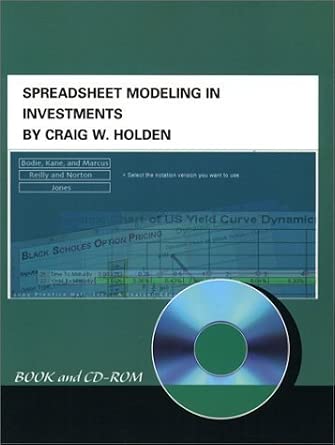
A book and CD-ROM focused on spreadsheet modeling for investments. No further product details are available in the provided content.
Pros:
- Includes both a book and a CD-ROM
Cons:
- No additional product details provided
Best for: Investors interested in learning spreadsheet modeling
Not ideal for: People looking for a confirmed ready-made tracker
Bottom line: Verify the book’s contents and CD-ROM compatibility before relying on it for tracking.
Dividend calendar
A dividend calendar can help you keep relevant dates visible as part of an investment tracking routine. No product is listed for this slot, so choose a format that you can update reliably: a calendar app, spreadsheet, or written planner may each suit different habits. Start by deciding which dates you want to record and where you will check them.
A frequent mistake is treating a date copied into a personal calendar as authoritative without checking its source. Confirm dates using information from the company or another source you trust, and note when you last reviewed each entry. Calendar labels can vary, so make clear what each date means in your own system. Avoid assuming that a scheduled date guarantees a particular payment or outcome.
For a digital calendar, review how you will enter, edit, and back up events, and whether it is convenient across the devices you use. For a spreadsheet or paper planner, leave room to record the source and update date. Keep the calendar focused on the details you need, and check it periodically against current information. A consistent review habit matters more than a complicated layout.
What to look for:
- Choose a format you can update regularly
- Record the source for each date
- Label dates clearly in your own system
- Review entries against current information
- Keep a note of when each entry was checked
Market analysis notebook
A market analysis notebook gives observations and questions a place to collect over time. There is no product pick for this slot, so use a notebook you already have or choose one whose format makes regular notes easy. Decide whether you want dated pages, space for charts, or sections for different topics before selecting a format.
A common mistake is recording conclusions without the reasoning or context that led to them. Add the date, the question you were considering, the information you consulted, and what would cause you to revisit the note. Separate observations from assumptions so that later reviews are easier to interpret. Avoid treating a notebook entry as a forecast or as confirmation that an investment decision will work out.
Check the notebook’s size, page layout, and portability against where you plan to write. If you prefer digital notes, consider how you will organize, search, and back them up. Keep the structure light enough that you will use it, and review earlier entries occasionally to see how your thinking has changed. Store account details securely elsewhere; the notebook needs only the context necessary to understand your analysis.
What to look for:
- Choose a layout that suits your note-taking style
- Leave room for dates, context, and follow-up questions
- Separate observations from assumptions
- Consider portability or digital search and backup
- Avoid storing sensitive account credentials
Prioritize purchases by the tracking gap you most want to address. First decide whether you need a place to record decisions, a way to organize dates, or support for calculations and spreadsheet learning. Check the complete listings, formats, requirements, and layouts before spending time setting up any tool. You may find that a journal or calendar habit is the most useful first step.
You do not need to build a complicated system all at once. Choose one manageable routine, keep its information current, and add another tool when a clear need appears. With steady notes and regular reviews, you can make your tracking process easier to follow and improve it as your needs change.