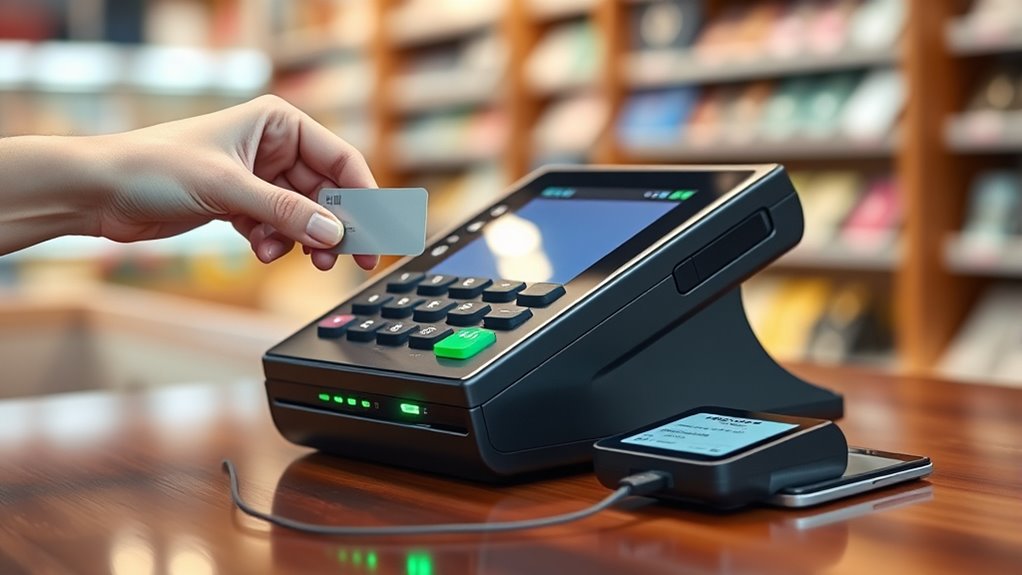

Your POS terminal communicates securely with banks and processing networks to verify your transactions. It captures card data via magnetic stripe, chip, or contactless technology using NFC. Then, it encrypts the information and transmits it through a secure connection. The bank or card issuer checks the details and approves or declines the payment. This process happens in seconds, ensuring quick, contactless, and safe payments. To learn more about how this seamless system works, keep exploring.
Key Takeaways
- POS terminals accept card payments via swipe, insert, or tap, communicating with banks to verify and authorize transactions.
- Contactless payments use NFC technology to wirelessly transmit data for faster, secure transactions.
- Encryption and secure connections protect card data during transmission between the POS and payment processors.
- The terminal verifies account details, checks funds, and receives approval or decline responses in real-time.
- Security features like EMV chips, hardware tamper-proofing, and PCI DSS standards ensure safe and reliable payments.
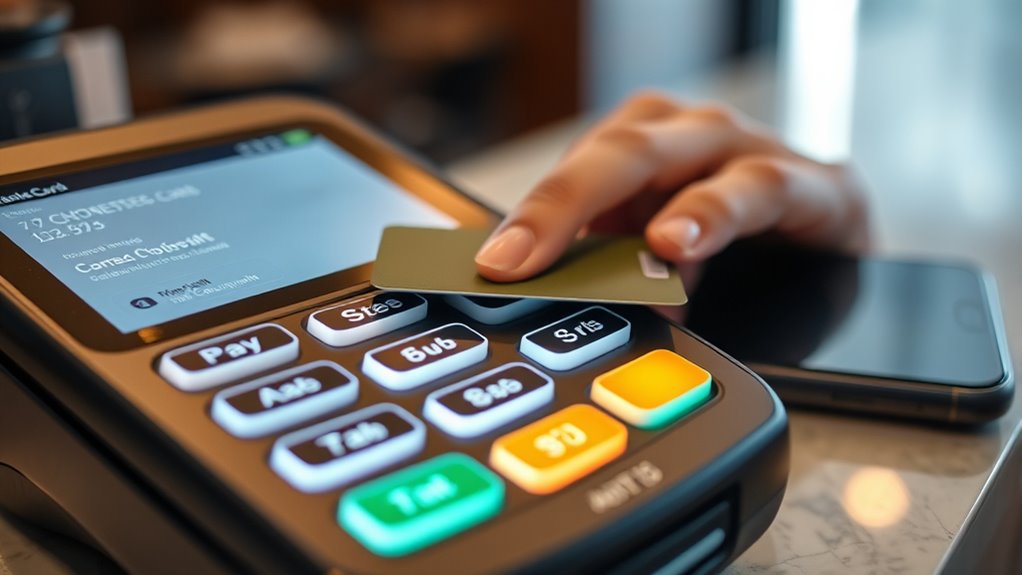
If you’ve ever made a purchase with a credit or debit card, you’ve likely used a card machine without even thinking about how it works. These devices, also known as POS terminals, are designed to make transactions quick, secure, and seamless. When you insert, swipe, or tap your card, the machine communicates with your bank or card issuer to verify your details and authorize the payment. With contactless payments gaining popularity, many machines now accept tap-and-go transactions, which use near-field communication (NFC) technology to transmit data wirelessly. This method speeds up checkout times and adds convenience, especially for small purchases.
Behind the scenes, your card machine employs robust security protocols to protect your sensitive information. These protocols include encryption, which scrambles data during transmission, making it unreadable to anyone intercepting the signal. When you tap your card or insert it into the machine, a secure session is established between your card and the terminal, ensuring that your account details aren’t exposed. Many card machines also use dynamic data, meaning each transaction generates a unique code that can’t be reused, further reducing the risk of fraud.
Your card machine uses encryption and dynamic data to keep your information safe during transactions.
The communication process between your card and the POS terminal involves multiple steps. First, the terminal reads your card’s data, whether through magnetic stripe, chip, or contactless technology. Then, it encrypts this information and sends it via a secure connection to a payment processor or acquiring bank. This entity verifies your account details and checks for sufficient funds or credit. Once approved, the response is sent back to the terminal, which then completes the transaction, often printing a receipt or providing a digital confirmation. This entire process typically takes just a few seconds, ensuring a smooth customer experience.
Security is at the forefront of card machine technology. Modern terminals are equipped with tamper-proof hardware, and many adhere to PCI DSS standards, which set strict guidelines for handling cardholder data. Additionally, the adoption of EMV chip technology has considerably reduced card-present fraud, as chips are harder to clone than magnetic stripes. With contactless payments, the security protocols also include transaction limits and additional authentication methods for larger amounts, providing peace of mind for both merchants and customers. In essence, your card machine is a sophisticated device that combines advanced technology with rigorous security measures, making your transactions safe, fast, and convenient every time you tap or swipe your card. Understanding the security features of modern card machines can help you feel more confident when making payments.
Frequently Asked Questions
How Secure Is Data Transmitted Through Card Machines?
Your data transmitted through card machines is quite secure because modern systems use robust encryption protocols to protect your information. These protocols scramble your data, making it unreadable to unauthorized parties. Additionally, they incorporate data breach prevention measures, such as tokenization and secure channels, to safeguard your payment details. While no system is completely invulnerable, these security features considerably reduce the risk of your data being compromised during transactions.
Can Card Machines Process International Transactions?
When it comes to international transactions, your card machine can definitely handle them, but be prepared for cross border fees and currency conversion charges. It’s a bit of a double-edged sword—you gain the ability to process payments globally, but those extra costs can add up. Make sure your POS terminal is set up for international use, and always inform customers about potential fees to keep the process smooth.
What Types of Payments Can Card Machines Accept?
Your card machine can accept various payment types, including contactless payments and mobile wallet integration. You can easily process credit and debit card transactions, whether swiped, dipped, or tapped. Plus, many machines support NFC technology, enabling quick contactless payments with smartphones or smartcards. This flexibility makes it convenient for your customers to pay using their preferred method, speeding up transactions and improving their overall experience.
How Often Should POS Software Be Updated?
Imagine your POS software as a car that needs regular tune-ups to run smoothly. You should update your POS software whenever merchant notifications alert you or at least every few months. These updates ensure security, fix bugs, and add features. Staying proactive helps prevent disruptions, keeping your payment processes seamless. Regular updates protect your business and customers, so don’t wait—stay current with the latest POS software releases.
What Should I Do if My Card Machine Stops Working?
If your card machine stops working, first try troubleshooting tips like checking power connections, restarting the device, or ensuring it’s within range of your network. If issues persist, explore repair options through your provider or a technician. Keep your software updated regularly to prevent problems, and always have a backup payment method. Acting quickly helps minimize transaction disruptions and keeps your business running smoothly.
Conclusion
Now that you know how your POS terminal talks and processes payments, you’re basically a wizard controlling a tiny supercomputer. It’s like having a secret army of digital agents working behind the scenes, making your transactions vanish into the ether at lightning speed. So next time you tap or swipe, remember—you’re wielding a tiny powerhouse that’s smarter than most computers and faster than the blink of an eye. Your card machine isn’t just a device; it’s a payment miracle in disguise!