
If your business still uses outdated payment terminals, you’ll need to upgrade to stay EMV compliant by 2025. Modern contactless, chip-enabled devices protect customer data, prevent fraud, and support faster transactions. Falling behind risks costly fines and losing customer trust. Upgrading now guarantees your systems meet industry standards and prepare for future payment methods. Want to know how to make the switch smoothly? Keep going to find out more.
Key Takeaways
- EMV compliance is mandatory in 2025 to ensure secure contactless payments and protect customer data.
- Outdated terminals lacking EMV support increase fraud risk and may lead to fines and non-compliance penalties.
- Upgrading to EMV-enabled devices enhances security with dynamic data authentication and encryption features.
- Modern systems support NFC, mobile wallets, and future payment technologies, keeping your business competitive.
- Continual upgrades and compliance checks are essential to stay ahead of evolving standards and industry security requirements.
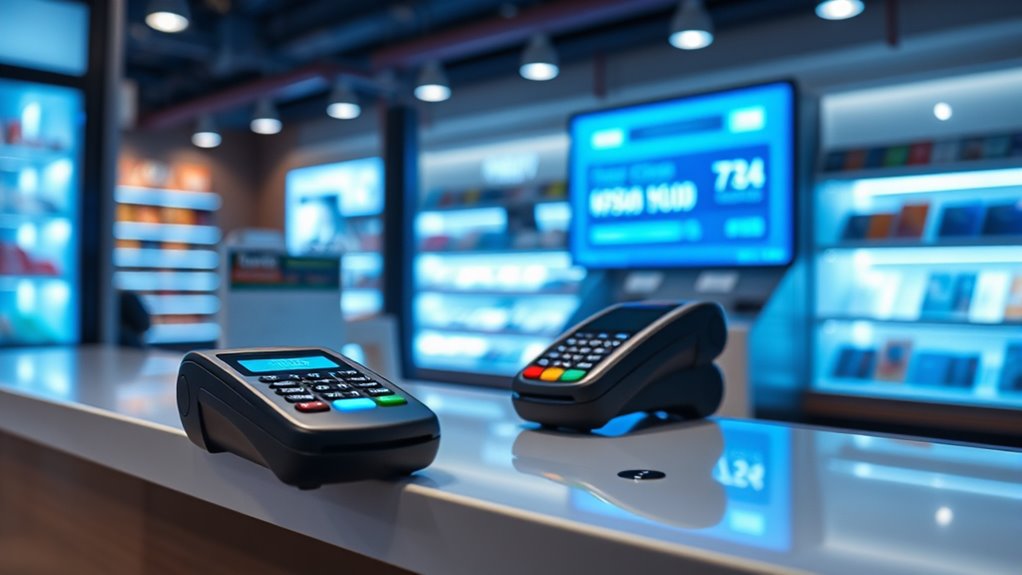
As we approach 2025, EMV compliance continues to be a critical focus for businesses handling card transactions. Staying compliant isn’t just about avoiding fines; it’s about safeguarding your customers’ data and maintaining trust. One of the biggest shifts in recent years has been the rise of contactless payments, which are now a staple in many transactions. If your business still relies solely on traditional chip readers or magnetic stripe terminals, it’s time to evaluate whether your equipment is up to date. Contactless payments offer speed and convenience, but they also require enhanced card reader security to prevent fraud. Upgrading to EMV-compliant terminals that support tap-and-go transactions ensures you’re not only meeting industry standards but also providing a safer environment for your customers.
Upgrade to EMV contactless terminals to enhance security and meet industry standards in 2025.
You might wonder if your current card reader security measures are sufficient. The truth is, older terminals often lack the necessary encryption and security protocols mandated by EMV standards. Modern EMV-capable devices use dynamic data authentication, making it much harder for criminals to clone cards or steal sensitive information. If your system doesn’t support contactless payments with robust security features, you’re leaving a vulnerable gap that could be exploited. Upgrading your card readers to EMV-compliant models means deploying devices that encrypt data at the point of interaction, reducing the risk of data breaches and counterfeit fraud. Additionally, integrating high-quality EMV technology can enhance your payment security and customer confidence.
Implementing EMV compliance isn’t just about hardware. You should also consider your payment process workflows. For example, contactless payments should be integrated seamlessly, allowing customers to pay quickly without compromising security. This means investing in terminals that support near-field communication (NFC) technology and are compatible with various contactless cards and mobile wallets. Ensuring your card reader security is up to par involves not just the hardware but also regular software updates and compliance checks. These updates fix vulnerabilities, improve encryption, and ensure your system adheres to evolving EMV standards.
Moreover, as EMV standards continue to evolve, so does the landscape of contactless payment options. Newer devices offer tokenization and biometric authentication, adding extra layers of security. If your business isn’t keeping pace with these advancements, you risk falling behind competitors who provide faster, safer payment experiences. Upgrading your payment terminals now prepares you for future developments and reassures your customers that you prioritize their security. So, if your current setup is outdated or doesn’t fully support contactless payments with proper security measures, it’s time to make that upgrade. Staying compliant in 2025 isn’t just about meeting requirements; it’s about protecting your business and your customers in a rapidly changing payment environment.
EMV contactless payment terminal
As an affiliate, we earn on qualifying purchases.
As an affiliate, we earn on qualifying purchases.
Frequently Asked Questions
Are Mobile Payment Options Affected by EMV Compliance?
Yes, mobile payment options like digital wallets and contactless payments are impacted by EMV compliance. These systems depend on secure chip technology to process transactions safely. If your business hasn’t upgraded to EMV-compliant terminals, your digital wallets and contactless payments might not work properly or could be more vulnerable to fraud. Staying compliant ensures seamless, secure transactions for your customers and protects your business.
What Are the Cost Implications for Small Businesses?
You’ll need to do a cost analysis to understand the upgrade expenses for your small business. Upgrading to EMV-compliant terminals involves initial costs for new hardware and software, plus potential training. While these expenses might seem significant, they can reduce fraud-related costs and liability. Consider long-term savings and security benefits, and compare different vendors to find the most cost-effective solution for your business needs.
How Does EMV Compliance Impact Customer Experience?
EMV compliance boosts customer trust by showing you prioritize security, making them feel confident in your payment system. It also improves transaction speed, reducing wait times and creating a smoother checkout experience. When you upgrade your systems, customers notice and appreciate your commitment to safety and efficiency. This positive experience encourages repeat business and enhances your reputation, ultimately benefiting your bottom line.
Is There a Deadline Extension for EMV Upgrades?
Think of the compliance deadline as a train on its schedule—you might wonder if there’s a last-minute extension. Currently, there’s no official deadline extension for EMV upgrades beyond the 2025 compliance deadline. It’s essential to stay on track, as missing it could lead to penalties or increased fraud risk. Keep an eye on updates, but don’t delay your upgrade plans, so you’re ready when the deadline hits.
What Are the Penalties for Non-Compliance in 2025?
If you don’t meet the compliance deadlines by 2025, penalties enforcement can hit your business hard. You might face fines, increased transaction costs, or liability for fraudulent transactions. Staying compliant is vital to avoid these penalties, so make sure your payment systems are upgraded on time. Non-compliance risks not only financial penalties but also damage to your reputation, making adherence to deadlines imperative for smooth operations.
As an affiliate, we earn on qualifying purchases.
Conclusion
By 2025, failing to upgrade your payment systems could leave your business more vulnerable than ever—like trying to stop a tidal wave with a paper umbrella. EMV compliance isn’t just a trend; it’s your shield against fraud and costly penalties. Don’t let outdated technology sink your reputation and revenue. Stay ahead, stay protected, and guarantee your business remains unbreakable in the face of evolving security threats. Upgrade now—your future depends on it.
As an affiliate, we earn on qualifying purchases.
contactless payment terminal with encryption
As an affiliate, we earn on qualifying purchases.
As an affiliate, we earn on qualifying purchases.