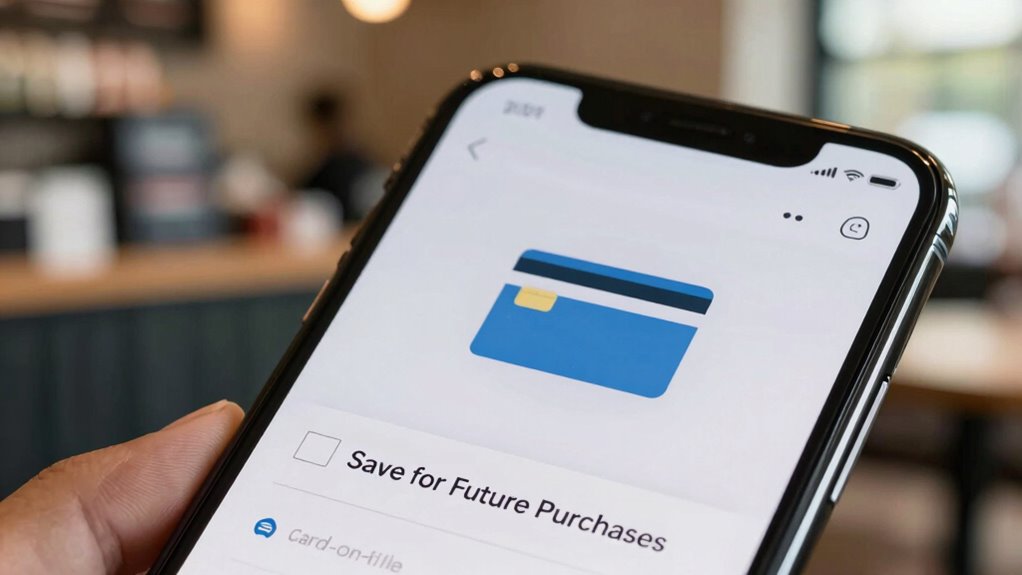

When you make a repeat purchase, card-on-file flows securely store your payment details, making checkout faster and more convenient. Your information isn’t kept in plain text; it’s encrypted and tokenized to prevent unauthorized access. Secure connections like HTTPS and user consent guarantee your data stays protected during transmission. These security measures build trust and compliance, giving you confidence in saving your payment info. Continue to discover how these processes work seamlessly to make your online shopping safer and easier.
Key Takeaways
- Card-on-file flows store encrypted payment information securely for quick, seamless repeat purchases.
- User consent and secure platforms ensure authorized storage and use of card details.
- Encryption, tokenization, and layered security protect stored data from unauthorized access.
- Secure transmission protocols like HTTPS encrypt data during transfer to prevent interception.
- Compliance with security standards and privacy policies builds user trust in the process.
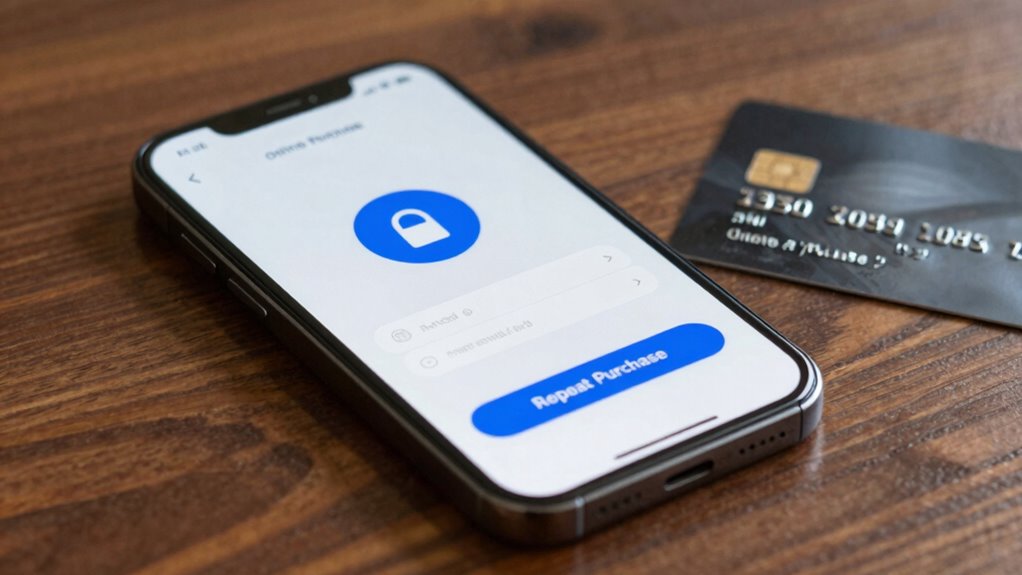
When you make repeat purchases online, the process of entering your payment details each time can feel tedious and time-consuming. That’s where card-on-file flows come into play, simplifying your shopping experience while maintaining security. Instead of manually inputting your card information with every purchase, you authorize the merchant or payment processor to securely store your payment details for future use. This setup allows you to complete transactions faster, often with just a few clicks or taps, making repeat buying seamless.
Behind the scenes, these flows rely heavily on strict security protocols to protect your sensitive data. When your card details are stored, they aren’t kept in plain text on servers. Instead, data encryption techniques scramble your information, making it unreadable to anyone who might intercept it. This encryption ensures that even if there’s a breach, your payment details remain confidential and unusable by malicious actors. Payment platforms also implement layered security measures, such as tokenization, where your actual card data is replaced with a unique token. This token is useless outside the specific transaction context, adding an extra layer of protection.
When you opt to save your card details, you typically give your consent through a secure website or app that uses HTTPS—a protocol that encrypts data transmitted between your device and the server. This means your payment information is shielded from potential interception during transmission. Additionally, many merchants implement two-factor authentication or biometric verification to confirm your identity before storing or using your card details for future transactions. These security protocols work together to prevent unauthorized access and ensure that only you can authorize repeat purchases. Incorporating encryption techniques and other security measures helps provide a safer environment for your sensitive information. Furthermore, the process relies on secure data transmission to keep your information safe during the entire transaction, aligning with the importance of privacy policies and user consent management. This comprehensive approach, including regional security standards, helps maintain trust and compliance across different jurisdictions. Knowing that privacy and security are prioritized can increase your confidence in using card-on-file flows for your shopping needs.

Nouysoc Tap to Pay Card Holder, Magical Contactless Payment Device, Convenient Retail Store and Coffee Shop Use, Debit Card Wand with Secure Storage for Quick Transactions
Magical Fairy Wand Design: This tap to pay card holder features an enchanting fairy wand design, transforming ordinary…
As an affiliate, we earn on qualifying purchases.
As an affiliate, we earn on qualifying purchases.
Frequently Asked Questions
How Secure Are Stored Card Details Against Fraud?
Stored card details are quite secure against fraud, thanks to advanced fraud detection systems that monitor suspicious activity and flag potential issues early. Additionally, your data is protected through strong data encryption, making it difficult for hackers to access sensitive information. While no system is completely foolproof, these security measures considerably reduce your risk of fraud, giving you peace of mind when making repeat purchases using stored card details.
Can Customers Update Their Saved Payment Information Easily?
Yes, customers can easily update their saved payment information, enhancing payment customization and user convenience. Most platforms allow you to access your account settings or payment methods section, where you can quickly add, edit, or remove card details. This streamlined process makes repeat purchases smoother, giving you control over your payment options. Maintaining your payment info current also helps prevent transaction issues and ensures seamless, secure checkout experiences.
What Are the Common Challenges in Implementing Card-On-File Flows?
You might think implementing card-on-file flows is simple—just store payment data, right? But the real challenge lies in mastering tokenization strategies and managing compliance considerations. Ironically, securing customer info demands rigorous standards, making integration complex. Ensuring data privacy, handling tokenization securely, and meeting PCI DSS requirements all become hurdles. These challenges can turn a straightforward process into a tangled web of technical and regulatory obstacles, complicating seamless repeat purchases.
How Do Card-On-File Flows Differ Across Industries?
You’ll notice that card-on-file flows differ across industries mainly due to industry-specific compliance requirements and payment method variations. For example, healthcare and finance sectors must adhere to strict data security standards, while retail might prioritize quick, seamless checkout experiences. Payment methods also vary—some industries prefer digital wallets, others rely on traditional credit cards—so designing flows that meet these unique needs guarantees smoother transactions and better customer satisfaction.
What Are the Best Practices for Customer Consent and Transparency?
You should prioritize clear communication to guarantee customer consent and transparency, which boosts user trust. Make privacy compliance a top priority by providing straightforward privacy policies and explaining how card data is stored and used. Obtain explicit consent before saving card details, and give customers easy options to manage or revoke consent. Regularly update them on any changes, fostering trust and demonstrating your commitment to their privacy and security.
encrypted payment tokenization tools
As an affiliate, we earn on qualifying purchases.
As an affiliate, we earn on qualifying purchases.
Conclusion
As you navigate card-on-file flows, you’ll notice how seamlessly your previous purchases seem to follow you, like a familiar bookmark in a well-loved book. It’s as if the system anticipates your needs, effortlessly guiding you back to what you want. This convenience transforms your shopping experience into a smooth, almost instinctive journey—where every repeat purchase feels natural, like catching up with an old friend. In this dance of trust and technology, everything just falls into place.

Thetis BIOFP Plus FIDO2 Fingerprint Security Key Hardware Passkey with USB Type C/Biometric/FIDO Certified, 2FA / MFA Authenticator App Device, Works for Window, macOS, Linux, Gmail, Github
FIDO2 Certified Passkey Authentication: Officially FIDO2 certified for secure, passwordless login on supported platforms. Use modern passkeys with…
As an affiliate, we earn on qualifying purchases.
As an affiliate, we earn on qualifying purchases.

Square Terminal – Credit Card Machine to Accept All Payments | Mobile POS
With Square Terminal, you can ring up sales, accept payments, and print receipts, all with one device. Use…
As an affiliate, we earn on qualifying purchases.
As an affiliate, we earn on qualifying purchases.