
Standardizing hardware helps you cut support costs by simplifying maintenance and troubleshooting, leading to faster issue resolution. It also reduces inventory expenses by focusing on a smaller, predictable set of spare parts, and streamlines procurement through bulk buying. With familiar devices, your tech team becomes more efficient, and support calls decrease. Over time, you’ll see better scalability and flexibility for growth. Keep exploring to discover additional ways this approach can benefit your organization.
Key Takeaways
- Standardization simplifies maintenance and troubleshooting, reducing time and labor costs.
- It enables inventory reduction, lowering storage and procurement expenses.
- Uniform hardware allows technicians to develop specialized skills, speeding up repair processes.
- It minimizes compatibility issues, decreasing system conflicts and support calls.
- Standardized devices streamline updates and replacements, supporting scalable and flexible growth.
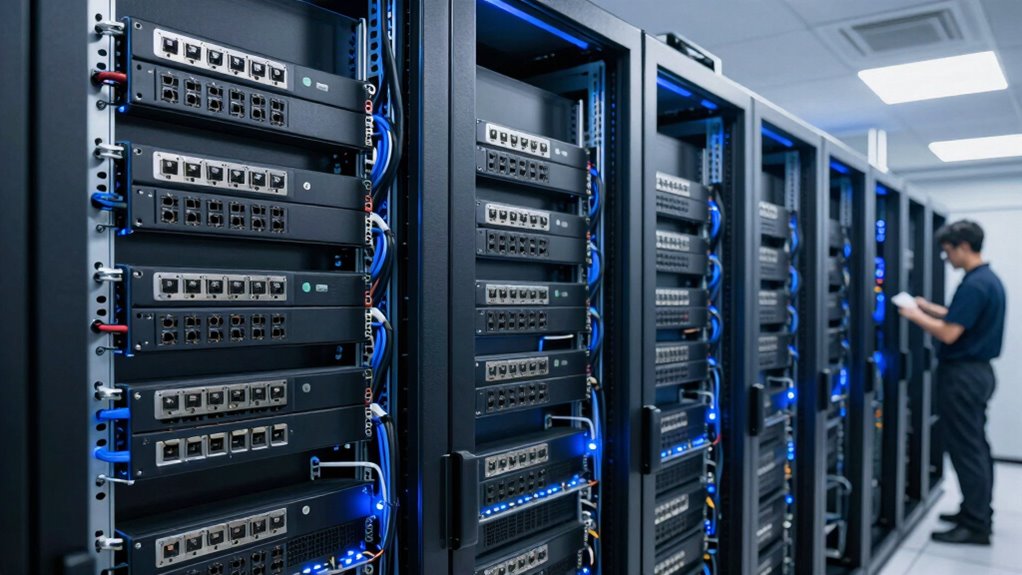
Hardware standardization can markedly reduce support costs by streamlining maintenance and simplifying inventory management. When your organization adopts a uniform set of hardware components, you eliminate the complexity that comes with managing multiple device types and models. This approach makes it easier for your IT team to troubleshoot issues because they’re familiar with the specific hardware, reducing downtime and support calls. Additionally, device compatibility becomes less of a concern, since standardized hardware ensures all devices work seamlessly together. This compatibility minimizes the risk of hardware conflicts that can cause system crashes or slow performance, ultimately saving you time and resources.
Standardized hardware reduces support costs by simplifying maintenance and enhancing device compatibility.
With standardization, your inventory management becomes more efficient. Instead of stocking a wide variety of spare parts and accessories for different devices, you can focus on a smaller, more predictable inventory. This reduces the amount of capital tied up in unused or rarely used spare parts, lowering storage costs and decreasing the likelihood of obsolete inventory. Moreover, having a consistent set of hardware means your procurement process is streamlined. You can negotiate better deals with suppliers when ordering large quantities of identical components, further lowering costs. This uniformity also simplifies the process of tracking and managing inventory levels, ensuring you always have the right parts available without overstocking. Furthermore, inventory control becomes more manageable, helping you avoid overordering or understocking issues. Incorporating standardized hardware can also facilitate easier updates and replacements, ensuring your system stays current without major disruptions. Additionally, establishing hardware standards can lead to better long-term planning and resource allocation, supporting your organization’s growth and adaptability.
Another benefit is that support and maintenance become faster and more predictable. When all devices are similar, your technicians develop specialized skills that accelerate repair times. They don’t need to learn multiple systems or troubleshoot unfamiliar hardware, which can considerably cut support costs. Furthermore, standardized hardware often comes with manufacturer support agreements that cover all devices, offering you predictable service costs and quicker resolutions to issues. This consistency in hardware can also facilitate remote management and automated updates, which keep your systems secure and running smoothly without requiring extensive manual intervention. Additionally, understanding the importance of color accuracy in projectors can help you select hardware that enhances your visual experience when deploying display equipment.
In the long run, hardware standardization promotes a more scalable and flexible IT environment. As your organization grows, adding new devices or replacing old ones becomes straightforward. You won’t have to worry about compatibility issues or incompatible parts, making your support processes smoother. Overall, by reducing the variety of hardware in your infrastructure, you lower support costs, improve device compatibility, and simplify inventory management—all of which contribute to a more efficient, cost-effective IT operation.
As an affiliate, we earn on qualifying purchases.
Frequently Asked Questions
How Does Hardware Standardization Impact Employee Productivity?
Hardware standardization boosts your employee productivity by improving efficiency and reducing downtime. When everyone uses compatible devices, tasks become smoother, and troubleshooting is quicker. You won’t waste time dealing with device compatibility issues or learning different systems, which lets your team focus on their work. Standardized hardware creates a seamless environment, allowing employees to be more effective and deliver results faster.
What Are the Initial Costs of Implementing Hardware Standardization?
Implementing hardware standardization involves initial costs like bulk purchasing, which offers discounts but requires upfront investment. You’ll also need to update inventory management systems to handle standardized equipment, ensuring smooth deployment and maintenance. These costs may seem high initially, but they lead to long-term savings through reduced support needs, simplified logistics, and easier training. Overall, the upfront investment pays off by streamlining operations and cutting ongoing expenses.
Can Hardware Standardization Improve System Security?
Think of your system like a fortress; uniform hardware acts as a strong, consistent wall. Hardware standardization boosts system security by ensuring firmware consistency, reducing vulnerabilities. It also stabilizes your supply chain, making it easier to deploy timely updates and patches. When all devices follow the same standards, you minimize security gaps and streamline maintenance, turning your infrastructure into a resilient fortress against cyber threats.
How Does Standardization Affect Hardware Upgrade Timelines?
Standardization streamlines your hardware upgrade timelines by reducing compatibility challenges. When you use uniform components, it’s easier to plan upgrades, since every device fits seamlessly into your existing system. This minimizes delays caused by incompatible parts or missing drivers, allowing you to schedule upgrades more confidently. As a result, you can implement hardware improvements faster, ensuring minimal disruption and maintaining peak system performance without lengthy planning or troubleshooting.
What Industries Benefit Most From Hardware Standardization?
Oh, tech industries, of course! You benefit most from hardware standardization because it simplifies your supply chain and vendor management. Imagine cutting through endless supplier chaos with a single hardware standard—your vendors become your best friends, not frenemies. This streamlining reduces delays and costs, making your operations smoother. So, whether you’re in IT, manufacturing, or healthcare, standardization helps you dodge supply chain chaos and keeps your vendors in check.
As an affiliate, we earn on qualifying purchases.
Conclusion
So, go ahead—embrace hardware standardization. After all, who needs a variety of rare, quirky devices driving up support costs and making your IT team’s life a nightmare? Streamlining your hardware means fewer headaches and happier support staff, all while saving a pretty penny. But hey, if chaos and constant troubleshooting are your thing, by all means, keep the chaos alive. Otherwise, standardize and watch your support costs plummet—because who doesn’t love a little simplicity?
standardized IT hardware components
As an affiliate, we earn on qualifying purchases.
As an affiliate, we earn on qualifying purchases.
As an affiliate, we earn on qualifying purchases.