

TL;DR
Financial planning notebooks—whether physical or digital—help you organize, track, and manage your finances effectively. Regular updates boost your financial awareness and progress toward goals.
Imagine a cluttered desk, receipts spilling over, and a mind overwhelmed by numbers. Now picture a sleek, organized notebook that turns that chaos into clarity. That’s the power of a financial planning notebook. It’s more than just a place to jot numbers; it’s your personal financial coach, nudging you toward smarter decisions.
If you’ve ever felt lost in your own money, you’re not alone. But the good news? A dedicated notebook can change that. You’ll learn exactly what to include, how to choose between physical and digital formats, and how to make this tool work for you. Ready to get your finances in shape? Let’s dive in.
A dedicated financial planning notebook improves discipline and awareness by consolidating all financial info in one place.
Decide early whether a physical or digital notebook suits your lifestyle—both have unique benefits.
Regular updates—weekly or monthly—are key to turning raw data into actionable insights.
Include core sections like income, expenses, debts, and savings to get a complete financial picture.
Use visual cues like color coding and motivational prompts to stay engaged and motivated.
Why a financial planning notebook is your secret money weapon
A financial planning notebook acts as your personal command center for money. Think of it as a map guiding you through the twists of budgeting, savings, and debt repayment. It’s like having a financial coach in your pocket—keeping you honest and focused.
For example, Sarah, a small business owner, started using a notebook to track her expenses and income. Within months, she saw where her money was slipping away—allowing her to cut back on unnecessary spending and boost her savings by 20%. That’s the kind of clarity a dedicated notebook provides.
Its main strength? Organization. Sections for everything—expenses, savings, investments—help you see the full picture at a glance. Plus, it keeps you accountable, making sure you follow through on your goals.
Deeply, this structured approach matters because it transforms abstract financial goals into tangible actions. When you see your income and expenses laid out, you can identify patterns, unnecessary expenditures, or potential savings. It also helps prioritize what matters most, whether that’s paying off debt faster or building an emergency fund. The tradeoff? It requires regular commitment, but the payoff is a clearer, more controlled financial life.

Budget Planner – Monthly Budget Book with Expense Tracker Notebook, Undated Bill Organizer & Finance Planner to Take Control of Your Money, Account Book to Manage Your Finances-Pink
Effective Budget Planning – Take control of your finances with the budget account book. This comprehensive planner allows…
As an affiliate, we earn on qualifying purchases.
As an affiliate, we earn on qualifying purchases.
What should you include in your financial notebook? The must-have sections
Starting a financial notebook without knowing what to include is like packing for a trip without a checklist. Here’s a quick rundown of essential sections:
- Income sources: Salary, side gigs, passive income—document every penny that comes in.
- Expenses: Fixed bills, groceries, entertainment—track these to see where your money goes.
- Savings goals: Emergency fund, vacation, retirement—set targets and monitor progress.
- Debt management: Student loans, credit cards—note balances, interest rates, and repayment plans.
- Investments: Stocks, mutual funds, real estate—keep records, purchase dates, and values.
Why do these sections matter? Because they form the foundation of financial awareness. By categorizing income and expenses, you understand your cash flow—how much is coming in versus going out. Tracking savings goals keeps you motivated and focused on future security. Managing debts with detailed records helps prioritize repayments, potentially saving on interest and reducing stress. Investment records allow you to monitor growth and make informed decisions. The tradeoff here is that maintaining detailed sections can seem tedious initially, but the long-term benefits—clarity, control, and improved decision-making—far outweigh the effort. Regular updates turn raw data into actionable insights, enabling smarter financial moves.
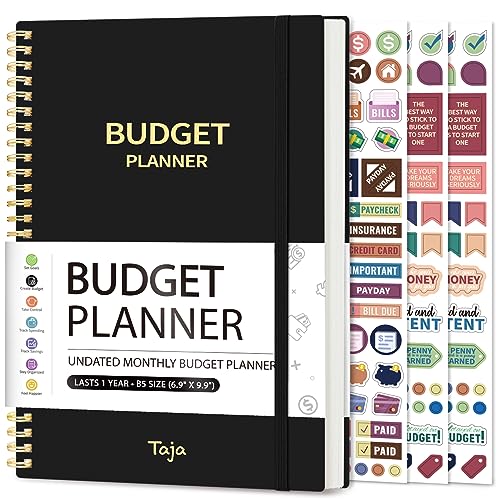
Budget Planner – Monthly Budget Book with Expense Tracker Notebook, Undated Bill Organizer & Finance Planner to Take Control of Your Money, Account Book to Manage Your Finances-Black
Effective Budget Planning – Take control of your finances with the budget account book. This comprehensive planner allows…
As an affiliate, we earn on qualifying purchases.
As an affiliate, we earn on qualifying purchases.
Physical vs. digital notebooks — which one will change your game?
Choosing between a physical or digital notebook depends on your style—and what makes you most consistent. Physical notebooks offer tactile satisfaction; flipping through pages feels more engaging. Digital tools provide instant updates, automatic calculations, and portability.
Say you prefer writing by hand. A high-quality leather-bound journal, like a Moleskine, can make tracking feel more personal and satisfying. On the other hand, if you’re glued to your phone, apps like YNAB or Evernote sync seamlessly across devices, making updates effortless.
Here’s a quick comparison:
| Feature | Physical Notebook | Digital Notebook |
|---|---|---|
| Portability | Limited to carry-around | Always accessible on devices |
| Customization | High—write or sketch freely | High—editable templates, auto-calculations |
| Privacy | Private, no hacking worries | Secure but vulnerable to breaches |
| Ease of updates | Manual, time-consuming | Quick, automatic updates |
Deep down, the choice impacts your consistency. Physical notebooks may encourage more deliberate reflection since writing by hand slows down the process, fostering mindfulness. Digital tools, however, excel in speed and data analysis, making it easier to spot trends over time. Combining both—using a physical notebook for weekly reflections and a digital app for daily tracking—can leverage the strengths of each. The tradeoff? Digital tools often require familiarity with technology, while physical notebooks demand discipline in manual entry. Your choice should align with your habits and what encourages regular use, because consistency is key to reaping the full benefits of your financial plan.
Budget Planner – Monthly Budget Book with Expense Tracker Notebook, Undated Bill Organizer & Finance Planner to Take Control of Your Money, Account Book to Manage Your Finances-Black
Effective Budget Planning – Take control of your finances with the budget account book. This comprehensive planner allows…
As an affiliate, we earn on qualifying purchases.
As an affiliate, we earn on qualifying purchases.
Frequently Asked Questions
What’s the best type of notebook for beginners?
Start simple. A basic spiral notebook or a free digital template works well. Focus on consistency over fancy features until you get the hang of tracking your finances.How often should I review my financial notebook?
Aim for weekly check-ins to update expenses and monthly reviews for overall planning. Regular review keeps your goals realistic and your progress visible.Can a financial notebook really help me get out of debt?
Yes. Tracking every debt and payment creates accountability. Seeing your progress on paper or screen makes it easier to stay motivated and stick to your repayment plan.Are digital templates better than physical notebooks?
It depends on your preference. Digital tools offer automation and portability, while physical notebooks provide a tactile, distraction-free experience. Combining both can be most effective.Budget Planner – Monthly Budget Book with Expense Tracker Notebook, Undated Bill Organizer & Finance Planner to Take Control of Your Money, Account Book to Manage Your Finances-Pink
Effective Budget Planning – Take control of your finances with the budget account book. This comprehensive planner allows…
As an affiliate, we earn on qualifying purchases.
As an affiliate, we earn on qualifying purchases.
Conclusion
Transform your financial chaos into clarity with a simple, dedicated notebook. It’s not about perfection but consistency. As you fill those pages week after week, you’ll start seeing the bigger picture—making smarter choices feel natural.
So grab a notebook, set your goals, and make that first entry. Your future self will thank you—one honest line at a time.