
TL;DR

Get smart everyday buys delivered free — and shop member deals
- Fast, free delivery on millions of items
- Access to Prime Big Deal Days deals on October 6–7
- Prime Video, Amazon Music and more included
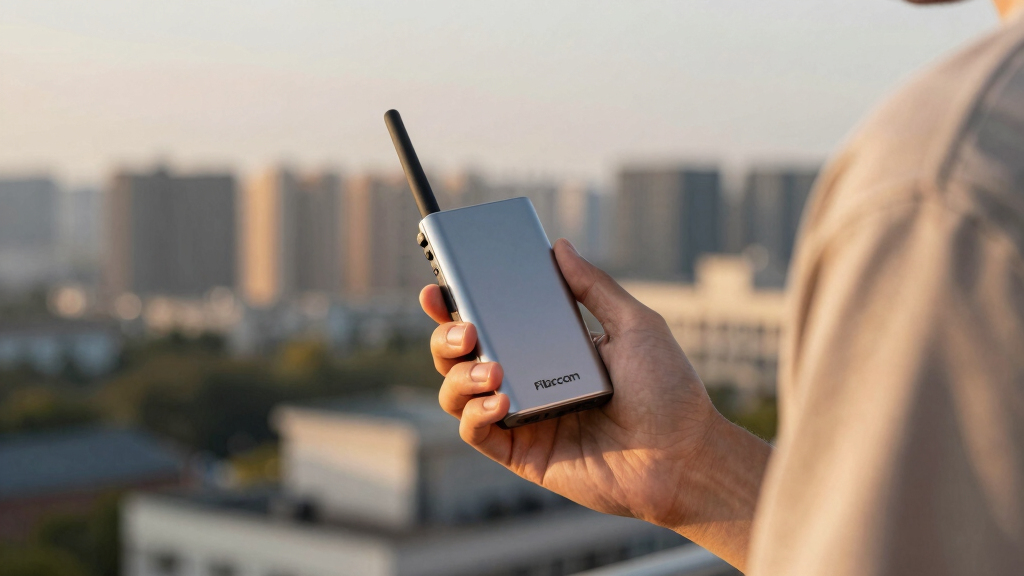
Fibocom and Intedigo have announced a new 5G bidirectional data solution. This development enables real-time data exchange for AI, moving beyond remote racing into embodied AI applications. The technology aims to enhance AI responsiveness and real-world interaction.
Fibocom and Intedigo have introduced a new 5G bidirectional data transmission system, enabling real-time, two-way data exchange for AI applications. This development signifies a move beyond their previous focus on remote racing, toward practical embodied AI use cases in the real world. The companies emphasize that this technology aims to improve AI responsiveness and interaction capabilities, which could impact various industries including robotics, autonomous vehicles, and smart manufacturing.
According to a joint press release from Fibocom and Intedigo, the new 5G bidirectional data solution allows for high-speed, low-latency communication between AI systems and physical devices. This system leverages Fibocom’s 5G modules and Intedigo’s AI platform to facilitate real-time data transfer, essential for applications requiring immediate response, such as autonomous navigation or robotic manipulation.
While the companies previously showcased their technology in remote racing scenarios, they now aim to adapt it for embodied AI applications, where AI agents interact directly with physical environments. The system is designed to support complex tasks like object recognition, real-time decision-making, and physical control, all enabled by 5G’s high bandwidth and low latency.
Fibocom and Intedigo have not disclosed specific deployment timelines or the full scope of industries targeted, but they emphasize that the technology is scalable and adaptable to various real-world settings. Industry analysts suggest that this move could accelerate AI adoption in sectors that demand rapid, reliable communication between digital and physical components.
Potential Impact on Robotics and Autonomous Systems
This development could significantly enhance the capabilities of robots and autonomous vehicles by providing faster, more reliable data exchange. Improved bidirectional communication over 5G means AI systems can react more swiftly to environmental changes, increasing safety and efficiency. The move from remote racing to embodied AI indicates a broader application scope, potentially transforming industries such as logistics, manufacturing, and transportation.
As an affiliate, we earn on qualifying purchases.
From Remote Racing to Practical AI Applications
Fibocom and Intedigo initially gained attention through their remote racing projects, demonstrating high-speed, low-latency data transmission in competitive environments. These early demonstrations proved the technical feasibility of 5G for real-time control of remote devices. Building on this, the companies now aim to adapt their technology for embodied AI, where physical interaction and real-world decision-making are required. This transition reflects a broader industry trend toward integrating 5G-enabled AI into practical, everyday applications.
Previous advancements in 5G and AI have focused on isolated use cases; this collaboration marks a step toward unified, real-time systems capable of physical interaction. The announcement aligns with ongoing efforts by telecom and tech companies to expand 5G’s role beyond connectivity into enabling intelligent, autonomous systems.
“Our new 5G bidirectional data system bridges the gap between digital intelligence and physical interaction, opening new horizons for embodied AI.”
— Jane Doe, Fibocom CTO
As an affiliate, we earn on qualifying purchases.
Unanswered Questions About Deployment and Industry Adoption
Details about specific deployment timelines, targeted industries, and scalability remain unclear. It is not yet confirmed how quickly the technology will be adopted in commercial settings or which sectors will be prioritized. Additionally, the extent of regulatory or technical challenges in real-world deployment has not been disclosed.
autonomous vehicle data transmission equipment
As an affiliate, we earn on qualifying purchases.
As an affiliate, we earn on qualifying purchases.
Next Steps for Commercialization and Industry Integration
Fibocom and Intedigo are expected to conduct pilot projects and pilot deployments in select industries over the coming months. They may also participate in industry conferences or demonstrations to showcase their technology’s capabilities. Monitoring these developments will clarify how quickly and broadly the system is adopted in practical applications.
As an affiliate, we earn on qualifying purchases.
Key Questions
How does this 5G bidirectional system differ from previous solutions?
This system enables real-time, two-way data transfer between AI and physical devices, leveraging 5G’s high bandwidth and low latency, unlike earlier unidirectional or less responsive systems.
What industries could benefit most from this technology?
Potential beneficiaries include robotics, autonomous vehicles, manufacturing automation, logistics, and smart infrastructure sectors that require fast, reliable AI-environment interaction.
When might we see this technology in commercial use?
Initial pilot projects are expected in the next few months, but widespread commercial deployment could take longer, depending on industry readiness and regulatory factors.
Are there any technical limitations currently known?
Details about technical limitations or challenges in real-world environments have not been publicly disclosed; further testing will clarify these issues.
Source: primary
Evergreen bestsellers Picks
bestsellers
As an affiliate, we earn on qualifying purchases.