To avoid holiday payment scams, always verify urgent requests for gift cards or personal info through separate, trusted channels before acting. Be cautious of phishing emails that mimic reputable companies and avoid clicking suspicious links or attachments. Use secure websites and trusted payment methods for online shopping, and double-check the authenticity of any unfamiliar messages. Staying vigilant and aware of common scam tactics helps keep your finances safe—keep exploring to learn more about protecting yourself this season.
Key Takeaways
- Verify all payment requests through official channels before sharing personal or financial information.
- Use trusted websites and secure payment methods when shopping online.
- Be cautious of urgent messages that pressure you to act quickly or share sensitive data.
- Avoid clicking on links or downloading attachments from unknown or suspicious sources.
- Recognize and report common scam signs, such as fake sender details or unexpected gift card requests.
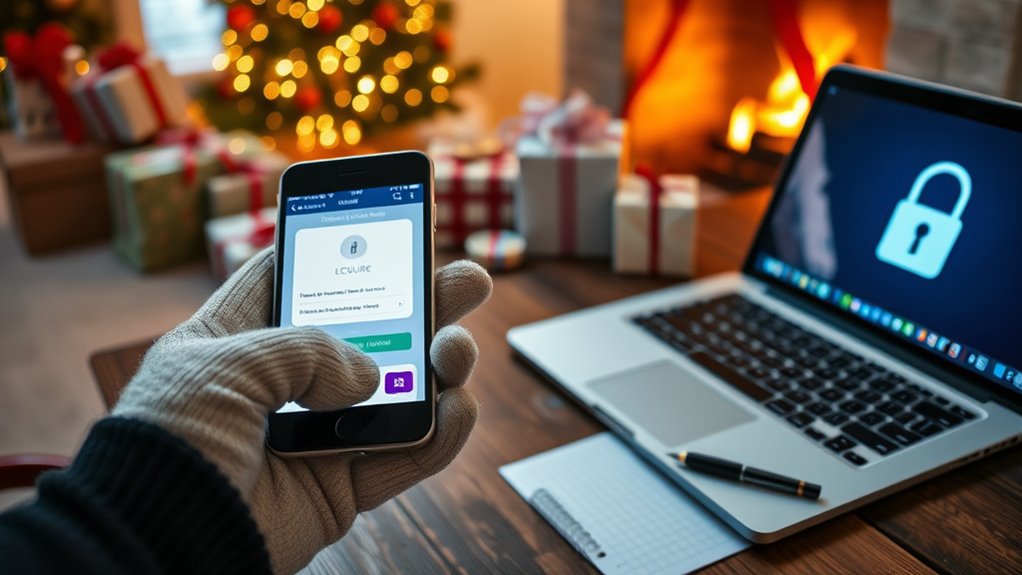
The holiday season is a joyful time for giving and celebrating, but it also brings an increase in payment scams and frauds. As you shop online or in stores, you need to stay alert for common tactics scammers use to steal your money and personal information. One of the most prevalent schemes during this period involves gift card scams. Hackers often pose as friends, family members, or trusted companies and convince you to buy gift cards, claiming they need them for urgent reasons. Once you provide the gift card details, the scammer quickly drains the balance, leaving you with no way to recover your money. To avoid this, always verify the request through a separate communication channel. If someone claims to be a loved one in trouble, call them directly before purchasing any gift cards. Never share gift card codes or receipts with anyone unless you’re absolutely sure of their identity. Be cautious of unsolicited messages or emails asking for gift card information, as these are common tactics used in gift card scams.
Phishing emails are another major threat during the holidays. Scammers send fake emails that appear to be from reputable companies, banks, or even friends, trying to trick you into revealing sensitive information like passwords, credit card numbers, or bank details. These emails often create a sense of urgency, such as claiming your account has been compromised or that you need to confirm your payment details to avoid service interruption. If you receive an email asking for personal information, don’t click on any links or download attachments. Instead, go directly to the company’s official website or contact their customer service to verify the message’s authenticity. Always scrutinize the sender‘s email address and look for signs of fraud, such as misspelled words or suspicious URLs. Remember, reputable companies will never ask for sensitive information via email. Additionally, staying informed about home improvement safety tips can help you recognize and avoid scams related to home repairs or upgrades during the holiday season.
Being cautious and aware during the holiday shopping season can save you from falling victim to scams. Stick to trusted websites and payment methods, and avoid clicking on links from unknown sources. When in doubt, double-check the authenticity of any request for money or personal information before taking action. Remember, scammers thrive on creating a sense of urgency and exploiting your desire to give or help others. By staying vigilant and following simple safety tips, you can enjoy the holiday season without falling prey to these scams. Protect your finances, keep your personal data safe, and enjoy the festivities knowing you’ve taken steps to prevent holiday payment frauds.

RFID Blocking Cards,Contactless NFC Debit Credit Card Passport ID Card Protector,Slim RFID Card Blocker for Wallet Safe Card Shield, Anti-Theft& Scam, Credit Card Fraud Shield-6 Pack
𝑺𝒆𝒄𝒖𝒓𝒆 𝒀𝒐𝒖𝒓 𝑴𝒐𝒏𝒆𝒚/𝑰𝒏𝒇𝒐𝒓𝒎𝒂𝒕𝒊𝒐𝒏:Every year, due to credit card fraud, the total loss exceeds billions of dollars. Smart as…
As an affiliate, we earn on qualifying purchases.
As an affiliate, we earn on qualifying purchases.
Frequently Asked Questions
How Can I Verify the Legitimacy of a Holiday Payment Request?
To verify a holiday payment request’s legitimacy, start with bank verification by contacting your bank directly through official channels to confirm the request’s authenticity. Always look for clear payment confirmation details, such as official receipts or transaction IDs. Be cautious of unverified email links or urgent requests. If anything seems suspicious, don’t hesitate to double-check with the sender and your bank before proceeding with the payment.
What Are Common Signs of Holiday Payment Scams?
Did you know that 60% of holiday scams involve phishing emails or fake payment links? You should watch out for urgent messages asking for personal info or suspicious links that seem out of place. Scammers often create fake payment links that look legit, but lead to fraud. Be cautious, verify sender details, and avoid clicking on unexpected links to protect yourself from holiday payment scams.
Are There Specific Apps or Tools to Detect Fraud?
Yes, you can use secure payment apps like PayPal or Venmo that offer built-in fraud detection tools to protect your transactions. Many apps automatically monitor for suspicious activity and alert you if anything seems off. Additionally, consider installing reputable third-party fraud detection tools on your devices, which can help identify and block fraudulent transactions before they affect you. Always keep your apps updated for peak security.
How Should I Report Suspected Holiday Payment Scams?
Think of reporting as your safety net catching the scammer’s fall. You should contact the right reporting channels, like your bank or official consumer protection agencies, to take swift action. Document every detail of the scam—screenshots, emails, transaction records—like pieces of a puzzle. This scam documentation helps authorities track down fraudsters. Don’t wait—report immediately to stop them from spinning more deception this holiday season.
Can Using Public Wi-Fi Increase My Scam Risk?
Using public Wi-Fi can increase your scam risks because it’s often unsecured, making it easier for scammers to intercept your data. When you connect to public Wi-Fi, hackers might try to access your personal information or trick you into revealing sensitive details. To stay safe, avoid making financial transactions on public networks, use a VPN, and turn off sharing settings. Protect yourself from holiday payment scams by staying vigilant.

PAYMENT AND SHIPPING ESSENTIALS: Returns, Packaging, and Customer Service for Online Stores
As an affiliate, we earn on qualifying purchases.
As an affiliate, we earn on qualifying purchases.
Conclusion
As you navigate the festive season, picture your hard-earned money as delicate snowflakes—beautiful, but easily lost in a sudden gust. Stay vigilant, double-check every transaction, and trust your instincts like a guiding lantern in a winter night. By staying alert and cautious, you’ll keep your holiday cheer bright and your finances safe, preventing scammers from turning your joyful season into a frosty setback. Protect your holiday magic—stay informed and vigilant.
Tool Phishing Text Email detection by Natural language processing with Machine Learning- Research paper
As an affiliate, we earn on qualifying purchases.
As an affiliate, we earn on qualifying purchases.
![LifeLock Standard Identity Theft Protection, Individual Plan, 1 Year Subscription, Activation Required [Subscription]](https://m.media-amazon.com/images/I/41JL0vY3nTL._SL500_.jpg)
LifeLock Standard Identity Theft Protection, Individual Plan, 1 Year Subscription, Activation Required [Subscription]
EASY TO REDEEM After ordering, click the Activate Your Subscription button on the order page or in your…
As an affiliate, we earn on qualifying purchases.
As an affiliate, we earn on qualifying purchases.