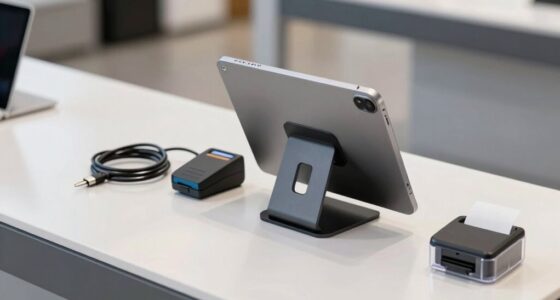
To implement 3D Secure authentication to reduce fraud, start by choosing a payment gateway that supports the protocol and integrate it smoothly into your checkout process. Make certain the setup is mobile-friendly, tests run across devices, and fallback options are in place for unsupported cases. Leverage the latest versions like 3D Secure 2 for a seamless user experience. Keep security standards up-to-date to stay protected—continuing your efforts can help you maximize safety and minimize fraud risks.
Key Takeaways
- Integrate a trusted payment gateway that supports 3D Secure, ensuring seamless and secure authentication during checkout.
- Update your checkout process to include 3D Secure prompts, verifying cardholder identity before transaction approval.
- Test the implementation across devices and browsers, incorporating fallback options for unsupported cases.
- Leverage 3D Secure 2’s frictionless features by using device info and behavioral analytics to minimize user friction.
- Regularly update security standards and monitor for newer versions, ensuring ongoing fraud prevention and compliance.
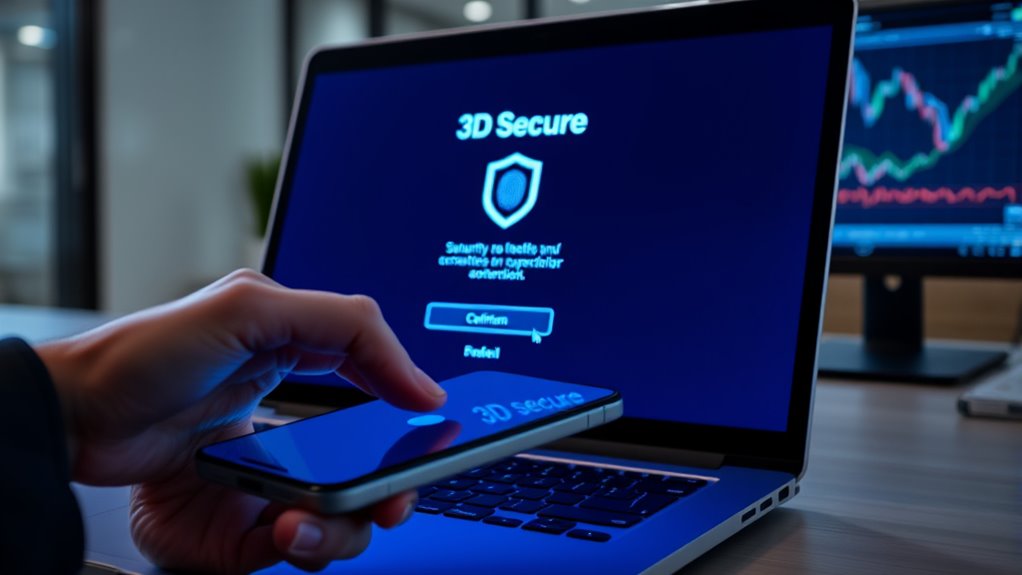
Implementing 3D Secure authentication is essential for enhancing the security of online transactions and reducing fraud. As more consumers embrace mobile payments, ensuring the safety of these transactions becomes increasingly critical. When you integrate 3D Secure into your payment system, you’re adding an extra layer of protection that verifies the identity of the cardholder during the checkout process. This protocol is designed to prevent unauthorized use of payment cards, making it a vital component of your fraud prevention strategy. For merchants, seamless integration is key. You need to incorporate 3D Secure smoothly into your existing payment gateway, whether you’re using a third-party provider or your own infrastructure. Proper merchant integration ensures that the authentication process doesn’t disrupt the user experience, especially on mobile devices where convenience is paramount.
To implement 3D Secure effectively, start by selecting a trusted payment processor or gateway that supports the protocol. Most major providers now offer built-in 3D Secure features, simplifying the integration process. Once you’ve chosen your provider, you’ll need to update your checkout flow to include the 3D Secure step. This often involves adding a verification layer, such as a password prompt or biometric check, during the transaction. When a customer makes a purchase using a mobile device, the authentication should be optimized for mobile payments; this means minimizing additional steps and ensuring the interface is mobile-friendly. A smooth, fast authentication process encourages customer trust and reduces the likelihood of cart abandonment.
Additionally, staying informed about emerging security standards, like tokenization, can further enhance transaction safety. It’s also crucial to test your integration thoroughly before going live. Verify that 3D Secure prompts appear correctly across different devices and browsers. Pay attention to the user experience—if it’s too cumbersome, customers may become frustrated and abandon their purchase. You should also consider implementing fallback mechanisms for cases where 3D Secure isn’t supported or encounters errors. These measures can help maintain conversion rates without compromising security. Additionally, staying updated with the latest 3D Secure versions, such as 3D Secure 2, is vital. The newer version offers a frictionless experience for consumers, especially on mobile, by leveraging device information and behavioral analytics to assess transaction risk without requiring additional authentication steps in many cases.
Top picks for "implement secure authentication"
Open Amazon search results for this keyword.
As an affiliate, we earn on qualifying purchases.
Frequently Asked Questions
Does 3D Secure Support Mobile Payment Methods?
Yes, 3D Secure supports mobile payment methods through mobile optimization and app integration. You can implement it seamlessly within your mobile apps, ensuring secure transactions while maintaining a smooth user experience. By integrating 3D Secure into your payment flows, you enhance security for mobile payments, reducing fraud risk. This approach helps you provide trustworthy, user-friendly mobile payment options that protect both your business and your customers.
How Does 3D Secure Impact Checkout Speed?
You’ll find that implementing 3D Secure can create slight checkout delays, with studies showing a 10-15% increase in authentication friction. This may slow down the process, but it markedly reduces fraud risk. While some customers experience minor checkout delays, the added security benefits outweigh the brief inconvenience. To minimize friction, streamline the authentication process, ensuring your customers complete purchases smoothly while staying protected.
Can 3D Secure Be Integrated With All Payment Gateways?
Yes, you can integrate 3D Secure with most payment gateways, but be aware of potential integration challenges and compatibility issues. Some gateways may require specific updates or plugins to support 3D Secure, so you’ll want to verify their documentation. If you encounter compatibility issues, contacting your payment provider for guidance or considering alternative gateways that fully support 3D Secure can help guarantee a smooth implementation.
What Are the Customer Experience Considerations for 3D Secure?
Think of 3D Secure as a gatekeeper; it must be smooth to keep customers happy. You should guarantee the user interface is simple and intuitive, minimizing friction. Prioritize user convenience by reducing unnecessary steps and delays. Clear instructions and seamless authentication make the experience feel like a friendly handshake rather than a barrier, encouraging trust and reducing cart abandonment. Good design turns security into a pleasant experience, not a hurdle.
Is 3D Secure Compliance Mandatory for Online Merchants?
You don’t necessarily have to implement 3D Secure to stay compliant, but regulatory requirements and industry standards increasingly favor its use. Many regions, like the EU with PSD2, make Strong Customer Authentication mandatory, which often involves 3D Secure. To avoid penalties and reduce fraud, it’s wise to adopt this protocol, aligning with industry standards and demonstrating your commitment to secure transactions.
Conclusion
By implementing 3D Secure authentication, you not only enhance your transaction security but also build trust with your customers, much like the sturdy defenses of a medieval castle. Remember, in today’s digital age, fraud can strike faster than a knight in a joust. Don’t wait for the Black Plague of data breaches—adopt this technology now, and stay ahead of cyber threats, ensuring your business remains resilient and secure in the modern battlefield.