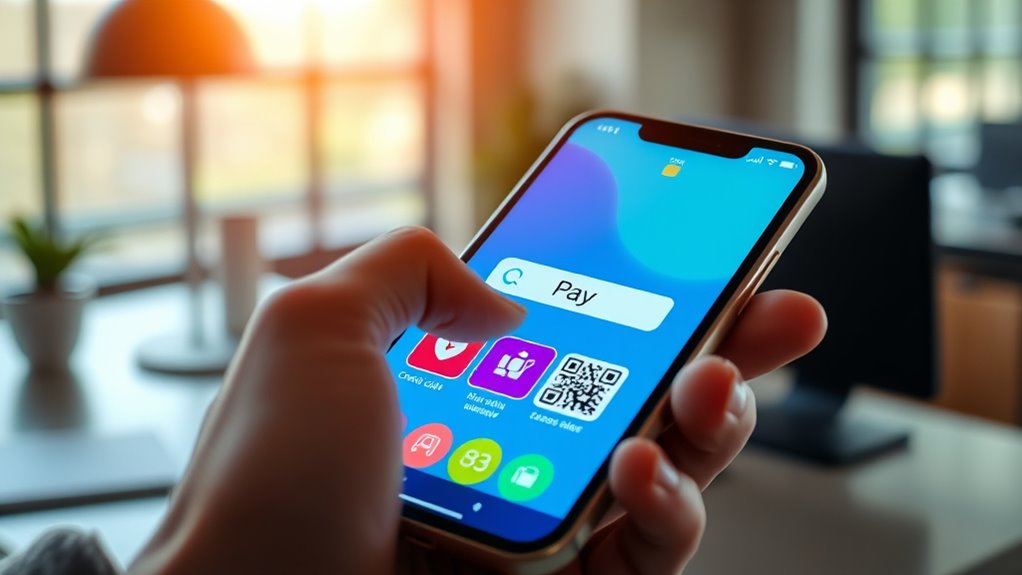

To integrate payments into your mobile app, choose a reliable payment gateway with easy-to-use SDKs and APIs. Guarantee you prioritize security by implementing robust encryption, PCI DSS compliance, and multi-factor authentication. Design a smooth, intuitive checkout process with clear instructions and familiar payment methods like digital wallets or credit cards. Incorporate error handling and security cues to reassure users. Keep security protocols updated — exploring further details will help you create a seamless, secure payment experience for your users.
Key Takeaways
- Select a reliable payment gateway offering SDKs/APIs compatible with your app platform.
- Ensure PCI DSS compliance and implement SSL/TLS encryption for secure data transmission.
- Design a seamless, user-friendly checkout flow with familiar payment options like digital wallets or credit cards.
- Test payment integration thoroughly across devices and operating systems to ensure consistency and reliability.
- Communicate clear privacy policies and incorporate fraud detection tools to protect user data and transactions.
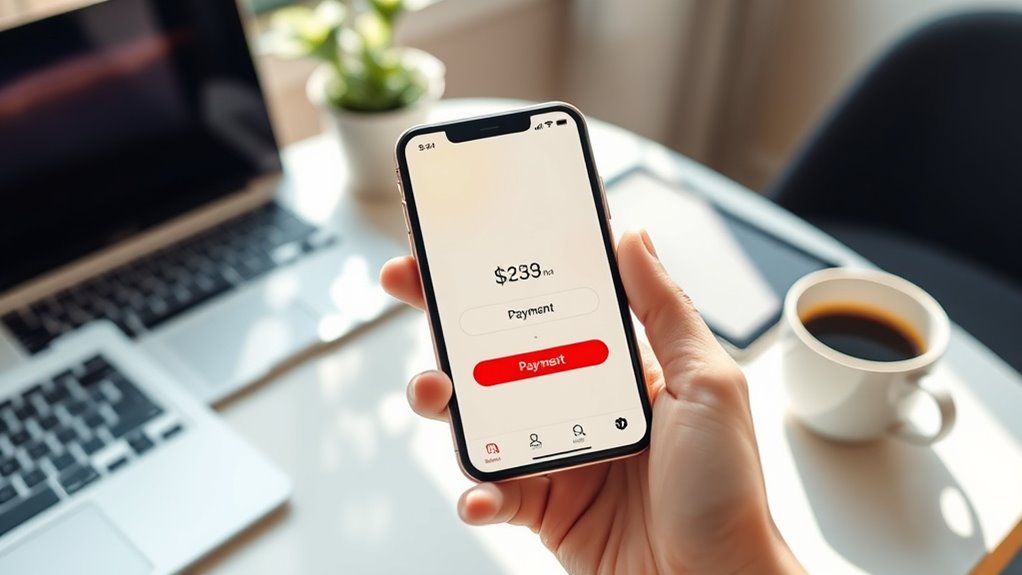
Adding payment functionality to your mobile app can substantially enhance user experience and boost revenue. When you incorporate a seamless payment system, your users can complete transactions quickly and effortlessly, making your app more attractive and convenient. To achieve this, you need to prioritize security protocols that protect sensitive financial data and foster trust. Implementing robust encryption methods, such as SSL/TLS, ensures that payment details are transmitted securely. Additionally, adopting industry standards like PCI DSS compliance demonstrates your commitment to safeguarding user information. Clear communication about security measures reassures users and encourages repeat transactions, ultimately improving their overall experience.
User experience is at the core of successful payment integration. You should aim for a smooth, intuitive checkout process that minimizes friction. Avoid lengthy forms or unnecessary steps that could cause frustration or abandonment. Instead, leverage pre-filled fields, auto-detection of card details, and one-tap payment options where possible. Incorporating familiar payment methods like credit cards, digital wallets, or popular services such as Apple Pay and Google Pay can simplify the process further. It’s also essential to provide visual cues and progress indicators so users know where they are in the transaction flow. When users feel confident their information is secure and the process is straightforward, they’re more likely to complete their purchases without hesitation.
Choosing the right payment gateway is vital. You want a provider that offers reliable transaction processing, transparent fees, and excellent customer support. Many gateways provide SDKs and APIs that integrate smoothly with your app’s existing architecture. By carefully selecting a provider, you can customize the payment experience to match your app’s design and user expectations. Remember to test the integration thoroughly across different devices and operating systems to ensure consistent performance. Incorporate error handling and fallback options, so if a payment fails, users are guided smoothly to resolve issues rather than abandoning their cart.
Finally, keep privacy considerations in mind. Clearly communicate your privacy policy and reassure users that their data is handled responsibly. Implementing multi-factor authentication and fraud detection tools further enhances security and user trust. Regularly updating your security protocols keeps your payment system resilient against new threats. A well-designed payment process also benefits from understanding security protocols that protect sensitive data. By focusing on both security and user experience, you create a payment system that feels reliable, convenient, and safe—encouraging users to make transactions confidently and frequently. This balanced approach not only improves customer satisfaction but also drives the growth and success of your mobile app.
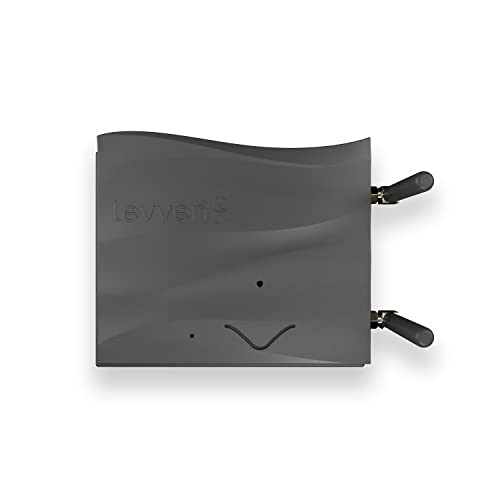
Levven Q Mobile Access Gateway
CONTROL, YOUR WAY – Connect and control all Levven devices in your home from your smartphone, locally and…
As an affiliate, we earn on qualifying purchases.
As an affiliate, we earn on qualifying purchases.
Frequently Asked Questions
What Are the Best Payment Gateway Options for Small Apps?
You should consider popular payment gateways like Stripe, PayPal, and Square, which are great for small apps. They support mobile wallets for quick, secure transactions and some even accept cryptocurrency payments. These options are easy to integrate, reliable, and offer flexible features, making them ideal for small apps looking to provide seamless payment experiences. Choose one based on your target audience and specific payment needs for the best results.
How Do I Ensure PCI Compliance During Integration?
To guarantee PCI compliance during integration, you should implement robust encryption standards like AES to protect sensitive data, and use tokenization methods to replace card details with secure tokens. Regularly update your security protocols, limit data access, and conduct vulnerability scans. Additionally, follow PCI DSS guidelines strictly, document your security measures, and work with compliant payment gateways to maintain a secure environment for your users’ payment information.
Can I Customize the Checkout Interface for Branding?
You can absolutely customize the checkout interface for branding. Remember, “the proof of the pudding is in the eating,” so explore the branding options provided by your payment gateway. Most platforms allow checkout customization, letting you add logos, choose colors, and tailor the design to match your app’s style. This not only enhances user experience but also reinforces your brand identity during the payment process.
What Are the Common Security Risks Involved?
You face common security risks like payment fraud and data breaches when integrating payments. To protect users, implement robust data encryption to safeguard sensitive information during transactions. Stay vigilant about payment fraud by monitoring suspicious activities and using fraud detection tools. Regularly update your security protocols and ensure compliance with industry standards like PCI DSS. This proactive approach helps prevent financial losses and maintains user trust in your app.
How Do I Handle Refunds and Chargebacks Effectively?
To handle refunds and chargebacks effectively, you should implement solid refund management processes and prioritize chargeback prevention. Clearly communicate your refund policies to users, process refunds promptly, and keep detailed records of all transactions. Use fraud detection tools to identify suspicious activity early, and respond quickly to chargeback notices with supporting evidence. Proactive management helps protect your reputation and reduces financial losses.

PCI DSS in Action: Implementing Cardholder Data Security and Compliance in Modern Payment Environments
As an affiliate, we earn on qualifying purchases.
As an affiliate, we earn on qualifying purchases.
Conclusion
Now that you know the essentials of integrating payments into your mobile app, you’re ready to create a seamless, money-making powerhouse. With the right tools and approach, you’ll turn your app into a payment magnet that could outshine even the biggest players in the industry. Don’t wait—dive in and make your app unstoppable. Remember, a smooth payment experience isn’t just an upgrade; it’s the secret weapon to skyrocketing your success!
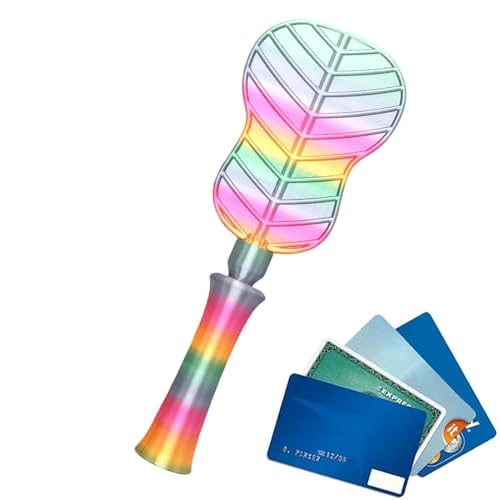
Wireless Payment Wand – Fast Contactless Payment Tool for Businesses | Sleek Portable Device with Technology, Accepts Cards, Mobile Payments Digital Wallets Enhances 11.81×3.9×1.2in
Innovative No-Card Convenience: With its innovative wand-style design, the Credit Card Wand provides a secure card slot and…
As an affiliate, we earn on qualifying purchases.
As an affiliate, we earn on qualifying purchases.

The SSL/TLS Handbook: Encryption, Certificates, and Secure Protocols
As an affiliate, we earn on qualifying purchases.
As an affiliate, we earn on qualifying purchases.