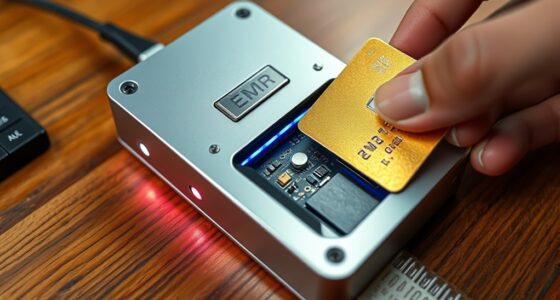
To prevent card skimming and POS fraud in your store, regularly inspect card readers for tampering, loose parts, or unusual attachments. Upgrade to EMV chip-enabled terminals that use dynamic data, making skimming less effective. Train staff to recognize suspicious activity and ensure surveillance cameras monitor your payment areas. Educate customers on checking for tampering before swiping. Combining these steps with strict access control and ongoing security updates helps safeguard your store—learn more to strengthen your defenses.
Key Takeaways
- Regularly inspect card readers for signs of tampering or unusual attachments.
- Upgrade to EMV chip-enabled terminals to reduce skimming risks.
- Install security seals and surveillance cameras to detect unauthorized access.
- Train staff to recognize suspicious activity and educate customers on checking for tampering.
- Maintain a comprehensive security plan combining technology, vigilance, and customer awareness.
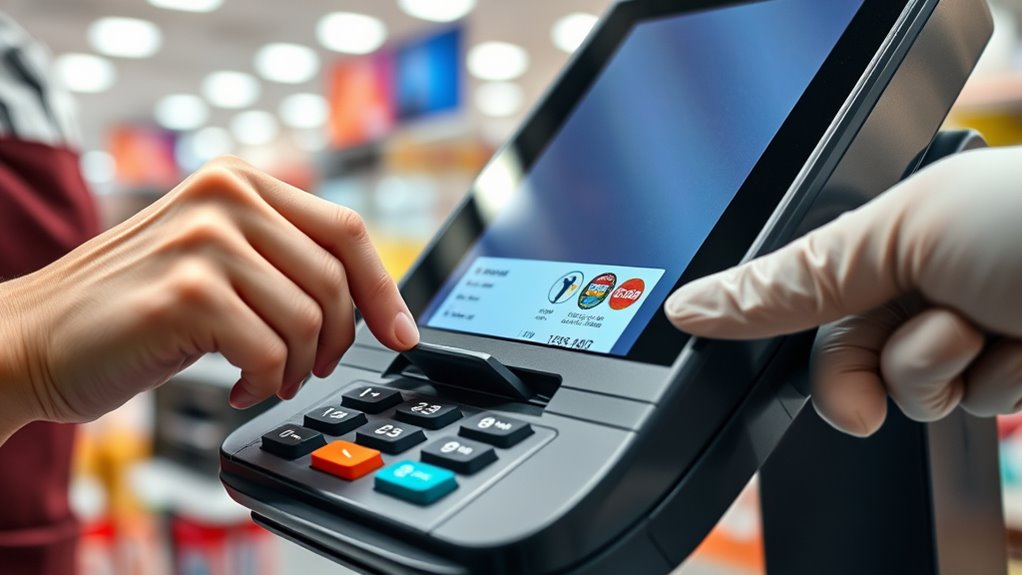
Have you ever wondered how criminals steal your card information at the point of sale? It’s a common concern, especially with the rise of card skimming and point-of-sale (POS) fraud. When customers swipe their cards, whether through a magnetic strip or a chip reader, they expect their data to stay secure. Unfortunately, fraudsters are always looking for ways to intercept that information. Understanding how these scams work can help you implement effective prevention measures.
Most card skimming occurs when thieves attach small, discreet devices called skimmers onto card readers. These devices mimic the appearance of legitimate equipment but secretly record the data from the magnetic strip of credit or debit cards. When a customer swipes their card, the skimmer captures the card number, expiration date, and other sensitive info. This stolen data can then be used for unauthorized transactions or sold on the black market. To combat this, always inspect your card readers regularly for any signs of tampering. Look for loose parts, unusual attachments, or anything that appears out of place. Installing security seals can also help you detect unauthorized access quickly.
Thieves attach skimmers to card readers to steal sensitive data during transactions.
While magnetic stripe technology is still widely used, the industry is shifting toward chip-enabled cards and readers. A chip reader offers a notable security upgrade because it uses dynamic data that changes with each transaction, making it much harder for fraudsters to clone cards. Encourage your customers to use chip cards whenever possible, as they reduce the risk of skimming. Ensure that your POS systems are equipped with updated chip readers that comply with current security standards. If your store still relies on magnetic stripe readers, consider upgrading to EMV-compatible terminals. These devices not only accept chip cards but also support contactless payments, adding an extra layer of security.
Another important step is to train your staff to recognize suspicious activity around card readers. Thieves might try to attach skimmers during off-hours or in less visible areas. Regularly cleaning and inspecting your terminals can help you spot small devices or tampered parts before any damage occurs. You should also implement strict access controls—only authorized personnel should have the ability to service or move your POS equipment. Additionally, consider installing surveillance cameras in areas with card readers to monitor activity and catch any tampering attempts in real time.
Finally, educate your customers about the importance of checking card readers before swiping. Encourage them to look for signs of tampering and to report anything suspicious immediately. By combining vigilant inspection, staff training, and technology upgrades like chip readers, you can considerably reduce the risk of card skimming and POS fraud in your store. Protecting your customers’ data isn’t just good business—it’s essential to maintaining their trust and your reputation. Being aware of potential threats and staying vigilant can greatly enhance your security measures.

ISO7816 Contact EMV SIM eID PC/SC USB CCID Smart IC Chip Card Reader Writer Programmer with 2pcs SLE4442 Cards + SDK Kit(Program Required) for Professional Engineer
Technical Required: This device design for professional engineer and who knows how to program for contact Chip Cards….
As an affiliate, we earn on qualifying purchases.
As an affiliate, we earn on qualifying purchases.
Frequently Asked Questions
How Can I Detect Hidden Card Skimming Devices?
To detect hidden card skimming devices, you should closely inspect your POS terminals and card readers for any suspicious changes. Look for loose or unusual device wiring, and check for any small, hidden cameras nearby that could be used to record card information. Carefully examine the card reader’s surface for tampering or unusual attachments. Regularly perform security audits to verify no hidden devices or cameras have been installed, keeping your transactions secure.
What Are the Signs of Compromised POS Systems?
You notice your POS system behaves strangely—slow responses, error messages, or unexpected pop-ups. You see unauthorized transactions, unusual activity, or unfamiliar devices attached. The signs of a compromised POS system include suspicious hardware, abnormal transaction patterns, and compromised security features like EMV chip or PIN verification failures. Stay vigilant, regularly update your software, and inspect your equipment to catch these issues early and keep your store safe.
Are Contactless Payments Safer From Skimming?
Yes, contactless payments are generally safer from skimming because they use contactless security features and transaction encryption, making it harder for fraudsters to intercept data. You benefit from reduced physical contact with cards, lowering the chances of skimming devices being installed. However, verify your contactless payment methods are updated with the latest security protocols, and always monitor your accounts for suspicious activity to maximize protection.
How Often Should POS Hardware Be Inspected?
You should inspect your POS hardware at least monthly—yes, every four weeks—because, surprise, even the most high-tech equipment needs regular POS maintenance. Skimming devices can be sneaky, so routine hardware inspections are your best defense. Don’t wait until something’s obviously wrong; catch potential fraud early with diligent hardware inspections. Trust us, your customers and your peace of mind will thank you for staying vigilant.
What Training Is Recommended for Staff on Fraud Prevention?
You should provide your staff with exhaustive training on fraud prevention and employee awareness, focusing on recognizing signs of theft and card skimming devices. Teach them to stay vigilant during transactions, monitor POS hardware regularly, and report suspicious activity immediately. By empowering your employees with this knowledge, you create a strong line of defense against theft and POS fraud, reducing the risk of financial loss and maintaining a secure shopping environment.

50 Pieces Steel Security Cable Seal – Disposable Numbered Anti-Tamper Tags for Electricity/Water Meters – Self-Locking Shipping Padlock (Blue)
Tamper protection: the security cable tags are for single use only and can't be opened once locked, so…
As an affiliate, we earn on qualifying purchases.
As an affiliate, we earn on qualifying purchases.
Conclusion
By staying vigilant and regularly inspecting your POS systems, you can catch signs of skimming devices before they do real harm. Some experts believe that advanced encryption and real-time monitoring are the keys to stopping fraud altogether. While no method is foolproof, combining technology with consistent staff training makes your store a less attractive target. Don’t assume it won’t happen to you—prevention starts with proactive awareness and quick action.

Guardhouse Mini Camera, Two Way Audio, 120°Pan Tilt Rotation, Local MicroSD Card Storage, WiFi Remote Mobile App Control for Indoor,Outdoor Security Camera for Homes and Retail Stores (Camera+32G)
1.Ultra HD View: Enjoy crystal-clear monitoring day and night with ultra-high-definition video and a 90° wide-angle lens, covering…
As an affiliate, we earn on qualifying purchases.
As an affiliate, we earn on qualifying purchases.

TamperSeals Group – 100pcs 100% Total Transfer Tamper Evident Security Warranty Void Stickers/Labels/Seals/Tapes for Shipping, Package, Retail, Food, Medicine (Red, 1 x 3.35 Inches, Serial Numbers)
【Keep Your Assets 100% Secured】: Compared with others’ only 50-60% partial transfer feature, our security prints or patterns…
As an affiliate, we earn on qualifying purchases.
As an affiliate, we earn on qualifying purchases.