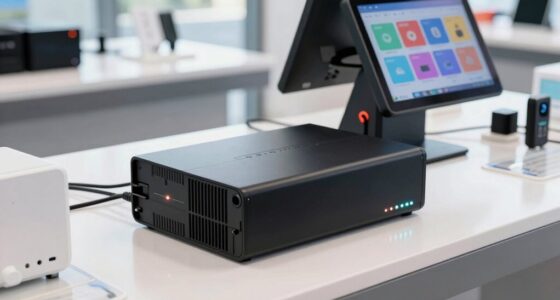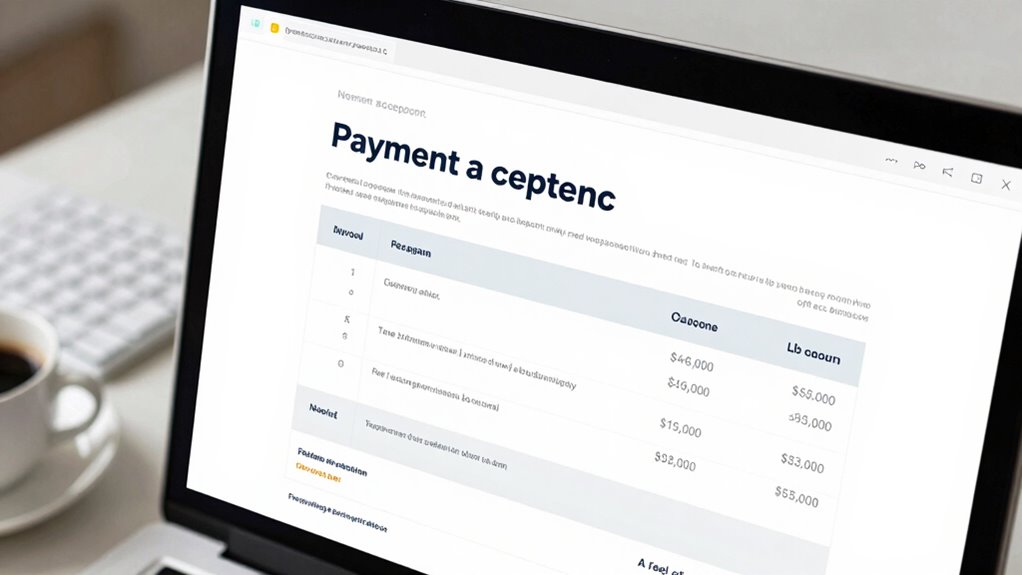

To spot hidden fees in payment acceptance quotes, thoroughly review all parts of the proposal, not just the advertised rates. Look for extra charges like setup fees, equipment costs, security fees, or charges for specific card types and international transactions. Pay attention to contract terms and cancellation policies to avoid unexpected exit costs. If you keep an eye on these details, you’ll be better prepared to identify and avoid costly surprises down the line.

Get smart everyday buys delivered free with Prime
- Fast, free delivery on millions of items
- Prime Video, Amazon Music and more included
- Member-only deals all year
Key Takeaways
- Review all fee disclosures, including flat, percentage, and combined charges, beyond the advertised rates.
- Scrutinize contract terms for early termination, upgrade, or service change fees.
- Confirm costs for equipment, software, security, and PCI compliance beyond initial quotes.
- Compare total costs, including monthly, setup, and transaction fees, not just per-transaction rates.
- Ask providers about hidden charges for international cards, chargebacks, refunds, and reporting.

When you’re comparing payment acceptance quotes, it’s easy to focus on the advertised rates and overlook concealed fees that can inflate your costs. These fees can sneak in through different channels, especially when you’re evaluating various merchant account types. Each type of account—whether it’s a traditional merchant account, an integrated payment gateway, or a mobile processing solution—has its own fee structure. Understanding these differences helps you avoid surprises later. Some merchant account types might have low transaction fees but charge hefty monthly maintenance or setup costs. Others could offer lower overall costs but impose additional fees for certain card types or international transactions. Knowing what to look for means examining the entire fee structure, not just the headline rate.
Carefully review all fees and account types to avoid unexpected costs in payment processing.
Transaction fee structures are another key area where hidden costs hide. Many quotes list a simple percentage per transaction, but this is only part of the picture. Some providers charge flat fees for each transaction, while others combine percentage-based fees with fixed amounts. It’s essential to understand precisely how these fees stack up, especially if you process a high volume of small transactions or large payments. Keep an eye out for fees that apply to specific card types, such as rewards or corporate cards, which often carry higher rates. Additionally, some providers charge for chargebacks, refunds, or even for accessing detailed reports. These charges can add up quickly if you’re not vigilant. Thoroughly reviewing the entire fee structure can prevent costly surprises down the line. Furthermore, being aware of the fee disclosures can help you negotiate better terms and prevent any unexpected charges from catching you off guard. Also, understanding the regulatory environment surrounding payment processing can help you identify potential compliance-related fees or restrictions that may impact your costs.
Another common source of hidden fees comes from equipment and software costs. Some quotes may seem affordable until you realize you’ll need to rent or buy card terminals, software licenses, or payment gateways. These expenses can be billed monthly or as one-time fees and are often buried in the fine print. Also, don’t overlook potential PCI compliance fees or security-related charges, which some merchant accounts impose to ensure your system remains secure. Additionally, adopting holistic SEO strategies, such as technical, on-page, and off-page optimization, can help improve your online visibility and reduce reliance on paid advertising, ultimately lowering your overall marketing costs. Being aware of these additional costs allows you to compare offers more accurately and avoid unexpected charges.
Finally, be cautious about contracts and cancellation policies. Some providers lock you into long-term agreements with hefty early termination fees, which aren’t always clearly stated upfront. Always ask for a detailed breakdown of all possible fees, including those for account upgrades, downgrades, and service changes. The more transparent the provider, the less likely you’ll get caught paying for services you didn’t anticipate. By carefully scrutinizing these elements—merchant account types, transaction fee structures, and additional charges—you can confidently identify hidden costs and choose a payment acceptance solution that truly fits your business needs.
As an affiliate, we earn on qualifying purchases.
Frequently Asked Questions
Are Hidden Fees Legal in Payment Processing Agreements?
Hidden fees in payment processing agreements are generally illegal if they violate fee transparency laws or are buried within complex contract clauses. You have the right to clear, upfront information about costs. Always review contract clauses carefully and ask vendors for detailed fee disclosures. If fees aren’t transparent, it’s a red flag, and you should seek providers committed to honest fee practices to avoid unexpected charges.
How Often Do Hidden Fees Typically Appear in Quotes?
Did you know that nearly 60% of payment processing quotes contain hidden fees? Hidden fees often sneak into quotes due to unclear pricing structures, making fee transparency essential. These fees can appear frequently, sometimes with every month or transaction. To avoid surprises, always scrutinize quotes carefully, ask about all costs upfront, and guarantee the pricing structure is clear and transparent. This way, you can better control your payment processing expenses.
Can I Negotiate Hidden Fees With Providers?
Yes, you can negotiate hidden fees with providers. Focus on fee transparency and review contract terms thoroughly before signing. Ask for clear explanations of all charges and request adjustments if fees seem excessive or unclear. Being proactive and informed helps you avoid unexpected costs. Open communication can lead to better terms, ensuring you understand exactly what you’re paying for and making negotiations smoother and more effective.
What Are Common Red Flags Indicating Hidden Charges?
Around 60% of merchants report unexpected fees in their payment processing, highlighting the importance of fee transparency. Red flags include vague language, inconsistent fee structures, and unclear contract terms. Always scrutinize for hidden charges, and prioritize providers that offer clear, straightforward contract clarity. If fees aren’t transparently outlined, it’s a sign you might be facing sneaky charges that could impact your bottom line.
Do All Payment Providers Include Hidden Fees?
Not all payment providers include hidden fees, but many lack full fee transparency. You should always review customer disclosures carefully to understand what’s included and what might be extra. Some providers may advertise low rates but add charges later, so ask questions upfront. By comparing proposals and requesting detailed fee breakdowns, you guarantee you’re not caught off guard by unexpected costs, ultimately protecting your business’s bottom line.
As an affiliate, we earn on qualifying purchases.
Conclusion
Spotting hidden fees is like finding a needle in a haystack, but with a keen eye, you can avoid surprises down the line. Carefully review every line of your payment acceptance quotes, ask questions about unclear charges, and compare multiple providers. Don’t let hidden fees sneak up on you like a thief in the night. Stay vigilant and informed, so you can make confident decisions that save you money and keep your business running smoothly.
As an affiliate, we earn on qualifying purchases.
credit card processing equipment
As an affiliate, we earn on qualifying purchases.
As an affiliate, we earn on qualifying purchases.
Halloween Picks
halloween
As an affiliate, we earn on qualifying purchases.