

To understand your merchant account statement, start by reviewing the gross sales and subtracting refunds and chargebacks to see your net income. Pay close attention to transaction fees, including processing and additional charges, and compare them to your sales volume. Note peak transaction times and any discrepancies in deposits, which can signal unnecessary costs. By analyzing these details, you’ll gain better control over your expenses and sharper insight into your business’s financial health—more tips await as you continue exploring.
Key Takeaways
- Review transaction fees and their impact on your net earnings to ensure accurate profit calculations.
- Identify peak retail hours to optimize staffing and understand transaction volume trends.
- Check chargeback details and associated costs to manage disputes and prevent revenue loss.
- Cross-reference gross sales, refunds, and net deposits for accuracy and detect discrepancies.
- Examine all miscellaneous fees to confirm they match contractual terms and manage overall processing costs.
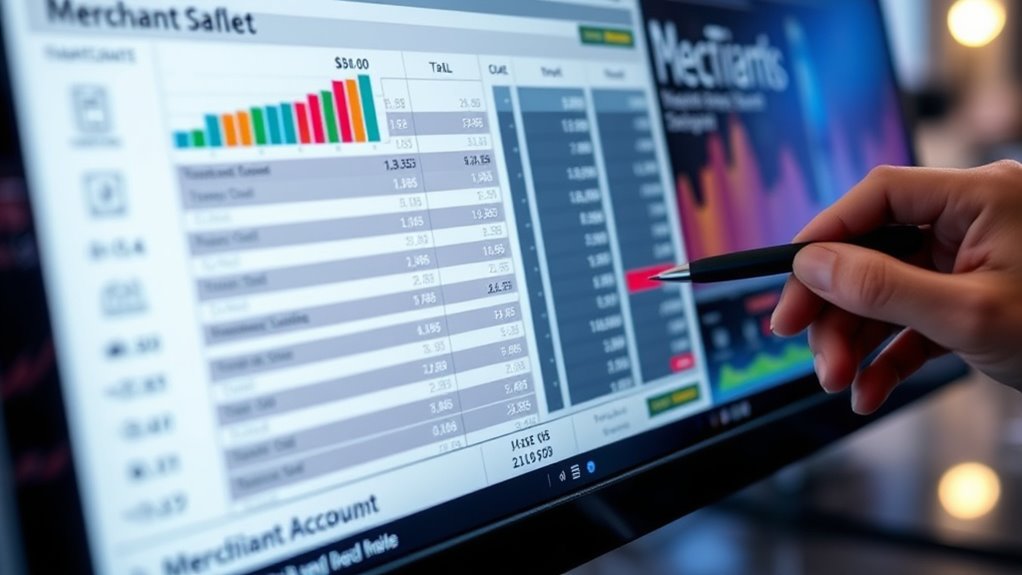
Have you ever looked at your merchant account statement and felt confused by all the numbers and fees? You’re not alone. These statements can seem overwhelming at first, but understanding them is essential to managing your business finances effectively. One of the first things to focus on is the section that details transaction fees. These are the charges associated with processing each sale, and they can vary depending on your payment processor and the types of transactions you handle. Typically, you’ll see a fee percentage or a flat fee per transaction. Recognizing these charges helps you determine your actual profit margins on sales and identify if you’re paying more than necessary. Keep an eye out for any additional fees that may be bundled into your transaction costs, such as those for international sales or high-volume processing. Additionally, reviewing your retail hours can help you understand peak times when transaction volumes are higher, potentially affecting your processing costs.
Another critical aspect to understand is chargebacks. A chargeback occurs when a customer disputes a charge on their credit card, and the bank reverses the transaction, often leading to fees on your end. Your statement should specify the number of chargebacks you’ve experienced within the billing period, along with any associated costs. Frequent chargebacks can signal underlying issues, such as unhappy customers or fraudulent activity, so it’s vital to monitor this data regularly. When you notice a spike in chargebacks, review the details of each case—sometimes, simple communication or better fraud prevention measures can reduce their occurrence. High chargeback rates not only lead to financial losses but can also impact your merchant account standing, making it harder to process future payments.
Understanding your statement also involves paying attention to how fees are deducted. Typically, your processor will subtract transaction fees and chargeback costs before depositing the remaining funds into your account. Some statements break down the gross sales, refunds, and net deposit amounts, offering transparency on how much you’re actually earning. Be sure to cross-reference these figures with your records to ensure accuracy. If you notice discrepancies, don’t hesitate to contact your payment processor for clarification. Additionally, if your statement includes miscellaneous fees—such as monthly service charges or equipment costs—review them to ensure they align with your agreed terms. Keeping track of these expenses helps you evaluate if your current processing setup remains cost-effective.
Top picks for "read understand merchant"
Open Amazon search results for this keyword.
As an affiliate, we earn on qualifying purchases.
Frequently Asked Questions
How Often Should I Review My Merchant Account Statement?
You should review your merchant account statement monthly to stay on top of reconciliation best practices. Regularly comparing your statement with your sales records helps catch errors or discrepancies early. This frequent statement comparison guarantees your finances remain accurate and transparent, reducing the risk of fraud or mistakes. Make it a habit to review your statements consistently, so you can address issues promptly and keep your business finances in check.
What Should I Do if I Find an Error?
If you find an error on your statement, act quickly by contacting your merchant account provider’s dispute resolution team. Clearly explain the discrepancy and provide supporting documentation if possible. Use this opportunity to negotiate fees if applicable. Stay persistent, follow up regularly, and document all communications. This proactive approach guarantees issues are resolved efficiently, and you maintain control over your account’s accuracy and costs.
How Can I Interpret Chargeback Information?
Think of chargeback information like a GPS guiding your dispute resolution. When you see a chargeback, review the reason code and transaction details carefully. This helps you understand why the customer disputed the charge and guides your response. Tracking the chargeback process guarantees you stay informed and act promptly. By interpreting these details, you can improve your dispute resolution strategy and protect your business from future chargebacks.
Are There Common Fees I Should Be Aware Of?
Yes, there are common fees you should watch out for, like interchange fees, which are charges from card networks, and monthly minimums, which require you to pay a set amount regardless of sales volume. These fees can add up, so it’s important to review your statement carefully. Understanding these charges helps you manage costs and avoid surprises, ensuring your business stays profitable and financially healthy.
How Does My Transaction Volume Affect Fees?
If your transaction volume increases, expect your fees structure to change. For example, a small business processing 1,000 transactions monthly might pay a flat fee, but if you grow to 10,000, volume discounts could lower per-transaction costs. Your transaction trends directly influence fees, so monitoring them helps you optimize costs. Higher volumes often lead to lower fees per transaction, benefiting your overall profit margins.
Conclusion
Now that you know how to read your merchant account statement, you’re equipped to spot both opportunities and surprises. Think of it as balancing a scale: on one side, the clarity of your sales and fees; on the other, the potential for growth or hidden costs. With each review, you gain confidence and control, turning what once seemed complex into a clear picture of your business’s financial health. Mastering this skill keeps you in charge of your success.