To accept remote payments using a virtual terminal, you log into your secure provider’s platform and select the payment processing option. Enter the customer’s card details carefully, guaranteeing your connection uses encrypted SSL or TLS protocols to protect data in transit. Limit access to trusted staff and ensure they are trained on handling sensitive information securely. Regularly monitor transactions for suspicious activity, and maintaining updated security measures keeps your system safe. Continue exploring to learn how to optimize your virtual terminal security and compliance.
Key Takeaways
- Select a PCI DSS-compliant virtual terminal provider that uses encryption and secure protocols like SSL/TLS.
- Set up user accounts with strong passwords, limited access, and enable multi-factor authentication for security.
- Ensure all payment data transmissions are encrypted and stored securely following data retention policies.
- Train staff on secure handling of customer payment information and recognizing security threats.
- Monitor transactions actively for suspicious activity and respond promptly to potential security breaches.
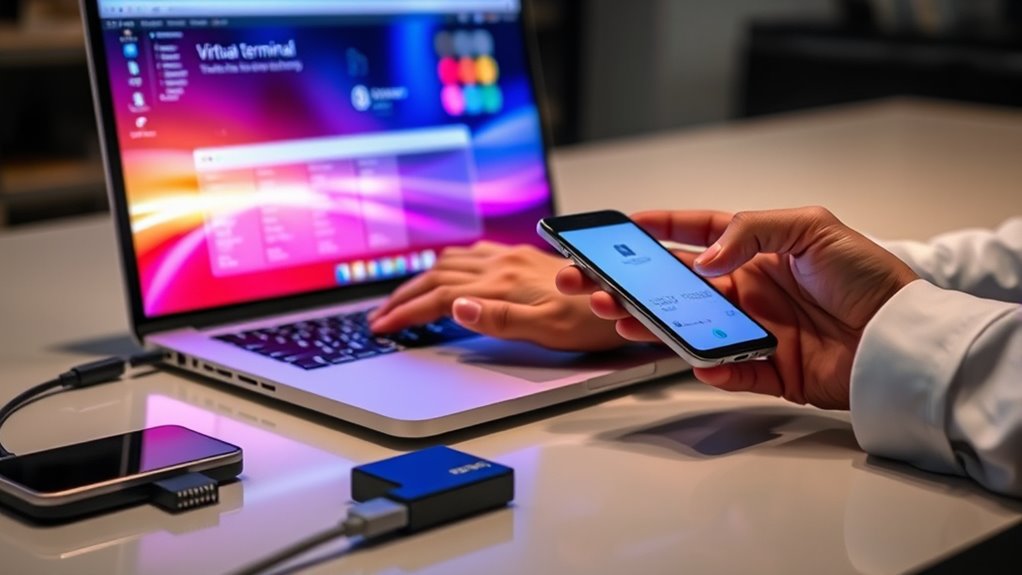
In today’s increasingly digital marketplace, accepting remote payments is essential for businesses of all sizes. Virtual terminals make it simple to process these transactions from anywhere, whether you’re working remotely or serving customers online. However, as you adopt virtual terminals, ensuring security compliance and transaction security becomes your top priority. These systems handle sensitive payment data, so you need to follow best practices to protect your customers and your business from fraud and data breaches.
The first step is choosing a reliable virtual terminal provider that complies with industry standards such as PCI DSS (Payment Card Industry Data Security Standard). This compliance guarantees that your payment processing environment follows rigorous security protocols, reducing your risk of vulnerabilities. When you set up your virtual terminal, make sure it uses encryption for data transmission. This way, customer card details are securely transmitted during the transaction, preventing intercepts and unauthorized access. Always confirm that the system employs SSL (Secure Socket Layer) or TLS (Transport Layer Security) protocols to safeguard data.
Another key aspect of security is user access management. Limit administrative access to your virtual terminal to only those employees who need it, and use strong, unique passwords combined with multi-factor authentication if available. Regularly update your software and security patches to close any potential loopholes that hackers might exploit. This proactive approach helps you maintain compliance and ensures each transaction remains secure.
When processing payments remotely, it’s vital to educate your staff on security best practices. Train them on recognizing phishing attempts, avoiding insecure Wi-Fi networks, and handling sensitive payment information carefully. This awareness minimizes human error, which is often a weak link in transaction security. Also, ensure that your customers’ data is stored securely if you retain any payment information, following data retention policies and encryption standards. Incorporating regular staff training on security protocols can further reinforce good practices and prevent lapses.
Monitoring your transactions regularly is another essential step. Set up alerts for any suspicious or unusual activity, such as multiple failed transactions or large payments from unfamiliar locations. Continuous monitoring helps you quickly identify and respond to potential fraud, maintaining the integrity of your payment system. Additionally, keep detailed records of all transactions for audit purposes and compliance verification.
Frequently Asked Questions
Can Virtual Terminals Accept International Currencies?
Yes, virtual terminals can accept international currencies through currency exchange and international processing. When you set up your virtual terminal, guarantee it supports multiple currencies, and your payment processor handles international transactions smoothly. This way, your customers can pay in their local currency, and you’ll receive funds in your preferred currency. Proper international processing and currency exchange integration make accepting international payments seamless and efficient for your business.
What Security Measures Protect Virtual Terminal Transactions?
You’re protected with security measures like data encryption, which safeguards your transaction details from hackers. Fraud prevention tools, such as CVV verification and real-time monitoring, help detect suspicious activity and prevent unauthorized payments. Implementing secure login protocols and PCI compliance further enhances transaction safety. These measures guarantee your virtual terminal transactions remain secure, reducing the risk of fraud and giving you peace of mind during remote payments.
Are Virtual Terminals Compatible With Mobile Devices?
Yes, virtual terminals are compatible with mobile devices. You can easily access them through mobile app integration, allowing you to process payments anytime, anywhere. The user interface design on these platforms is optimized for mobile screens, ensuring smooth navigation and quick transaction completion. This seamless compatibility makes managing remote payments convenient, whether you’re using a smartphone or tablet, helping you stay connected with your customers and grow your business effortlessly.
How Do Virtual Terminals Handle Recurring Payments?
Virtual terminals handle recurring payments by automating subscription billing, so you don’t have to manually process each invoice. You set up customer details once, then schedule automatic charges at regular intervals. This simplifies invoice management and guarantees consistent revenue. You can easily update or cancel payments when needed, giving you better control over subscriptions and reducing the risk of missed or late payments.
What Are the Costs Associated With Virtual Terminal Usage?
Did you know that virtual terminal costs typically range from $10 to $50 per month? You should consider transaction fees, which usually run around 2-3% per sale, and setup costs that can be a one-time fee or included in monthly charges. These expenses vary depending on your provider, so it’s smart to compare plans and understand all costs before committing to guarantee you stay within your budget.
Conclusion
Using virtual terminals makes accepting remote payments straightforward, much like turning on a light in a dark room. With just a few clicks, you can securely process transactions from anywhere, giving your customers the convenience they expect. Embrace this technology to streamline your payment process and expand your reach. Think of virtual terminals as the bridge connecting your business to the world—a simple tool that opens endless possibilities, making remote selling as easy as flipping a switch.