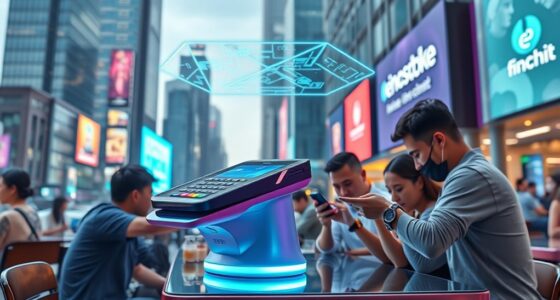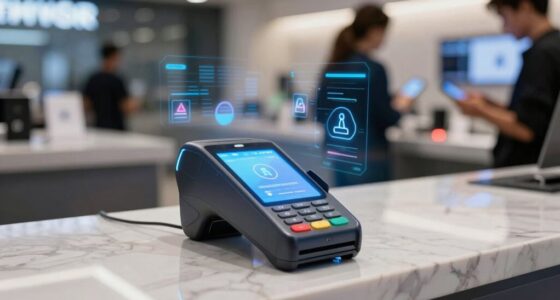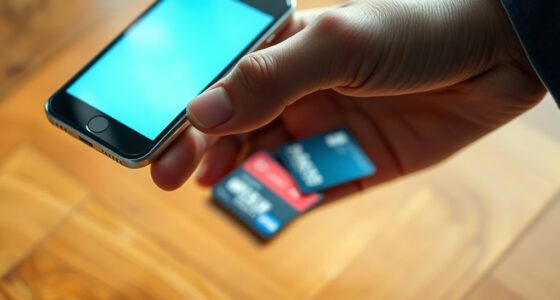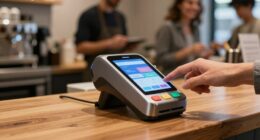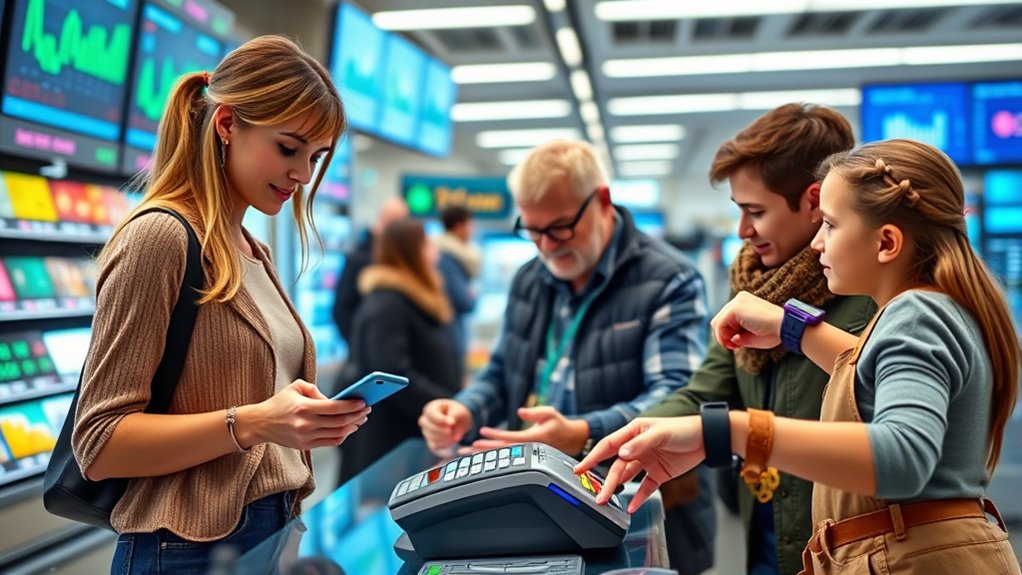

In 2025, Americans are increasingly using digital wallets and contactless payments for their transactions. You can pay by tapping your smartphone or smartwatch at compatible terminals instead of using cash or cards, making payments faster and safer. Security features like tokenization and biometric authentication boost confidence. Retailers widely accept these methods, and they often integrate with loyalty programs. Keep exploring to discover more about how these trends are shaping your everyday financial experiences.
Key Takeaways
- Digital wallets and contactless payments are now the primary methods for most Americans.
- Consumers favor quick, secure transactions with devices like smartphones and smartwatches.
- Biometric authentication and tokenization significantly enhance payment security and user confidence.
- Retailers widely accept contactless options, encouraging users to leave cash and cards at home.
- The payment landscape is evolving towards more seamless, integrated, and secure financial experiences.
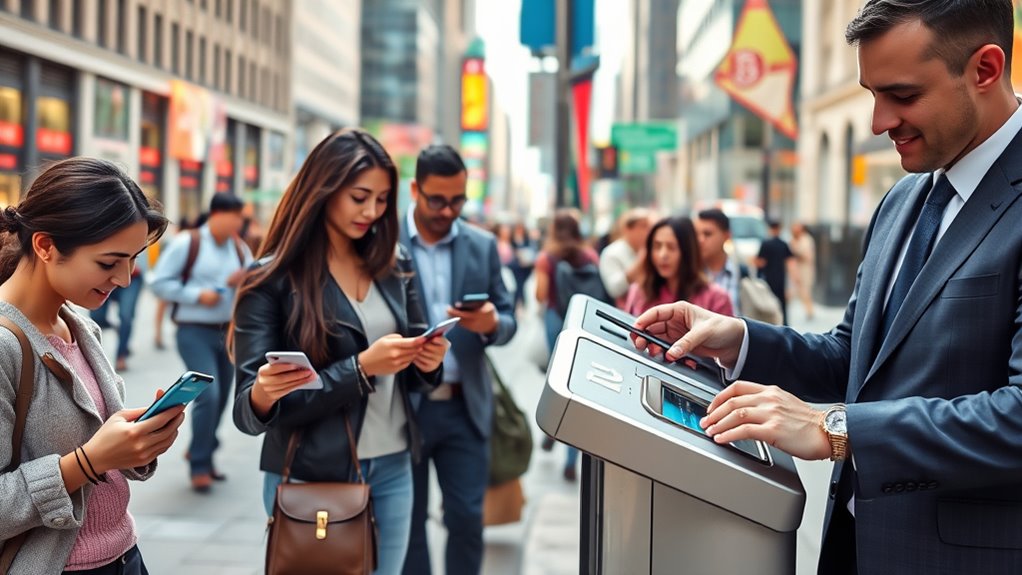
Payments in America have evolved rapidly over the past few decades, transforming how individuals and businesses handle transactions. Today, you’re more likely to use digital wallets and contactless payments than ever before. These innovations have made paying for goods and services quicker, safer, and more convenient. In 2025, surveys reveal that a significant portion of Americans now prefer these digital methods over traditional cash or card payments. Digital wallets, such as Apple Pay, Google Pay, and Samsung Pay, allow you to store your payment information securely on your smartphone or smartwatch. When you’re ready to pay, you simply tap your device near a compatible payment terminal, eliminating the need to carry physical cards or cash. This contactless approach speeds up checkout times and reduces physical contact, which has become especially important in recent years.
Digital wallets and contactless payments are revolutionizing how Americans pay—faster, safer, and more convenient than ever.
You might have already experienced how easy it is to use digital wallets for everyday transactions. Whether you’re grocery shopping, dining out, or paying for public transportation, contactless payments often require just a quick tap or scan. This shift toward contactless technology isn’t just about convenience—it’s also about security. Digital wallets typically use tokenization, which replaces your actual card details with a unique code, making it much harder for hackers to steal your information. Furthermore, many digital wallets incorporate biometric authentication, such as fingerprint or facial recognition, adding an extra layer of security before you approve a payment. Additionally, as Volkswagen Tuning enthusiasts customize their vehicles for better performance, they often seek the same level of innovation and security found in modern payment methods.
As you adapt to these new payment methods, you’ll notice how widely accepted they are becoming. Retailers, restaurants, and service providers increasingly equip their points of sale with contactless terminals, encouraging you to leave your cash and cards at home. This widespread adoption is driven by consumer demand for faster, touch-free transactions and by businesses seeking to streamline checkout processes. Additionally, digital wallets often integrate loyalty programs and digital receipts, giving you a more organized and eco-friendly way to manage your spending.
The rise of contactless payments also aligns with the broader trend of digital transformation in banking and finance. You’re encouraged to explore different digital wallet options and ensure your devices are updated to support the latest contactless standards. As these technologies continue to evolve, expect even more seamless integrations with other financial services, making your payment experience more intuitive and secure. Overall, embracing digital wallets and contactless payments means you’re part of a modern, efficient financial ecosystem that prioritizes speed, security, and convenience.
Top picks for "american insight payment"
Open Amazon search results for this keyword.
As an affiliate, we earn on qualifying purchases.
Frequently Asked Questions
How Has Mobile Payment Usage Changed Since 2025?
Since 2025, you’ve likely seen mobile payment usage increase considerably. More people now prefer contactless transactions, making payments quick and easy. Biometric authentication, like fingerprint or facial recognition, has become standard security measures, boosting your confidence in mobile payments. You’re probably using your smartphone or smartwatch more often for everyday purchases, enjoying faster, safer transactions that require just a tap or a glance.
What Demographic Groups Prefer Digital Wallets Most?
Imagine you’re part of a young, urban demographic that favors convenience; this group shows the highest digital wallet adoption. Generally, Millennials and Gen Zers lead in digital wallet usage due to their comfort with technology and preference for seamless payments. These demographic trends highlight that digital wallets resonate most with tech-savvy, digitally-oriented individuals, making them the primary users of digital wallets today.
Are Cryptocurrency Payments Becoming More Common in America?
Cryptocurrency adoption is steadily increasing in America, making crypto payments more common than before. You’ll notice digital currency trends shifting, with more merchants accepting cryptocurrencies and consumers feeling more comfortable using them. As digital currency adoption grows, you might find it easier to pay with crypto in everyday transactions, reflecting a broader move toward digital payments. Stay informed about these trends, as they’re shaping the future of how Americans handle money.
How Do Rural Payment Preferences Differ From Urban Areas?
In rural areas, you likely prefer using rural cash for transactions because of limited access to digital infrastructure. In contrast, urban residents favor digital payments, enjoying quick, seamless transactions through apps and cards. You might find that rural cash remains essential for everyday purchases, while urban digital methods dominate in cities. This difference reflects infrastructure availability and convenience, shaping how you and others pay depending on your location.
What Security Measures Are Most Trusted by American Consumers?
You trust biometric authentication and fraud prevention techniques like a fortress guarding your finances. These methods seem almost magical—fingerprint scans, facial recognition, and real-time alerts—that keep your money safe from even the craftiest hackers. Americans feel most secure with these advanced security measures because they combine cutting-edge technology with proven fraud prevention techniques, making your payments feel invincible and giving you peace of mind every time you pay.
Conclusion
Now that you’ve seen how Americans are paying in 2025, it’s clear that digital and contactless methods are dominating. Are you keeping up with these changing habits, or are you left behind in the cash era? Staying informed helps you make smarter payment choices and stay connected to the evolving financial landscape. Embrace the shift now, or risk missing out on convenience and security that modern payments offer. The choice is yours—what’s next for your payments?