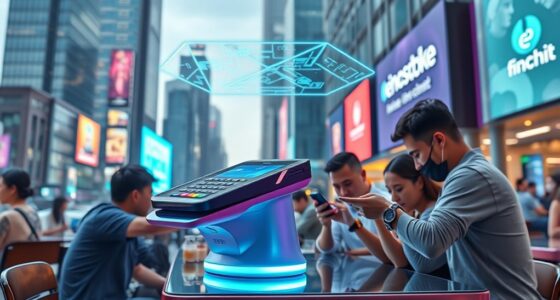

Cashless stores offer you faster, more convenient shopping experiences by eliminating cash and streamlining payments with cards or smartphones. However, you might also face privacy concerns, as your purchase data can be tracked and misused. Accessibility can be an issue for those without smartphones or digital skills, risking exclusion. To fully understand whether these stores benefit or hinder society, explore the nuanced debate that continues to unfold.
Key Takeaways
- Cashless stores enhance convenience through faster checkouts and seamless digital payments but may exclude those without access to smartphones or banking.
- Privacy concerns arise from data tracking and potential misuse of personal purchase information in digital transactions.
- Technical failures and system outages can disrupt shopping experiences, raising reliability issues for cashless systems.
- Accessibility barriers for elderly, disabled, or underserved populations can lead to social exclusion in cashless retail environments.
- The debate balances increased efficiency against privacy, security risks, and societal inequalities, highlighting the need for inclusive solutions.
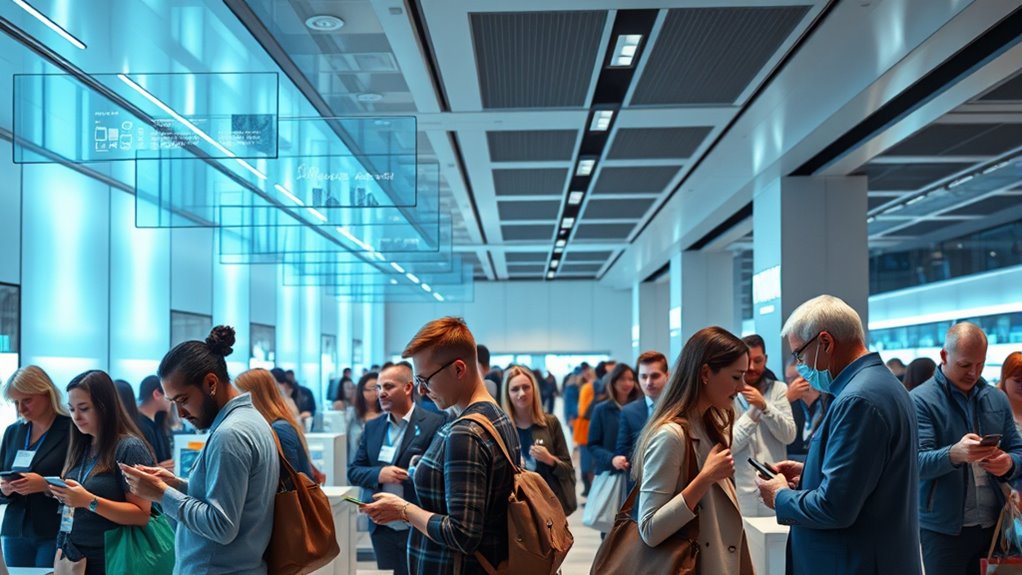
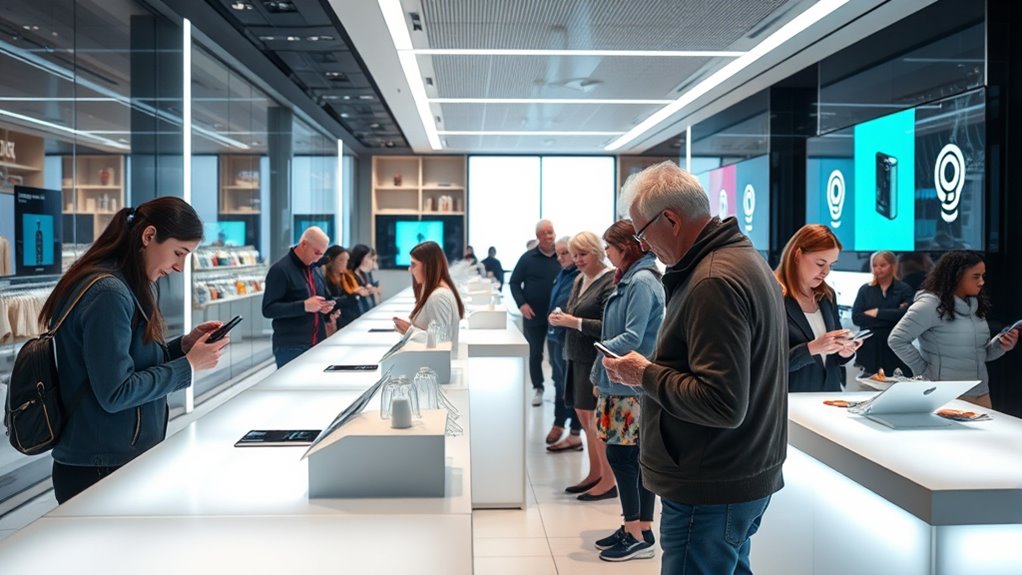
Cashless stores are transforming the way you shop by eliminating physical cash and relying entirely on digital payments. This shift offers a level of convenience that many find appealing—no need to carry cash, faster checkout processes, and seamless transactions. As you step into a cashless store, you might appreciate how quickly you can pay with a tap of your card or smartphone, avoiding long lines and fumbling for change. However, this *progression* isn’t without its challenges. Concerns about privacy often come to the forefront, as digital transactions inherently generate data that can be tracked and analyzed. Some worry about how their purchase history might be used or shared, raising questions about security and personal privacy. If you value your anonymity, you might find cashless stores uncomfortable, especially if you’re unsure about how your data is stored or protected.
Cashless stores offer convenience but raise concerns about privacy and data security.
Accessibility issues also surface as a significant concern. Not everyone has access to the latest smartphones or banking services needed for digital payments. Elderly customers, people with disabilities, or those living in underserved communities may struggle to use cashless systems, effectively excluding them from shopping experiences that others find convenient. You might feel frustrated if you’re unable to navigate digital interfaces or if the store’s payment options don’t support your preferred method. This digital divide can reinforce societal inequalities, making it harder for some individuals to participate fully in everyday activities like shopping. Additionally, the reliance on technology heightens the risk of security breaches that could compromise personal data.
Furthermore, reliance on technology means that any technical glitch or system outage can halt your shopping experience entirely. Imagine trying to pay for groceries only to find the payment terminal malfunctioning or the network down—suddenly, your smooth transaction turns into a hassle. Such issues can cause delays and inconvenience, especially if cash isn’t an option. As you consider the pros and cons, it becomes clear that while cashless stores offer speed and convenience, they also pose significant questions about privacy and equal access.
Ultimately, whether cashless stores are a welcome innovation or a source of exclusion depends on your perspective. If you’re tech-savvy and comfortable with digital payments, you might see them as a step toward a more efficient shopping future. But if you’re concerned about privacy or face accessibility barriers, you could view them as a move that leaves some people behind. As this trend continues to grow, it’s important to weigh both sides and consider how these changes impact all consumers, not just the digitally connected.
Top picks for "cashles stor convenience"
Open Amazon search results for this keyword.
As an affiliate, we earn on qualifying purchases.
Frequently Asked Questions
How Do Cashless Stores Impact Small Businesses Financially?
Cashless stores can benefit your small business by reducing cash handling costs and streamlining transactions through digital payments. However, you might face higher expenses for card processing fees and upgraded technology, which can strain your finances. While digital payment options attract tech-savvy customers, they could also exclude those who prefer cash. Balancing these factors helps you manage your small business’s financial health effectively.
What Are the Privacy Concerns Associated With Cashless Transactions?
You should know that 60% of consumers worry about data breaches in cashless stores, and surveillance concerns grow with digital transactions. Your personal data can be tracked, stored, and potentially misused by companies or hackers. This raises privacy issues, as you might unknowingly share location, purchase habits, and payment details. Protecting your information requires awareness of how data is collected and the risks of surveillance in cashless environments.
Are There Legal Regulations Governing Cashless Store Policies?
Yes, there are legal regulations governing cashless store policies. You must guarantee legal compliance by following laws related to consumer rights, such as providing alternative payment options for those who can’t or prefer not to use digital methods. Stores are increasingly required to accommodate all customers, preventing discrimination. Staying informed about local laws helps you protect your rights and ensures businesses operate fairly within the legal framework.
How Do Cashless Stores Affect Unbanked or Underbanked Populations?
You might not realize it, but cashless stores can feel like a colossal barrier for unbanked or underbanked populations, widening the digital divide and threatening their financial inclusion. Without bank accounts or digital access, they’re left out of everyday transactions, deepening inequality. This exclusion can be as vast as an ocean, making it harder for them to participate fully in the economy and access essential goods and services.
What Technological Issues Can Disrupt Cashless Payment Systems?
You might face disruptions in cashless payment systems due to issues with digital infrastructure, like server outages or connectivity problems, which can prevent transactions. Cybersecurity risks also pose a threat, as hackers could compromise payment data or cause system breaches. These technological issues highlight the importance of robust digital systems and security measures to keep cashless stores running smoothly and protect your financial information.
Conclusion
So, next time you breeze through a cashless store, enjoy the convenience—while silently acknowledging the irony. You’re seamlessly avoiding cash, but at what cost? The very ease might be quietly excluding those without cards or smartphones. In a world that claims to be more connected, it’s ironic how technology can create new barriers. Perhaps, in the rush for progress, we’re forgetting that true inclusion shouldn’t depend on a swipe or scan.