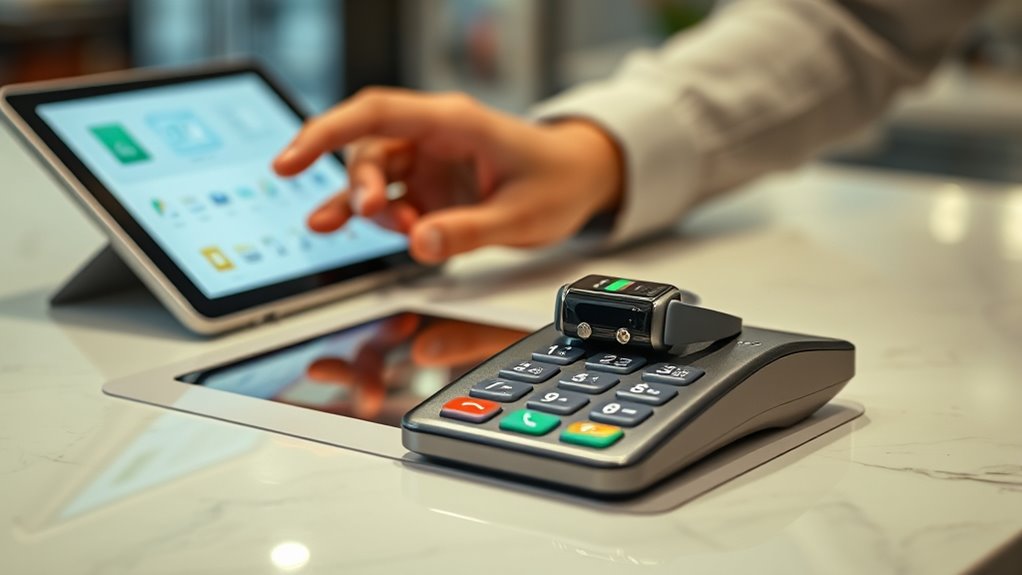

Connected payments allow you to pay effortlessly using IoT devices like smartphones, wearables, and smart appliances. These devices securely communicate with payment systems through encryption and standardized protocols, enabling quick, contactless transactions. Automation features let you reorder items or settle bills without manual input. As more devices become interconnected, your payments become faster, safer, and more convenient. To discover how these innovations are transforming everyday interactions, explore further into connected payment technologies.
Key Takeaways
- IoT devices enable seamless, real-time payments across multiple platforms through connected networks.
- Digital wallets and secure encryption protect payment data during IoT-enabled transactions.
- IoT automates purchases, such as reordering supplies or paying for smart parking, reducing manual input.
- Standardized protocols allow diverse IoT devices to communicate and process payments smoothly.
- Enhanced security features in IoT devices minimize fraud risks and ensure safe payment experiences.
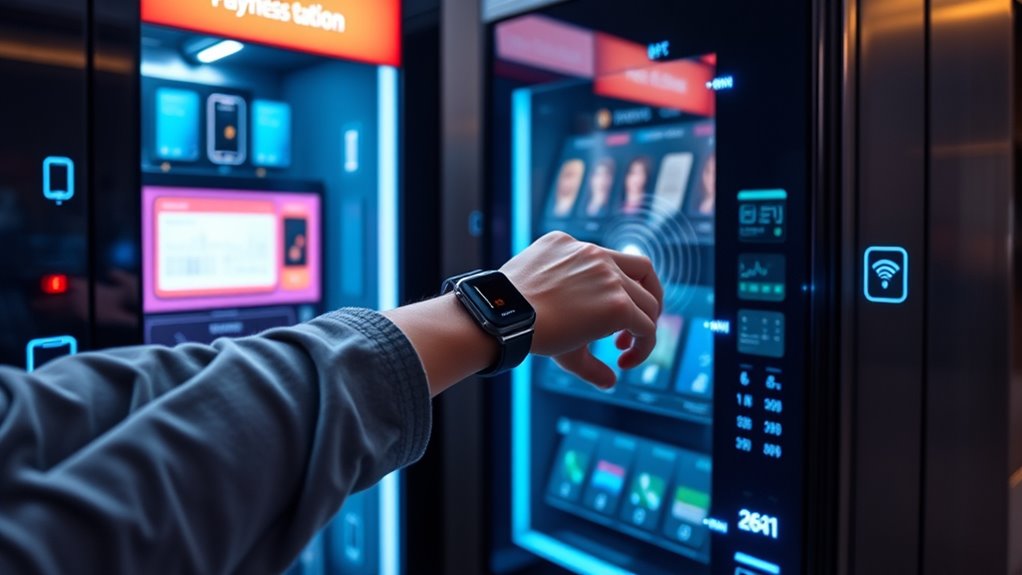
Connected payments are transforming how you handle transactions by seamlessly linking multiple devices and platforms. With the rise of the Internet of Things (IoT), paying for goods and services has become more convenient, integrated, and intuitive. Instead of fumbling with cash or physical cards, you can now use your digital wallets across various connected devices—smartphones, wearables, even smart appliances—making payments faster and more efficient. This interconnected approach not only simplifies your purchase experience but also introduces new layers of flexibility, allowing you to pay anytime, anywhere, without the need for traditional payment methods.
Connected payments simplify transactions by linking devices, making payments faster, more flexible, and effortless across platforms.
As you adopt these connected payment systems, one of the main advantages you’ll notice is enhanced payment security. IoT devices employ advanced encryption and multi-factor authentication to protect your financial data during transactions. Digital wallets, in particular, act as secure repositories for your payment information, reducing the risk of theft or fraud. When you tap your smartwatch or use a connected car to pay for parking, your sensitive data isn’t exposed or stored on the device itself but is instead transmitted securely through encrypted channels. This minimizes vulnerabilities and gives you peace of mind, knowing your transactions are safeguarded against cyber threats.
Another key benefit of connected payments lies in their ability to streamline your purchasing process. Imagine walking into a store and simply picking up what you want—no need to pull out your wallet or scan a card. Your digital wallet, linked to your IoT-enabled device, recognizes your identity and authorizes the payment instantly. This frictionless system reduces checkout times and enhances your overall shopping experience. Furthermore, as these systems evolve, they’ll become even smarter, offering personalized deals based on your preferences or transaction history, further enriching your convenience.
The interoperability of IoT devices also opens up possibilities for automation. Your connected refrigerator could automatically reorder groceries when supplies run low, or your smart car might settle the parking fee without your intervention. Such automation relies heavily on secure payment channels, ensuring that each transaction is completed safely and swiftly. As these technologies mature, you’ll find that your daily routines become more efficient, with minimal manual input required. The ability to make secure, seamless payments across multiple devices is reshaping how you interact with the world around you, especially as standardized protocols ensure smooth communication between diverse IoT systems.
Frequently Asked Questions
How Secure Are Iot-Enabled Payment Systems?
IoT-enabled payment systems can be quite secure when you use features like data encryption and biometric verification. Data encryption protects your transaction details from hackers, while biometric verification adds an extra layer of security, ensuring only you can authorize payments. However, since IoT devices are connected to networks, you should stay vigilant for potential vulnerabilities. Keep your software updated and use strong, unique passwords to safeguard your payments effectively.
What Are the Privacy Concerns With Connected Payments?
You should be aware that connected payments raise privacy concerns because your data privacy might be at risk. IoT devices collect and transmit sensitive payment information, which could be vulnerable to hacking or unauthorized access. This can impact your consumer trust, especially if your personal data isn’t properly secured. To protect yourself, always review privacy settings, use secure networks, and stay informed about how your data is handled.
How Do Iot Devices Authenticate User Transactions?
You authenticate user transactions on IoT devices through biometric verification, like fingerprint or facial recognition, ensuring only authorized users can make payments. Additionally, they use tokenization security, replacing sensitive data with unique tokens that protect your information during transactions. These methods work together to keep your payments secure and verify your identity quickly, providing a seamless and safe experience every time you pay through connected devices.
Can Small Businesses Adopt Iot Payment Solutions Easily?
Adopting IoT payment solutions for your small business is like planting a seed that quickly blossoms. You can easily set up smart storefronts and automate inventory, streamlining operations. Many vendors offer user-friendly systems with simple integrations, so you don’t need to be a tech wizard. With minimal effort, you’ll enjoy faster transactions, better inventory management, and a modern customer experience—making your business more competitive and efficient.
What Are the Future Trends in Iot Payment Technology?
You’ll see future IoT payment trends like wearable wallets becoming more sophisticated, offering seamless, hands-free transactions. Smart vending machines will increasingly accept contactless payments, making purchases quicker and more convenient. Expect integration with AI for personalized experiences and enhanced security. These innovations will simplify transactions, reduce queues, and give you more control over your payments, transforming everyday interactions into effortless, connected experiences.
Conclusion
Think of IoT devices as the bridges in a bustling city, seamlessly connecting your payments and daily life. As these bridges grow stronger and more numerous, your transactions become effortless streams flowing smoothly from one point to another. With each connected device, you’re steering a landscape where payments are swift currents, carrying convenience right to your fingertips. Embrace this evolving network—because in the world of connected payments, you’re the navigator of a future that moves with you.