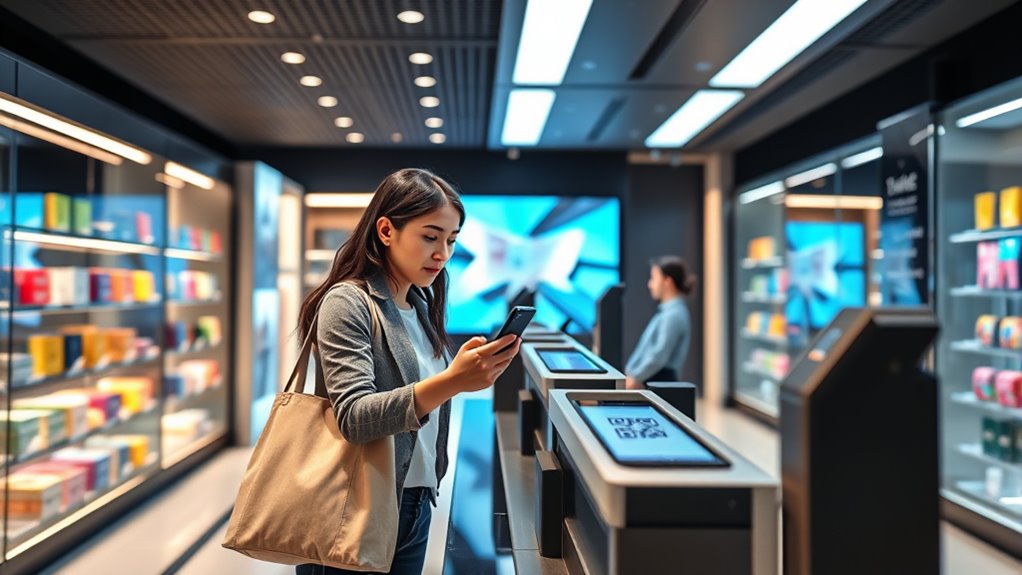

Omnichannel payments connect your online and in-store experiences, making transactions smooth and hassle-free. By integrating mobile wallets, loyalty programs, and secure authentication methods, you can offer customers quick, contactless options across all channels. This seamless approach builds trust, encourages repeat business, and collects valuable data for personalized marketing. Maintaining consistent payment options and loyalty benefits guarantees a unified experience. Keep exploring how you can fully bridge these channels for a smoother customer journey.
Key Takeaways
- Integrating mobile wallets across channels enables seamless, quick payments whether online or in-store.
- Consistent payment methods and loyalty programs ensure a unified customer experience.
- Contactless payments via tap or scan facilitate frictionless transitions between digital and physical shopping.
- Real-time loyalty point updates and personalized offers enhance engagement across all touchpoints.
- Secure authentication methods build trust and protect customer data throughout the omnichannel journey.
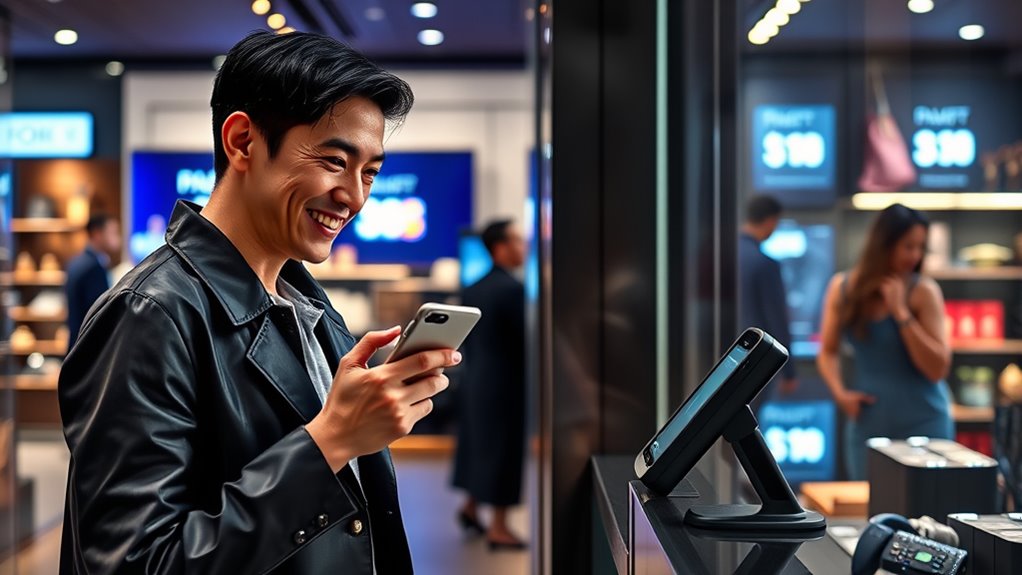
In today’s retail landscape, customers expect seamless payment experiences across all channels, whether they’re shopping online, in-store, or through mobile apps. To meet these expectations, you need to integrate multiple payment methods smoothly, making transactions quick and effortless. Mobile wallets have become an essential part of this strategy, offering customers the convenience of storing their credit cards, debit cards, and even loyalty cards in one digital location. With a mobile wallet, you can enable customers to pay with a simple tap or scan, eliminating the need to carry physical cards or cash. This not only speeds up the checkout process but also reduces friction, encouraging repeat business. Additionally, mobile wallets often integrate with loyalty programs, allowing you to reward customers instantly and effortlessly. When customers use their mobile wallets, their loyalty points can be automatically tracked and applied at checkout, providing a personalized experience that fosters brand loyalty. This integration also allows you to gather valuable data about customer preferences and purchasing habits, which can inform targeted marketing campaigns and tailored offers. Implementing secure payment authentication methods further enhances trust and reduces the risk of fraud during transactions.
Creating a truly omnichannel payment experience means ensuring that customers can switch seamlessly between online and in-store shopping without facing payment hurdles. For example, you might offer options like buy online, pick up in-store (BOPIS), or pay via mobile app when picking up goods. In these scenarios, mobile wallets and loyalty programs work together to maintain a consistent experience. When a customer pays with their mobile wallet in-store, their loyalty points can be instantly updated, and their preferences remembered for future purchases. Similarly, if they shop online through your website or app, the same loyalty benefits and payment methods should be accessible, ensuring continuity. This consistency removes pains often associated with multi-channel shopping, such as having to re-enter payment details or lose loyalty rewards.
Top picks for "omnichannel payment bridg"
Open Amazon search results for this keyword.
As an affiliate, we earn on qualifying purchases.
Frequently Asked Questions
How Secure Are Omnichannel Payment Systems?
You can feel confident that omnichannel payment systems are quite secure. They use advanced encryption protocols to protect your sensitive data during transactions, preventing unauthorized access. Additionally, robust fraud detection measures continuously monitor for suspicious activity, helping to identify and stop potential fraud before it happens. While no system is completely foolproof, these security features considerably reduce risks, making your online and in-store payments safer.
What Are the Costs Associated With Implementing Omnichannel Payments?
Implementing omnichannel payments involves costs like a detailed cost analysis to understand expenses and selecting the right vendor to guarantee compatibility and security. You’ll need to budget for technology upgrades, integration, and ongoing maintenance. Vendor selection influences costs considerably, so compare pricing, features, and support services. While initial investments might seem high, the seamless customer experience can boost sales and loyalty, making it a worthwhile long-term investment.
How Do Omnichannel Payments Impact Customer Loyalty?
Imagine a handshake that seamlessly connects your online and in-store worlds—that’s how omnichannel payments boost your customer loyalty. By implementing personalization strategies, you make each shopper feel uniquely valued, deepening their engagement. This consistency builds trust and encourages repeat business, transforming one-time buyers into loyal customers. As you create a unified experience, you foster lasting relationships that keep customers coming back, strengthening your brand’s reputation and loyalty.
What Are the Best Practices for Integrating Online and In-Store Data?
To effectively integrate online and in-store data, focus on customer segmentation to tailor experiences and offers. Guarantee data synchronization across platforms so customer info updates in real-time, providing a seamless experience. Use unified systems to track purchase history, preferences, and behaviors, allowing personalized marketing and smooth checkout processes. Regularly audit your data integration efforts to identify gaps, and adopt flexible tools that adapt to your evolving omnichannel strategy.
How Do Omnichannel Payments Adapt to Mobile and Contactless Trends?
Did you know that 75% of consumers prefer mobile wallets for quick payments? Omnichannel payments adapt seamlessly by integrating contactless technology, allowing you to pay effortlessly via mobile wallets and tap-and-go options. This trend ensures your in-store experience matches your online convenience, making transactions faster and safer. You can easily use contactless payments to enhance customer satisfaction and keep up with evolving mobile payment trends.
Conclusion
So, here you are, thinking you’ve got it all figured out with omnichannel payments. But the truth? It’s constantly evolving, blending online and in-store worlds in ways you never expected. Ironically, the more seamless your experience seems, the more complex it becomes behind the scenes. Yet, if you stay adaptable, you’ll find yourself ahead of the game—because in this ever-shifting landscape, staying static is the real risk. Embrace the chaos, and thrive.