
Social media giants like Twitter and Meta are increasingly becoming financial hubs by integrating seamless social payments directly within their platforms. They’re making transferring money, splitting bills, and paying friends as easy as posting a photo or sending a message. As these platforms expand their payment features, it’s clear they’re aiming to be key players in the digital money space. Continue exploring to see how their plans might shape the future of social payments.
Key Takeaways
- Both Twitter and Meta are actively integrating digital payment features into their platforms.
- Their goal is to leverage social interactions to facilitate seamless peer-to-peer transactions.
- Embedding payment options enhances user engagement and positions these platforms as financial hubs.
- Strategic partnerships and technological advancements support their expansion into payment services.
- They are likely to become significant players in social payments due to their large user bases and platform integration.
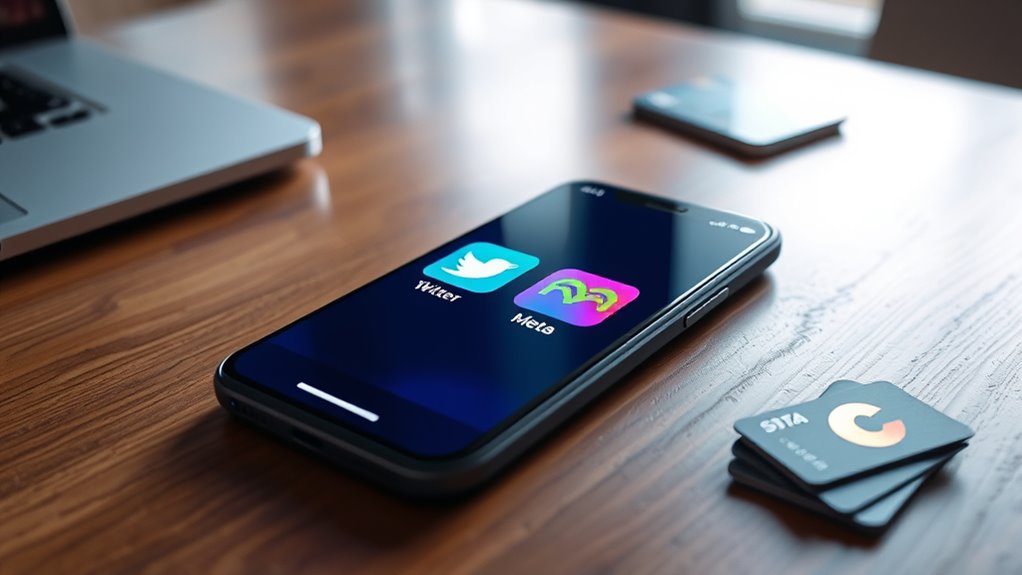
Have you ever wondered how social payments impact your daily life? These days, they’re more than just a way to split a dinner bill or send a quick gift. Social payments are transforming how you handle money, thanks in large part to digital wallets and peer-to-peer payments. Instead of digging through your purse or wallet for cash or cards, you can use your smartphone to send or receive money instantly, often within the same app you use to chat, share updates, or browse content. This seamless integration makes transactions effortless, blending social interaction with financial activity. When you send money through a social platform, it’s often as simple as clicking a button or tapping a screen, which keeps the process smooth and unobtrusive.
Platforms like Twitter and Meta are increasingly exploring their roles as payment players, aiming to capitalize on the popularity of social media to facilitate transactions. Imagine scrolling through your feed and being able to pay a friend for concert tickets or split a group gift without leaving the app. These companies recognize that social payments can become a natural extension of their existing services. By integrating digital wallets directly into their platforms, they make peer-to-peer payments more accessible and convenient than ever. Instead of switching between multiple apps, you can handle your transactions within the same environment you already use daily. This convenience can encourage more frequent use of social payments, making them a default option for small, everyday transactions.
Social media platforms are integrating digital wallets to make peer-to-peer payments seamless and convenient within their apps.
For example, Meta’s push into social payments includes features designed to make peer-to-peer payments as intuitive as sending a message. You could, in theory, send money to friends during a chat, just as easily as you share a meme. Twitter’s experiments with payment features aim to embed financial transactions into conversations and content sharing, creating new avenues for monetization and engagement. These developments are all about removing friction from the process—making it as quick and simple as sending a tweet or posting a photo. As more social media giants develop their payment capabilities, they’re positioning themselves not just as platforms for communication but also as financial hubs. Additionally, the integration of affiliate marketing strategies can further enhance these platforms’ revenue streams through targeted promotions and partnerships.
In the end, social payments are shaping your digital experience, blurring the lines between social interaction and financial exchange. Whether it’s through digital wallets or peer-to-peer payments, these platforms are making it easier than ever to handle money in a way that feels natural and integrated into your everyday digital life. As they continue to evolve, expect social payments to become even more ingrained in your routines, changing the way you think about managing your money online.

Digital Gold: A simple guide to understanding digital money Moses
As an affiliate, we earn on qualifying purchases.
As an affiliate, we earn on qualifying purchases.
Frequently Asked Questions
How Secure Are Social Payment Platforms Against Fraud?
Social payment platforms generally offer strong transaction security, but no system is completely immune to fraud. You can protect yourself by enabling fraud prevention features like multi-factor authentication and monitoring your account activity regularly. While these platforms invest heavily in security measures, it’s essential to stay vigilant, avoid sharing personal info, and report suspicious activity immediately. Staying informed helps ensure your transactions stay safe and secure.
Will Regulatory Changes Impact Social Payment Services?
Regulatory changes will considerably impact social payment services, especially as they expand into digital currency and cross-border transactions. You’ll find tighter rules meant to enhance security and transparency, which could slow down or alter how these platforms operate. While this might create hurdles, it also encourages safer, compliant transactions, giving you more confidence in using social payments for international and digital currency transfers.
Can Small Businesses Easily Adopt Social Payment Options?
You can easily adopt social payment options, but be prepared for peer-to-peer challenges like ensuring secure transactions and managing user trust. Merchant onboarding hurdles might slow you down, as integrating these systems requires compliance with regulations and technical setup. However, with proper planning and support, small businesses can leverage social payments to boost sales and customer engagement, making the initial hurdles worth overcoming for long-term benefits.
How Do Social Payments Compare to Traditional Banking?
Social payments often offer faster, more convenient transactions compared to traditional banking, especially with cryptocurrency integration that enables seamless peer-to-peer transactions. You can send money instantly without visiting a bank or waiting days for transfers. While banks provide security and regulation, social payments focus on user convenience and real-time exchanges. Ultimately, social payments complement banking, making it easier for you to manage small transactions and digital assets on the go.
What Are User Privacy Concerns With Social Payment Apps?
Are you aware of the privacy risks with social payment apps? You might worry about data privacy, as your financial info could be vulnerable to breaches or misuse. These apps rely on user consent, but it’s essential to stay informed about how your data is collected, stored, and shared. Protect your privacy by understanding app policies and only sharing necessary information, ensuring your financial details stay secure.

MOBILE PAYMENT UNCOVERED: A Deep Dive into the Global Digital Payment Revolution That’s Changing How We Pay, Save, and Live
As an affiliate, we earn on qualifying purchases.
As an affiliate, we earn on qualifying purchases.
Conclusion
As you watch giants like X and Meta venture into social payments, it’s clear they’re shaping a new digital landscape. Will they become the kings of seamless transactions or just fleeting trends? Like a tide that’s impossible to stop, their moves could redefine how you pay, connect, and share. Keep your eyes open—because in this game of digital dominance, the future of social payments might just change everything you thought you knew.

Asixxsix Smart NFC Ring, Steel Material, for Door Locks, File Transfer, NFC Devices, Ideal Gift for Men, All Round Sensing Technology Wearable Smart Ring for Mobile Phones (11)
【Multi Functional】The NFC ring is a high tech smart ring equipped with for Ntag213 chip, which can be…
As an affiliate, we earn on qualifying purchases.
As an affiliate, we earn on qualifying purchases.

Skywin QR Code Sign for Business – Social Media & Cash App QR Code Sign Stand, Acrylic Display Holder for Office Desk, Home Decor & Payment Display (Black)
[ VERSATILE DISPLAY ] – The Skywin QR Code Business Social Media Sign Stand is an elegant acrylic…
As an affiliate, we earn on qualifying purchases.
As an affiliate, we earn on qualifying purchases.