
Your payment habits across the Atlantic vary because of different cultures, technological setups, and regulations. In the US, credit cards are popular for rewards and convenience, with cash still used for small or informal payments. In Europe, cash remains trusted and common, especially in southern and eastern regions, while contactless payments grow fast. Understanding these differences reveals how infrastructure, tradition, and rules shape how people pay—stay with us to uncover more about these fascinating distinctions.
Key Takeaways
- Cultural preferences for cash and privacy influence Europe’s continued reliance on cash versus US focus on credit card rewards.
- Infrastructure and technology adoption, like contactless payments, are more widespread in the US, shaping payment convenience.
- European countries maintain cash habits due to cultural norms and privacy concerns, despite digital payment growth.
- US regulations encourage credit use with incentives, while European policies emphasize security, affecting payment method preferences.
- Payment habits reflect complex factors including cultural attitudes, technological infrastructure, and regulatory environments across the Atlantic.
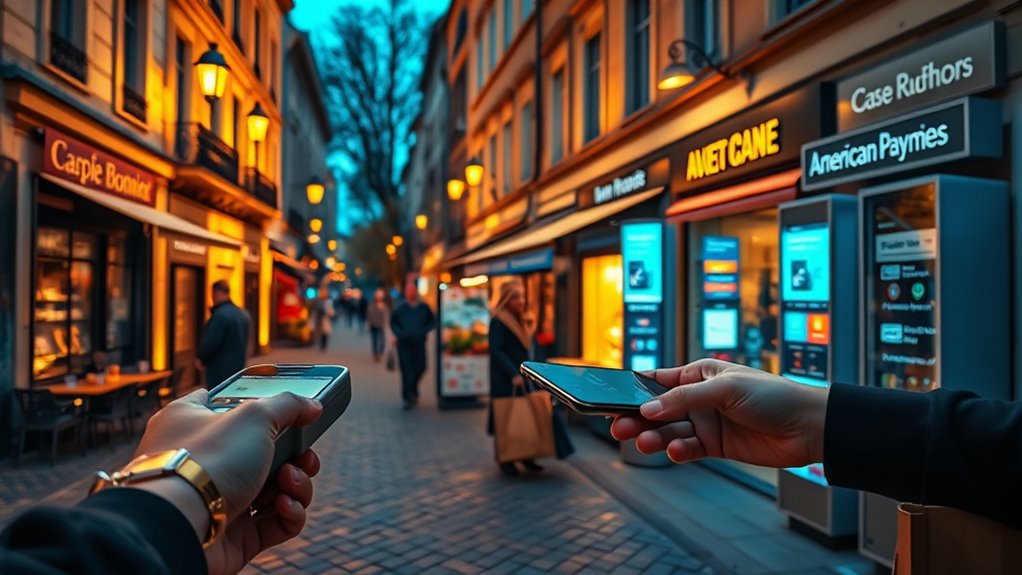
Payment habits in the US and Europe differ markedly, shaped by cultural preferences, technological infrastructure, and financial regulations. In the US, many consumers favor using credit and debit cards for everyday transactions, but cash still holds a notably significant place, especially in small businesses or for quick, informal payments. You might notice that cash is often your go-to for small purchases or tipping, reflecting a cultural comfort with tangible money. Meanwhile, contactless payments are rapidly gaining popularity, providing a quick and convenient way to pay without digging for your wallet. You simply tap your card or smartphone, and the transaction is completed in seconds. This shift toward contactless technology is driven by widespread infrastructure and a preference for speed, especially in urban areas.
In the US, cash remains relevant alongside contactless payments driven by speed and convenience.
In contrast, Europe exhibits a more diverse payment landscape. While cash remains prevalent in many countries, especially in southern and eastern regions, contactless payments have become deeply ingrained in daily life. You’re likely to notice that tap-and-go cards and mobile payment apps are the norm in places like Scandinavia, the UK, and Germany, where consumers appreciate the convenience and hygiene benefits of contactless technology. Europeans tend to embrace digital payments partly because of the robust banking systems and extensive card networks. However, in some countries, a strong cash preference endures, driven by longstanding cultural habits, concerns over privacy, or distrust of digital security.
Cultural attitudes considerably influence these differences. In the US, there’s a strong emphasis on credit card use, often tied to building credit history and rewards programs. You may find that Americans are more comfortable carrying plastic and using it for larger purchases, with cash serving as an auxiliary payment method. Meanwhile, Europeans often see cash as a trusted, straightforward option that offers anonymity and control, especially for smaller transactions. This cultural inclination sustains a higher cash preference in many European markets, even as contactless payments continue expanding.
Technological infrastructure also plays a role. The US has invested heavily in contactless payment terminals, making it easy for you to pay with your smartphone or card almost anywhere. However, some rural or older demographics still prefer cash or traditional cards. In Europe, widespread adoption of contactless technology varies by country, but the trend is clear: digital wallets and contactless cards are becoming standard, driven by governments’ push for digital inclusion and security.
Financial regulations further shape these habits. In the US, regulations encourage credit usage through rewards and incentives, which influences consumer preferences. In Europe, policies often promote financial transparency and security, fostering trust in contactless and digital payments while maintaining cash as an accessible, reliable option. Overall, your payment habits are a reflection of these complex, interwoven factors, making transatlantic differences in payment behavior both fascinating and deeply rooted in cultural and infrastructural contexts.
Top picks for "europe payment habit"
Open Amazon search results for this keyword.
As an affiliate, we earn on qualifying purchases.
Frequently Asked Questions
How Do Cultural Attitudes Influence Payment Preferences?
Your cultural attitudes shape your payment preferences by emphasizing cultural trust and payment etiquette. In some cultures, you might prefer cash or face-to-face transactions because they foster trust and personal connection. Others lean toward digital payments for convenience and efficiency, reflecting a shift in payment etiquette. These attitudes influence how comfortable you feel with different methods, ultimately guiding your choices based on societal norms and expectations.
What Role Does Technology Infrastructure Play in Payment Choices?
Technology infrastructure heavily influences your payment choices by ensuring digital security and transaction speed. When secure networks and reliable payment systems are in place, you trust digital methods like mobile payments or online banking. Faster transaction speeds mean less waiting and more convenience, encouraging you to adopt newer payment options. Robust infrastructure reduces risks and builds confidence, making digital payments more appealing and accessible across different regions.
Are There Regulatory Differences Affecting Payment Methods?
Regulatory rules really shape your payment preferences. Strict legal frameworks guarantee compliance, often limiting certain methods like cash or specific digital options. In Europe, extensive regulations foster trust and transparency, encouraging digital dominance. Conversely, the more relaxed US regulatory environment allows more flexible payment options but can also create confusion. So, your choice of payment method hinges on these regulatory differences, driving diverse behaviors across continents.
How Do Demographic Factors Impact Regional Payment Habits?
Demographic influences considerably shape regional disparities in payment habits. You’ll notice that age, income, and education levels determine how comfortable you are with digital payments or cash. Younger populations tend to adopt mobile and online methods quickly, while older groups prefer traditional cash or card payments. Regional differences in income and technology access further impact your payment choices, creating distinct payment landscapes across different areas.
What Future Trends Could Reshape US and European Payment Behaviors?
Future payment trends are like a rising tide, transforming how you spend money. You’ll likely see digital wallets and contactless payments becoming even more prevalent, making transactions faster and more seamless. As technology advances, you’ll enjoy greater convenience, security, and integration across devices. These innovations will bridge the gap between regions, reshaping your payment habits while making financial exchanges more intuitive and effortless worldwide.
Conclusion
So, as you cross the Atlantic, think of payment habits as two different playlists—one’s upbeat and card-driven, the other’s mellow and cash-friendly. These differences shape how you spend and connect with money, like two sides of the same coin spinning through time. Embrace the rhythm of each, and you’ll navigate these financial melodies with confidence, turning cultural nuances into your personal symphony of smarter, smoother transactions across the ocean.