

ACH payments help you lower processing fees compared to credit card transactions, making them a cost-effective choice for your business. They work well for recurring payments like subscriptions or rent, and are reliable for one-time transactions too. By using ACH, you can reduce chargebacks and streamline operations, saving time and money. If you want to learn more about how ACH can benefit your business and when to best use it, keep exploring the details ahead.
Key Takeaways
- ACH payments offer lower processing fees compared to credit card transactions, reducing overall costs for merchants.
- Ideal for recurring payments like subscriptions, rent, or memberships due to automated processing.
- Suitable for high-volume transactions, improving operational efficiency and minimizing manual processing errors.
- Use ACH when you want secure, cost-effective payments with minimal chargeback risks.
- Ensure proper verification and fraud prevention measures to maximize benefits and protect against risks.
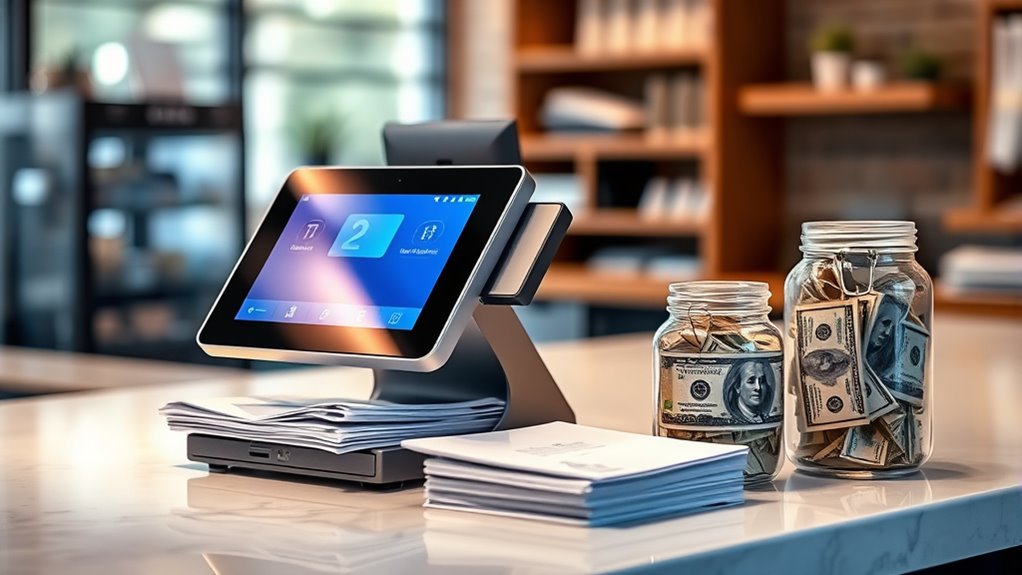
ACH payments have become a popular and efficient way for merchants to handle transactions directly from customers’ bank accounts. They offer a streamlined alternative to credit card payments, often resulting in lower processing fees and fewer chargebacks. With ACH transfers, you can automate recurring payments, like subscriptions or rent, and facilitate one-time payments without dealing with the complexities of card processing networks. This method appeals to both small businesses and large enterprises because of its cost-effectiveness and reliability.
ACH payments streamline transactions, reduce costs, and support automated, reliable bank account transfers for businesses of all sizes.
However, implementing ACH payments isn’t without its challenges. One major concern is fraud prevention. Since ACH transactions are directly linked to bank accounts, fraudsters may attempt to exploit vulnerabilities if proper safeguards aren’t in place. You need robust verification processes, such as micro-deposits or account validation tools, to confirm the bank account details provided are legitimate. This not only shields your business from fraudulent transactions but also builds trust with your customers. Additionally, since ACH transactions typically take one to three business days to settle, you must manage customer expectations about payment timing and potential delays, especially during weekends or bank holidays.
Integration challenges are another hurdle you might face when adopting ACH payments. Incorporating ACH into your existing payment infrastructure requires technical expertise, because you need to connect your systems securely to ACH networks. This process involves setting up secure APIs, ensuring compliance with NACHA (National Automated Clearing House Association) rules, and maintaining data security standards. If your payment system isn’t designed to handle ACH transactions, you might encounter compatibility issues or increased development costs. Some merchants opt for third-party payment processors that simplify integration, but even then, you should carefully vet providers for security features and ease of use. Proper integration ensures seamless transactions and minimizes errors, but rushing the setup or choosing incompatible solutions can lead to operational headaches.
Despite these challenges, ACH payments are a valuable tool for merchants seeking lower fees and reliable transaction processing. They’re ideal for businesses with recurring billing needs or large-volume transactions where cost savings can considerably impact profitability. Additionally, the use of advanced color accuracy tools in projectors can significantly enhance visual quality, making the viewing experience more immersive. To succeed, focus on strengthening fraud prevention measures and selecting payment solutions that integrate smoothly with your existing infrastructure. By doing so, you can leverage ACH payments’ benefits while mitigating the risks associated with their implementation. Overall, once integrated properly, ACH payments can streamline your operations, reduce costs, and improve customer satisfaction.

Music Software Bundle for Recording, Editing, Beat Making & Production – DAW, VST Audio Plugins, Sounds for Mac & Windows PC
No Demos, No Subscriptions, it's All Yours for Life. Music Creator has all the tools you need to…
As an affiliate, we earn on qualifying purchases.
As an affiliate, we earn on qualifying purchases.
Frequently Asked Questions
How Long Does an ACH Payment Transaction Typically Take?
ACH payment transactions usually take 1 to 3 business days to process. You should consider the transaction timing when planning your payment processing to guarantee funds arrive on time. Factors like bank processing times and weekends can influence how quickly the transfer completes. If you need faster payments, alternative methods might be better, but ACH payments are reliable and cost-effective for many merchants.
Are ACH Payments Secure for High-Value Transactions?
Are ACH payments secure enough for high-value transactions? Absolutely, they are, thanks to robust ACH security measures and fraud prevention techniques. Banks and networks employ encryption and multi-factor authentication to protect your funds. While no system is completely risk-free, ACH payments are generally safe for large transactions when you follow best practices, like verifying account details and monitoring your account regularly. Wouldn’t you want added security for significant payments?
Can ACH Payments Be Reversed After Processing?
Yes, ACH payments can be reversed after processing, but it depends on the reversal policies and dispute resolution procedures. If you notice an error or suspect fraud, you should contact your bank promptly to initiate a reversal. Keep in mind that timely action is vital because reversals are typically only possible within a specific window. Understanding your bank’s dispute resolution process helps guarantee you can recover funds when necessary.
What Are the Best Practices for Integrating ACH Payments?
To integrate ACH payments effectively, you should streamline user onboarding to guarantee a smooth experience. Automate the process wherever possible to reduce manual errors and address automation challenges. Verify account details early, implement secure authentication, and provide clear instructions. Regularly test your system, stay compliant with regulations, and offer support. This approach minimizes errors and builds trust, making ACH payments a reliable option for your business.
How Do ACH Fees Compare to Credit Card Processing Fees?
ACH fees are generally lower than credit card processing fees, saving you money on transactions. While credit cards often charge higher percentages and flat fees, ACH transactions typically cost a small fixed fee or a percentage under 1%. To protect your business, integrate fraud prevention measures, especially with digital wallets, and guarantee secure ACH payments. This way, you benefit from lower fees while maintaining secure, reliable transactions.
ACH bank transfer payment terminal
As an affiliate, we earn on qualifying purchases.
As an affiliate, we earn on qualifying purchases.
Conclusion
Choosing ACH payments is like finding a hidden gem—offering lower fees and smoother transactions. When you want to save money and streamline your checkout process, they’re your best friend. Just remember, they work best for recurring or larger payments, so use them wisely. Incorporate ACH into your payment mix, and watch your costs shrink while your business grows. It’s a win-win, turning your payment process into a well-oiled machine.
ACH payment verification tools
As an affiliate, we earn on qualifying purchases.
As an affiliate, we earn on qualifying purchases.
ACH payment API integration
As an affiliate, we earn on qualifying purchases.
As an affiliate, we earn on qualifying purchases.