

Accepting cryptocurrency can expand your customer base and position your business as innovative. It allows you to process digital asset payments securely, attract tech-savvy clients, and stay competitive in a growing digital economy. You’ll need to manage potential price volatility, stay compliant with evolving regulations, and protect your digital wallets from security threats. Implementing these methods may seem complex at first, but understanding the essentials will help you navigate this promising payment option more confidently.
Key Takeaways
- Accepting cryptocurrency expands your customer base by attracting digital asset users and positioning your business as innovative.
- Ensure secure management of digital wallets and transaction processes with multi-signature wallets and regular security audits.
- Stay updated on blockchain developments and evolving regulations to maintain compliance and security.
- Track each crypto transaction meticulously and convert to fiat promptly to manage volatility and simplify tax reporting.
- Integrating crypto payments can enhance competitive edge and facilitate global market access for business growth.
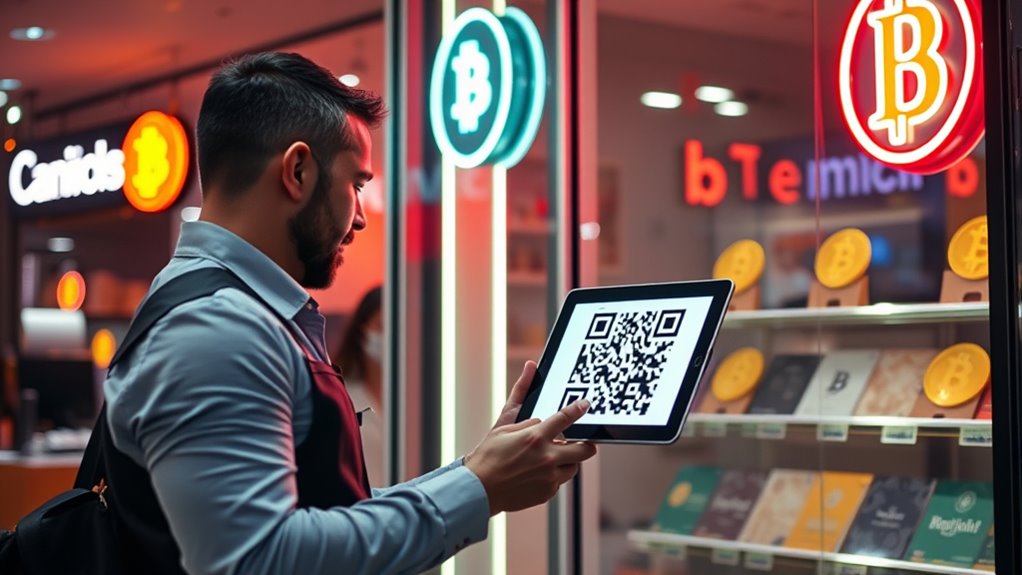
Accepting cryptocurrency as a payment method can open your business to new opportunities and a broader customer base. More consumers are turning to digital assets for their transactions, and by embracing this trend, you position your business as innovative and forward-thinking. However, integrating cryptocurrency into your merchant services isn’t just about accepting coins; it involves understanding essential aspects like blockchain security and cryptocurrency taxation.
Accepting cryptocurrency broadens your customer base and positions your business as innovative and forward-thinking.
Blockchain security is fundamental because cryptocurrencies operate on decentralized digital ledgers, which are inherently secure if managed correctly. When you accept cryptocurrencies, you need to ensure your digital wallets and transaction processes are protected against hacking, phishing, and other cyber threats. Implementing robust security measures, such as multi-signature wallets, regular security audits, and secure private keys, helps safeguard your assets and customer information. Failing to prioritize blockchain security can lead to significant financial losses and damage your reputation. You should also stay informed about the latest developments in blockchain technology, as vulnerabilities can emerge, and timely updates can help you maintain a secure environment. Staying vigilant about cryptocurrency regulations is also crucial to ensure ongoing compliance and adapt to evolving legal requirements.
Cryptocurrency taxation is another critical consideration. Different jurisdictions have varying rules on how digital assets are taxed, and understanding these regulations helps you stay compliant. When you accept cryptocurrencies, you’ll need to track each transaction meticulously, noting the fair market value at the time of receipt to determine taxable income. Additionally, you’ll have to consider capital gains taxes if the value of the cryptocurrency fluctuates between receipt and disposal. Proper record-keeping simplifies tax reporting and reduces the risk of penalties or audits. Consulting with a tax professional familiar with cryptocurrency regulations can help you navigate complex legal requirements and develop a strategy that minimizes your tax liabilities while remaining compliant.
Adopting cryptocurrency also means preparing for the volatility inherent in digital assets. Prices can swing dramatically within short periods, impacting your margins if not managed carefully. To mitigate this, many businesses choose to convert received cryptocurrencies into fiat currency immediately, reducing exposure to market fluctuations and simplifying accounting. This approach can also ease the integration of crypto payments into your existing financial systems.
Top picks for "accept cryptocurrency mean"
Open Amazon search results for this keyword.
As an affiliate, we earn on qualifying purchases.
Frequently Asked Questions
How Does Cryptocurrency Volatility Affect Transaction Stability?
Cryptocurrency volatility can considerably impact transaction stability because of price fluctuation. When the value of a coin changes rapidly, you might face payment delays or need to adjust the amount received. This unpredictability can make it challenging to plan finances accurately. To minimize these issues, many merchants convert cryptocurrencies to stable currencies quickly, reducing exposure to price fluctuation and ensuring smoother transactions.
Are There Additional Fees for Accepting Cryptocurrencies?
Are there additional fees for accepting cryptocurrencies? Think of cryptocurrency fees as the tolls on your digital highway—they can vary. You might face transaction costs, which are typically lower than credit card fees, but some providers charge extra for conversions or processing. Always check your merchant service’s fee structure, because understanding these transaction costs helps you make smarter decisions and keeps your profits on the right side of the ledger.
What Legal Considerations Exist for Merchants Accepting Crypto?
You need to prioritize legal compliance and understand the regulatory frameworks in your jurisdiction. Laws surrounding cryptocurrencies vary, so make certain you’re adhering to anti-money laundering (AML) and know-your-customer (KYC) requirements. Stay updated on tax reporting obligations and potential licensing needs. Consulting legal experts helps you navigate evolving rules, avoid penalties, and operate securely while accepting crypto payments. Proactively managing legal considerations safeguards your business and builds customer trust.
How Is Customer Privacy Protected With Cryptocurrency Payments?
Think of cryptocurrency payments like sending a postcard—your details stay private, but the message gets through. Customer privacy is protected through cryptographic techniques that guarantee transaction anonymity, so sensitive info isn’t exposed. While privacy concerns exist, many cryptocurrencies offer features like pseudonymity, shielding customer identities. By using secure wallets and blockchain technology, you help safeguard your customers’ data, fostering trust and making crypto payments safer for everyone involved.
What Are the Best Practices for Integrating Crypto Into Existing POS Systems?
To integrate crypto into your existing POS systems, start by choosing reliable crypto payment gateways that seamlessly connect with your setup. Guarantee Blockchain security features are in place to protect transactions and customer data. You should also train staff on handling digital currencies responsibly and update your software regularly. By following these best practices, you’ll smoothly incorporate cryptocurrency payments, enhancing your service options and keeping transactions secure.
Conclusion
By embracing cryptocurrency, you’re stepping into a new frontier of commerce, much like explorers charting unknown waters. It’s a bold move that can set you apart and open doors to a global audience. Remember, as the pioneers before you, those willing to innovate often find the greatest rewards. So, take the plunge—your merchant services could be the next legendary chapter in your business journey.