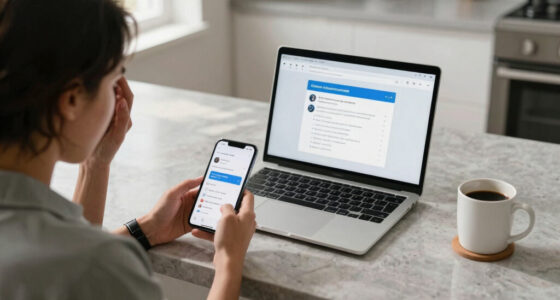
The future of receipts leans heavily toward digital options like email and text, making transactions faster, more convenient, and eco-friendly. You’ll likely see fewer paper slips as companies adopt electronic invoicing to cut costs and reduce environmental impact. Digital receipts also improve security and organization, making record-keeping easier. If you want to explore how this shift could impact your purchases and ongoing innovations, there’s more to discover ahead.

Get smart everyday buys delivered free — and shop member deals
- Fast, free delivery on millions of items
- Access to Prime Big Deal Days deals on October 6–7
- Prime Video, Amazon Music and more included
Key Takeaways
- Digital receipts via email or text are becoming the preferred method due to convenience and environmental benefits.
- Many retailers are moving toward eliminating paper receipts entirely, favoring fully digital or no-receipt options.
- Consumer demand for eco-friendly and secure record-keeping drives adoption of electronic invoicing solutions.
- Future innovations may include integrated digital wallets and automated expense tracking, reducing reliance on physical receipts.
- Regulations and sustainability goals are encouraging businesses to adopt no-receipt or fully digital receipt practices.
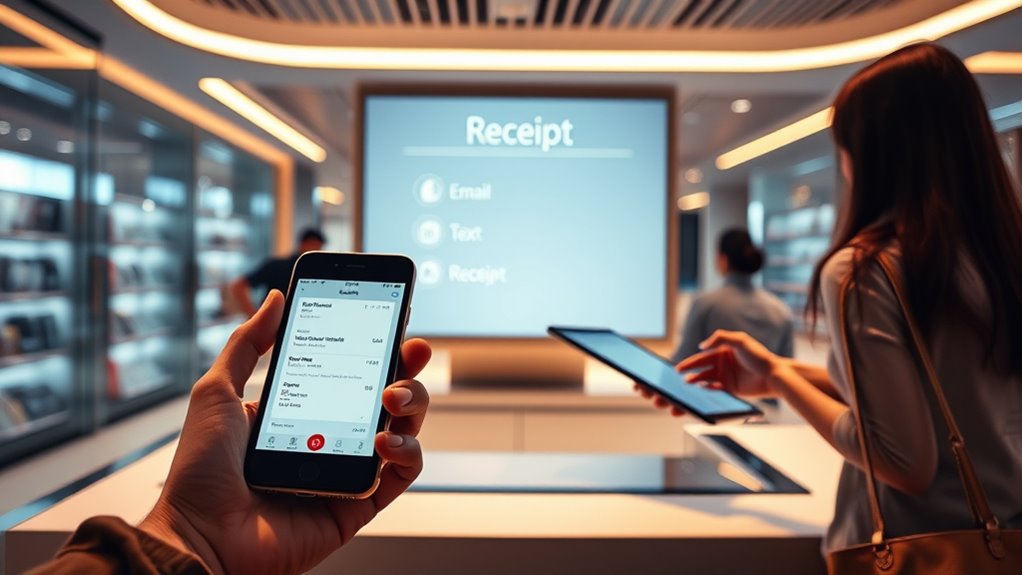
Receipts are evolving rapidly, transforming from paper slips into digital records that are more convenient and eco-friendly. Instead of cluttering your wallet or desk with paper receipts, you’re increasingly likely to receive your proof of purchase via email or text message. This shift isn’t just about convenience — it’s also a move toward sustainability initiatives, reducing paper waste and the environmental footprint of retail transactions. Digital invoicing plays a *vital* role here, streamlining the process for businesses and customers alike. Instead of printing receipts, companies can send electronic invoices that are easy to store, organize, and retrieve. This approach benefits both parties: you get your receipt instantly, and the business reduces costs associated with paper and ink.
Digital receipts are transforming transactions, offering convenience and sustainability by reducing paper waste and streamlining record-keeping.
As more merchants adopt digital invoicing, you’ll notice a growing trend toward paperless transactions. You might scan a QR code at checkout or provide your email address, and within moments, your receipt appears in your inbox. This method not only saves trees but also speeds up the process, making returns or expense tracking much simpler. Plus, digital receipts can be automatically stored in your email or cloud services, eliminating the risk of losing paper copies. For business owners, embracing digital invoicing aligns with sustainability initiatives that aim to cut waste and lower carbon footprints, making their operations more environmentally responsible. These initiatives often include incentives for customers who opt to receive receipts electronically, encouraging a broader shift toward eco-friendly practices.
Additionally, many systems incorporate secure data practices such as encryption and secure servers to protect your personal information. You might wonder if receiving receipts via email or text is secure. Rest assured, many systems use encryption and secure servers to protect your data. Additionally, opting for paperless receipts reduces clutter and simplifies record-keeping, especially for tax purposes or expense management. As technology advances, you’ll likely see even more innovative solutions, like digital wallets or integrated apps that automatically categorize and store your receipts. This not only enhances convenience but also supports businesses’ efforts to become more sustainable. More companies are recognizing that reducing paper waste aligns with consumer values, especially among environmentally conscious shoppers.
Ultimately, whether you prefer email, text, or no receipt at all, the trend is clear: digital records are replacing traditional paper slips. They’re faster, more efficient, and better for the planet. As you navigate this evolving landscape, expect your receipt experience to become increasingly seamless and eco-friendly, reflecting a future where sustainability initiatives and digital invoicing work hand in hand to benefit everyone.
As an affiliate, we earn on qualifying purchases.
Frequently Asked Questions
How Secure Are Digital Receipts Compared to Paper Copies?
Digital receipts can be quite secure if they use strong encryption methods to protect your data. However, you should be aware of data breach risks, especially if companies don’t update their security protocols. Compared to paper copies, digital receipts are less vulnerable to physical theft or loss but rely heavily on cybersecurity measures. To stay safe, always choose trusted providers and keep your devices secure.
Will Businesses Charge Extra for Digital or No Receipts?
Imagine a toll booth on your shopping journey—some businesses may add digital receipt fees or a receipt surcharge, making your trip more costly. You might encounter extra charges for digital or no receipts, as companies seek to cover digital infrastructure costs. While not universal, these fees could become more common, turning your receipt into a small toll on your shopping adventure, depending on the store’s policies.
How Do Receipts Affect Consumer Privacy and Data Security?
Receipts can raise privacy concerns and increase the risk of data breaches, especially with digital or email formats. When you receive digital receipts, your personal information might be stored or shared without your consent, making you vulnerable to identity theft or targeted marketing. To protect yourself, look for secure options, limit data sharing, and stay informed about how your data is used and stored by businesses.
Can Digital Receipts Be Easily Integrated With Personal Finance Apps?
Digital receipts can be easily integrated with your personal finance apps through digital wallet integration and app synchronization. These features allow seamless transfer of receipt data, making expense tracking straightforward. You simply link your receipts to your preferred finance app, which automatically updates your spending records. This integration streamlines your financial management, saves time, and improves accuracy, ensuring you stay on top of your budget without manual entry hassles.
What Legal Regulations Govern the Storage and Sharing of Digital Receipts?
Imagine holding a digital receipt, knowing it’s protected by strict rules. You’re governed by data privacy laws like GDPR and CCPA, which ensure your information stays secure. Regulatory compliance is essential for businesses storing or sharing receipts, requiring secure storage and transparent data use. You must adhere to these regulations to avoid penalties and protect your privacy, making sure your digital receipts are handled responsibly and legally.
As an affiliate, we earn on qualifying purchases.
Conclusion
Imagine a world where receipts vanish into thin air, and you’re left with a clutter-free, eco-friendly universe. No more paper mountains piling up on your desk or digital clutter clogging your inbox. Whether through quick texts or seamless emails, the future’s so sleek, it’s like having a personal assistant wiping out every scrap of paper. Get ready—this revolution will transform your shopping experience into a futuristic marvel you’ll wonder how you ever lived without!
secure digital invoicing software
As an affiliate, we earn on qualifying purchases.
As an affiliate, we earn on qualifying purchases.
As an affiliate, we earn on qualifying purchases.
Halloween Picks
halloween
As an affiliate, we earn on qualifying purchases.