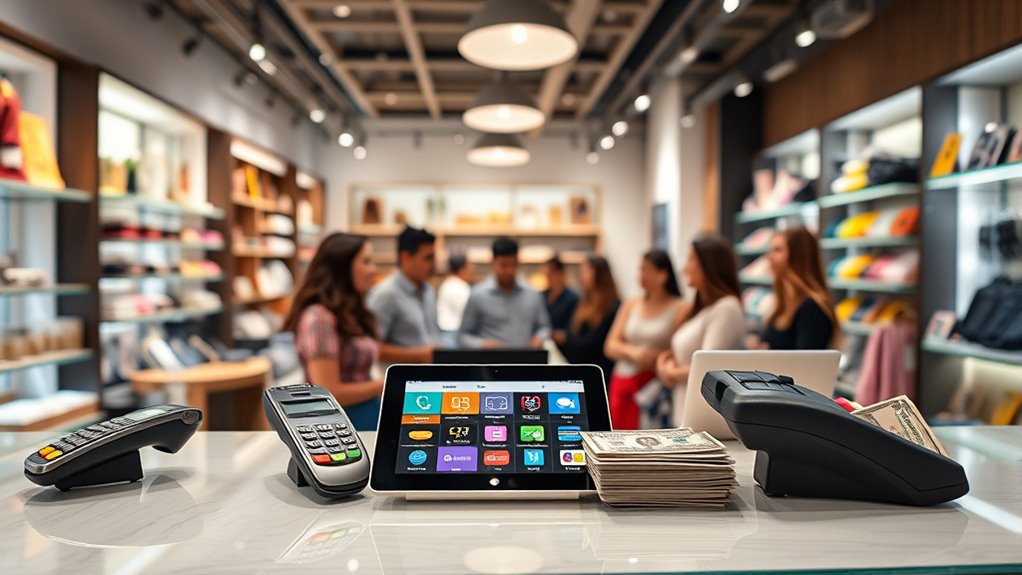

Offering multiple payment options helps you meet your customers’ preferences, boosting satisfaction and loyalty. Nearly 90% of US consumers prefer credit cards, but many small businesses still don’t accept them, limiting sales. Providing choices like digital wallets, BNPL, or contactless payments can increase conversions and reduce cart abandonment. Plus, handling various payments improves cash flow and keeps you secure against fraud. Keep going to discover how diversifying your payment methods can transform your business.

Get smart everyday buys delivered free with Prime
- Fast, free delivery on millions of items
- Prime Video, Amazon Music and more included
- Member-only deals all year
Key Takeaways
- Catering to customer preferences increases purchase likelihood and expands demographic reach.
- Offering diverse payment methods boosts sales, reduces cart abandonment, and encourages repeat business.
- Multiple options improve cash flow through faster, more secure digital transactions.
- Staying compliant and reducing fraud risk enhances customer trust and protects your business.
- Adapting to current payment trends ensures competitiveness and relevance across sales channels.
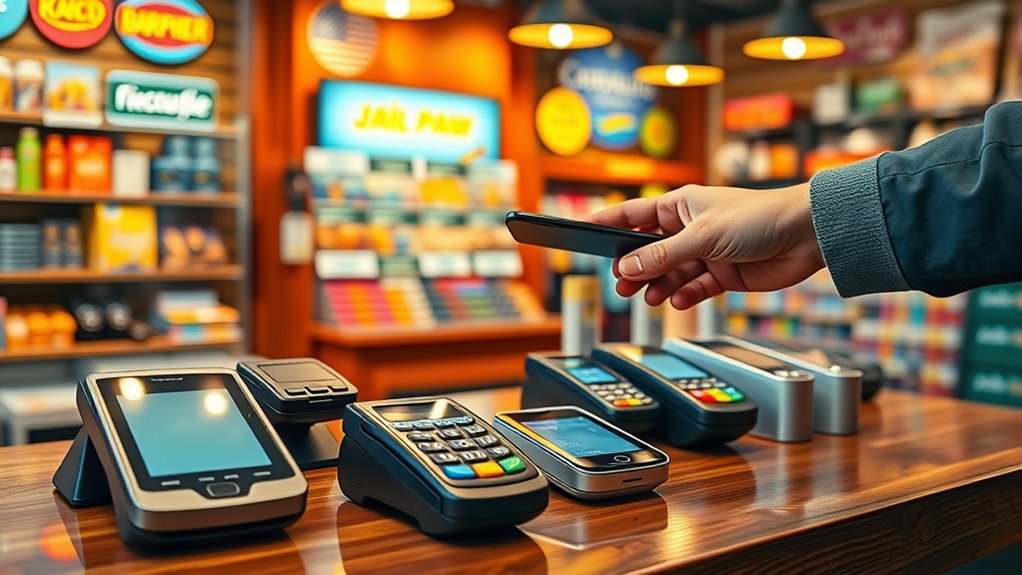
Are you maximizing your small business’s potential by offering multiple payment options? If not, you’re likely missing out on a significant opportunity to grow your customer base and boost sales. Nearly 90% of US consumers prefer paying with credit cards, yet about 30% of small businesses still don’t accept card payments. This gap limits your reach, especially when a large portion of shoppers expect the convenience of digital transactions. By diversifying your payment methods to include digital wallets, Buy Now Pay Later (BNPL) options, and cash alternatives, you appeal to a broader audience. For example, younger customers find BNPL attractive, and nearly half of shoppers consider payment choice a critical factor when selecting where to shop. If you don’t offer these options, you risk losing customers to competitors who do, as 21% of consumers will switch stores if their preferred payment method isn’t available.
Offering multiple payment options isn’t just about attracting new customers; it also directly impacts your sales performance. When you provide convenient and flexible payment choices, customers are more likely to complete their purchases. Accepting at least three different payment methods—such as cards, mobile wallets, and alternative options—strikes a balance that covers most preferences without overwhelming shoppers. This flexibility can lead to increased revenue, as more sales close successfully and customers return for repeat purchases. BNPL payments alone, which accounted for $316 billion globally in 2023, are projected to grow at a 9% compound annual growth rate through 2027, making them a lucrative sales channel. Additionally, contactless and click-to-pay options reduce friction during checkout, decreasing the chances of abandoned carts and lost sales.
Fast, efficient payments also improve your cash flow. Digital payment systems typically process payments faster than traditional methods, which often delay your access to funds. In fact, small businesses were paid an average of 9.5 days late in the second quarter of 2024, highlighting the need for quicker solutions. Implementing “pay now” features on invoices and sending prompt reminders can accelerate your cash inflow. Automated reconciliation tools streamline financial management by handling multiple payment types seamlessly and reducing errors. Real-time transaction data from digital payments also enables you to make quicker, smarter financial decisions and forecasts. Faster payments mean less reliance on credit lines, lowering your borrowing costs and improving overall financial stability. Furthermore, adopting modern payment systems can help you stay compliant with evolving security standards, reducing the risk of fraud and chargebacks. Staying informed about the latest trends in small business payments can give you a competitive edge and help you adapt more effectively.
Finally, adapting your payment options to match customer touchpoints and preferences keeps your business competitive. Online shoppers favor digital wallets and click-to-pay, while in-store clients may prefer cash or cards. Mobile payments via Apple Pay or Google Pay are increasingly popular, especially in developed markets. Accepting P2P payments like Venmo and Zelle is also on the rise, with retailers increasingly incorporating these methods. The ability to add or remove payment options based on evolving customer preferences ensures you stay relevant and attract diverse demographics. Analyzing payment data helps you optimize your offerings across sales channels, building trust and loyalty by consistently providing the methods your customers want. Offering multiple payment options isn’t just a convenience; it’s a strategic move to grow your small business.
As an affiliate, we earn on qualifying purchases.
Frequently Asked Questions
How Do Multiple Payment Options Impact Transaction Security?
Multiple payment options can both enhance and complicate transaction security. When you offer various methods, you need to implement tailored safeguards like encryption, tokenization, and strong authentication for each. This diversification requires diligent management to prevent vulnerabilities. Proper security protocols, PCI compliance, and real-time fraud detection become essential. By doing so, you reduce risks of data breaches and build customer trust, ensuring secure transactions across all payment channels.
What Is the Cost Difference Between Various Payment Methods?
You need to understand the cost differences between payment methods. Credit cards typically charge 2.6% to 3.5% plus fixed fees per transaction. ACH payments cost less, often under 1%, making them cheaper for B2B. Alternative options like tap-to-pay or mobile wallets may have transaction fees around 1.29%, with some providers charging monthly fees. Choosing the right method depends on your transaction volume and cost goals, balancing fees and flexibility.
How Do Payment Options Influence Customer Satisfaction?
Think of payment options as the keys to your customers’ wallets. When you offer multiple choices, you create a smoother, more convenient checkout experience. This reduces friction, boosts satisfaction, and encourages loyalty—especially if payments are fast and reliable. Customers appreciate variety, and providing it can cut cart abandonment by 11%. In turn, happy shoppers are more likely to return, making your business thrive in a competitive market.
Are There Specific Payment Methods Better for Certain Industries?
Certain payment methods work better for specific industries. For example, digital wallets like UPI or PayPal suit eCommerce and quick service sectors, offering fast, contactless transactions. Retail and groceries often prefer debit cards for everyday purchases, while high-value or subscription services lean toward credit cards. B2B businesses benefit from real-time payments and ACH transfers, reducing delays. Matching your industry’s needs with the right payment options enhances customer experience and streamlines operations.
How Can Small Businesses Manage Multiple Payment Systems Efficiently?
You should consider managing multiple payment systems efficiently because 81% of SMBs using several payment methods are open to integrated solutions. To do this, prioritize automation and integration across accounts receivable, payable, and cash management systems, reducing manual work and errors. Monitor transaction fees and negotiate better rates, and choose secure, compliant payment solutions that support various gateways. This approach accelerates cash flow, cuts costs, and enhances overall operational efficiency.
As an affiliate, we earn on qualifying purchases.
Conclusion
By now, it’s clear that offering multiple payment options isn’t just a modern convenience—it’s a must. Think of it as your business’s secret weapon, helping you stay ahead of the game, much like a trusty quill in a sea of keyboards. Don’t get caught in the past; embrace diverse payment methods today. Doing so guarantees your customers feel valued, and your business remains as adaptable as a knight’s armor in the ever-changing marketplace.
As an affiliate, we earn on qualifying purchases.
As an affiliate, we earn on qualifying purchases.
Fall Picks
fall essentials
As an affiliate, we earn on qualifying purchases.