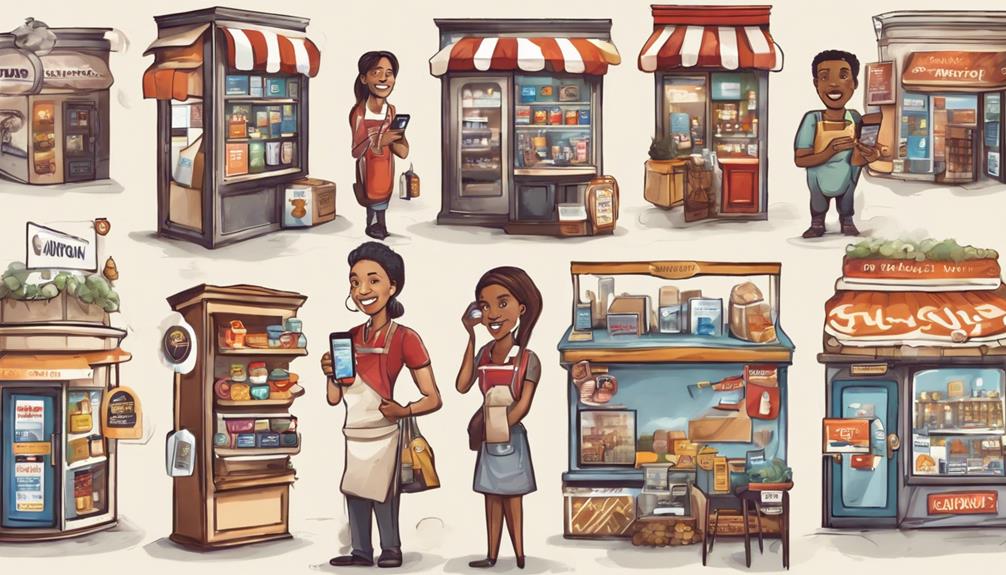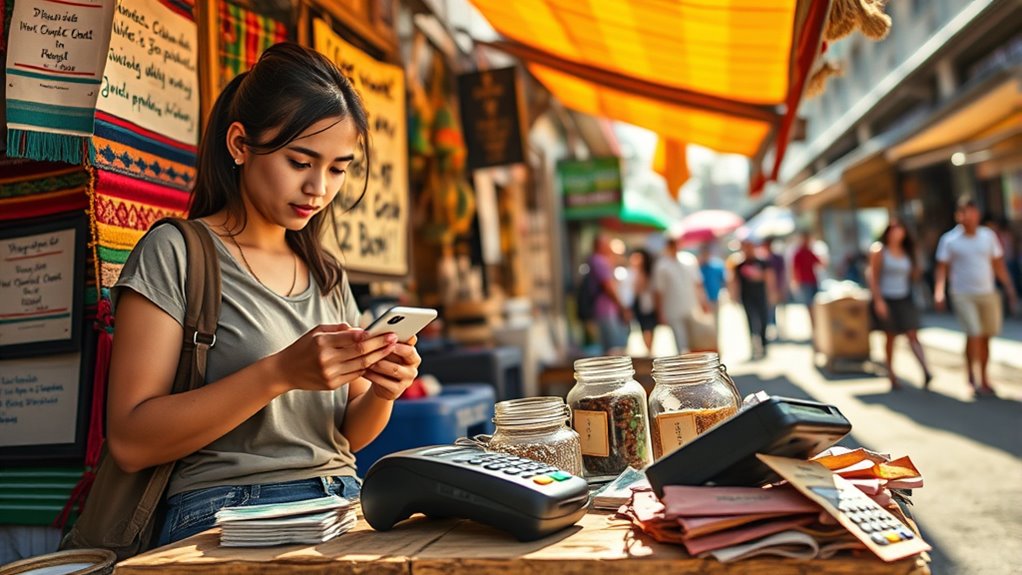
To thrive as a micro-merchant or side hustler, adopting digital payment solutions is essential. They make transactions faster, safer, and more convenient, helping you manage cash flow effectively. Digital tools reduce risks, streamline bookkeeping, and build trust with customers. Plus, they offer valuable insights to grow your business. Embracing these innovations helps you stay competitive and adaptable in today’s cashless economy—so, keep exploring how these solutions can boost your success.
Key Takeaways
- Digital payment solutions enable micro-merchants and side hustles to accept instant, secure transactions, improving cash flow management.
- They reduce cash handling risks, enhance financial transparency, and simplify bookkeeping for very small businesses.
- Digital platforms offer analytics tools that help small business owners understand customer behavior and sales trends.
- Adoption of digital payments increases customer trust, encourages repeat business, and supports business growth.
- Early integration of digital payment methods positions micro-merchants for long-term resilience and competitiveness.

Have you ever wondered how small-scale entrepreneurs are transforming the way we shop and earn? It’s all about innovative payment solutions that empower micro-merchants and side hustlers. These small businesses often operate with tight margins, so managing their cash flow effectively is essential. Cash flow management isn’t just about tracking income and expenses; it’s about ensuring there’s enough liquidity to keep the business running smoothly. When you adopt digital payment options, you can streamline this process considerably. Digital payments provide instant transactions, reducing the delays and uncertainties associated with cash handling. This immediate flow of funds helps you better predict your cash position, plan for expenses, and avoid cash shortages that could disrupt your operations.
Digital payments streamline cash flow, ensuring liquidity and smoother operations for small businesses and side hustlers.
Adopting digital payment methods isn’t just a convenience; it’s a strategic move for micro-merchants. Traditional cash transactions can be risky, slow, and difficult to track. With digital payments, you can quickly accept card payments, mobile wallets, or QR codes, making it easier for customers to pay you. This not only increases your sales potential but also enhances your credibility in the eyes of your customers. Plus, digital transactions leave a clear record, simplifying bookkeeping and reducing errors. This transparency is essential for maintaining healthy cash flow and preparing accurate financial reports, which are often overlooked in small businesses.
The shift toward digital payment adoption also opens up new opportunities for side hustlers. Whether you’re selling handmade crafts, offering freelance services, or running a small food stall, digital payments allow you to operate more professionally. You don’t have to worry about carrying cash or making change, and your customers appreciate the convenience. This ease of payment encourages repeat business and word-of-mouth recommendations. Furthermore, digital payment platforms often come with analytics tools that give you insights into customer behavior and sales trends, helping you make smarter business decisions.
For very small businesses, these payment solutions are a game-changer. They minimize cash handling risks, improve cash flow management, and create a seamless experience for your customers. As you grow, these tools can scale with you, offering features like invoicing, inventory management, and financial reporting. Additionally, understanding the benefits of eye patch products for personal care demonstrates how small innovations can improve overall well-being, which is increasingly important for entrepreneurs managing busy schedules. By embracing digital payment adoption early on, you position yourself for long-term success and resilience in an increasingly digital economy. It’s not just about making sales; it’s about building a sustainable business foundation that adapts to changing customer preferences and market demands.
Frequently Asked Questions
How Do Micro-Merchants Handle Chargebacks Effectively?
You can handle chargebacks effectively by implementing strong dispute resolution strategies and fraud prevention measures. Keep detailed records of transactions, communication, and delivery proof to support your case. Regularly monitor your account activity for suspicious behavior. Educate yourself on chargeback policies and respond promptly to disputes. These steps help you mitigate losses, protect your business, and ensure smoother resolution processes when issues arise.
What Are the Best Mobile Payment Apps for Small-Scale Sellers?
Think of mobile payment apps like a Swiss Army knife—versatile and handy. For small-scale sellers, apps like Square, PayPal, and Venmo are top choices, offering seamless digital wallets and contactless payments. They make transactions quick and secure, helping you focus on growing your side hustle. With intuitive interfaces and low fees, these apps are perfect for managing sales on the go and building customer trust effortlessly.
How Can Micro-Merchants Ensure Secure Payment Transactions?
To guarantee secure payment transactions, you should use a trusted digital wallet that offers built-in security features. Always enable fraud prevention tools like two-factor authentication and regularly update your app. Educate yourself on common scams and avoid sharing sensitive info. Using secure networks and monitoring transactions helps spot suspicious activity early. These steps help protect your business and customers, giving everyone peace of mind during every transaction.
What Are the Costs Associated With Different Payment Solutions?
Did you know that transaction fees can range from 1.5% to 3.5%, significantly impacting your profits? When choosing payment solutions, you need to take into account costs like transaction fees and hardware costs. Some providers charge flat rates, while others take a percentage of each sale. Hardware costs vary, with basic card readers starting around $20. Carefully compare options to find the most cost-effective solution for your small business.
How Do Payment Solutions Integrate With Small Business Accounting?
You can seamlessly integrate payment solutions with your small business accounting by linking them to your inventory management and customer relationship systems. This way, sales automatically update your inventory, and customer data helps improve relationships. Many payment platforms offer built-in integrations or APIs, making it easy to streamline transactions, track sales, and manage finances efficiently, giving you real-time insights and reducing manual data entry for your micro-merchant or side hustle.
Conclusion
Did you know that over 60% of micro-merchants worldwide use mobile payment solutions to grow their side hustles? This shows how accessible and essential these tools are for small businesses like yours. Embracing modern payment options can help you reach more customers, boost sales, and stay competitive. So, whether you’re just starting out or scaling up, leveraging these solutions is key to turning your side hustle into a thriving business.