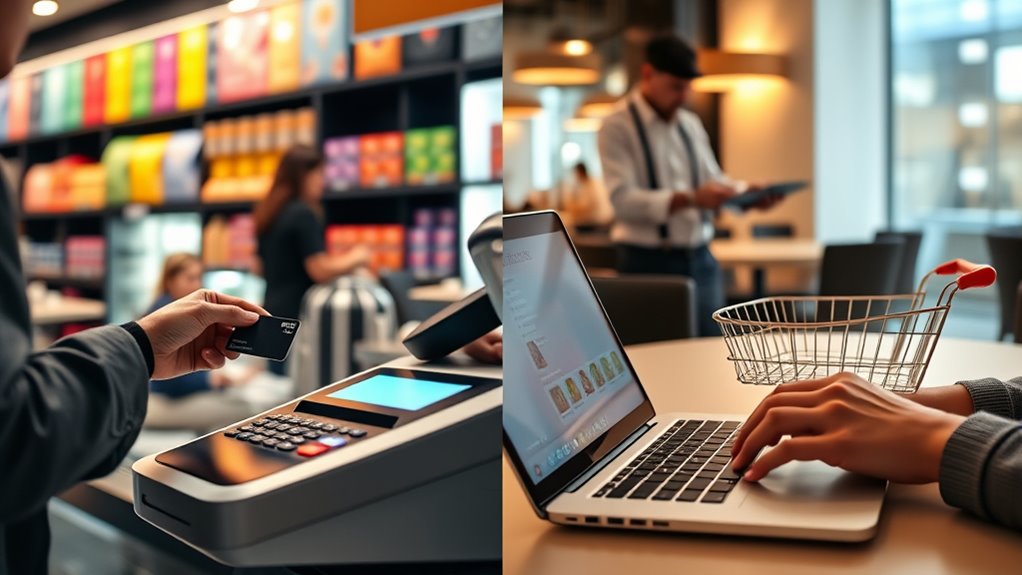

Payments in retail, restaurants, and e-commerce each have unique needs. Retail focuses on seamless checkout and loyalty rewards, balancing convenience and security through methods like EMV chips and tokenization. Restaurants prioritize speed with contactless and QR code payments, while managing high transaction volumes securely. E-commerce relies heavily on digital wallets and fraud prevention tools like 3D Secure and device fingerprinting. To understand how these differences shape customer experience and security, keep exploring the details behind each sector.
Key Takeaways
- Retail payments focus on in-store convenience, loyalty programs, and fraud prevention through EMV chip readers and tokenization.
- Restaurant payments emphasize speed and contactless options, with QR codes and encryption to handle high transaction volumes securely.
- E-commerce relies on digital wallets, secure checkout, and multi-layered fraud detection like 3D Secure for remote transactions.
- Security measures vary: retail uses EMV and tokenization, restaurants prioritize CVV and encryption, e-commerce employs device fingerprinting and fraud scoring.
- Each sector balances convenience and security differently, adapting to industry-specific fraud risks and customer experience needs.
Payments play a fundamental role in shaping the customer experience across retail, restaurant, and e-commerce sectors, but each industry handles transactions differently. In retail stores, you often see a focus on seamless payment methods that encourage repeat visits, which is where loyalty program strategies come into play. Retailers design these programs to reward customers for their purchases, motivating loyalty through discounts, points, or exclusive offers. When implementing loyalty programs, you need to guarantee the process is quick and straightforward, so customers don’t get frustrated at checkout. Additionally, retail environments are prime targets for fraud, so employing effective fraud prevention techniques is essential. These might include EMV chip card readers, real-time transaction monitoring, and secure tokenization to protect sensitive data. Retailers must strike a balance between convenience and security, making sure their fraud prevention measures don’t hinder a smooth shopping experience.
In the restaurant industry, payment methods are often tailored for ease and speed, especially during busy hours. You might find contactless payments, mobile wallets, or even QR code-based options becoming more common, reducing wait times and streamlining service. Loyalty strategies in restaurants are frequently integrated into POS systems, allowing servers to instantly apply rewards or discounts during checkout. This encourages repeat visits and customer retention. Since restaurants process a high volume of transactions, they also face unique fraud risks like fake coupons or stolen card data. To combat this, many adopt fraud prevention techniques such as CVV verification, transaction velocity checks, and encryption. These measures help guarantee that both your customers’ data and the restaurant’s revenue are protected, without slowing down the payment process.
E-commerce, on the other hand, relies heavily on digital payment solutions, including credit cards, digital wallets, and buy-now-pay-later options. You often see personalized loyalty program strategies online, where your purchase history influences discounts or targeted offers. Because transactions happen remotely, implementing multi-layered fraud prevention techniques is vital. Tools like 3D Secure authentication, fraud scoring algorithms, and device fingerprinting help verify your identity and prevent unauthorized transactions. E-commerce platforms also focus on building trust through secure checkout processes, reassuring you that your data is safe. These platforms continuously update their security measures to fight evolving fraud tactics, ensuring that your shopping experience remains smooth and secure.
Furthermore, some industries are exploring new payment security technologies to enhance protection while maintaining a seamless user experience.
Frequently Asked Questions
How Do Cross-Border Payments Differ Across These Sectors?
You’ll find cross-border payments differ across sectors due to currency fluctuations and regulatory compliance. In retail, you often face fluctuating exchange rates, making pricing tricky, while restaurants may deal with tighter regulations and quicker transactions. E-commerce must navigate complex global regulations and currency conversions swiftly, ensuring compliance and minimizing fee impacts. Staying aware of these differences helps you manage risks and streamline international transactions across all sectors effectively.
What Security Measures Are Unique to Each Industry’s Payment Systems?
You should prioritize security measures like mobile encryption and biometric authentication tailored to each industry. In retail, mobile encryption safeguards card data during transactions, while biometric authentication ensures authorized access at checkout. Restaurants often use biometric methods for employee verification, and e-commerce sites rely heavily on mobile encryption to secure online payments. By implementing these security features, you can protect customer data effectively across all sectors.
How Do Loyalty Programs Influence Payment Methods in These Sectors?
Loyalty programs act as a magnet, pulling you deeper into each sector’s payment ecosystem. You’re more likely to use integrated payment methods that reward your loyalty, like mobile wallets or contactless cards, thanks to loyalty integration and reward incentives. In retail, restaurant, and e-commerce, these programs turn simple transactions into engaging experiences, encouraging repeat business and making your payment choices feel like uncovering exclusive perks.
What Are the Latest Technological Trends Impacting Payments?
You’ll notice that contactless payments and biometric authentication are shaping the latest payment tech trends. You can now quickly tap your card or smartphone to pay, making transactions faster and safer. Biometric authentication, like fingerprint or facial recognition, adds extra security, reducing fraud. These innovations streamline your shopping and dining experiences, offering convenience and peace of mind while keeping your payment info protected.
How Do Customer Preferences Shape Payment Options in Each Industry?
You notice that customer behavior heavily influences payment options, as convenience remains a top priority. In retail, you prefer quick, contactless payments like mobile wallets; in restaurants, you value seamless checkouts with digital or card payments; and in e-commerce, you rely on secure, flexible methods such as digital wallets and one-click checkout. Your desire for payment convenience drives businesses to adapt and offer tailored solutions that match your expectations across industries.
Conclusion
Understanding how payments differ across retail, restaurants, and e-commerce helps you navigate each world with confidence. Just like a seasoned traveler knows their map, knowing these differences guides your choices and expectations. So, next time you pay, remember—each industry has its own rhythm and rules, but your awareness makes you the master of your spending journey. After all, in the dance of commerce, it’s your steps that truly matter.