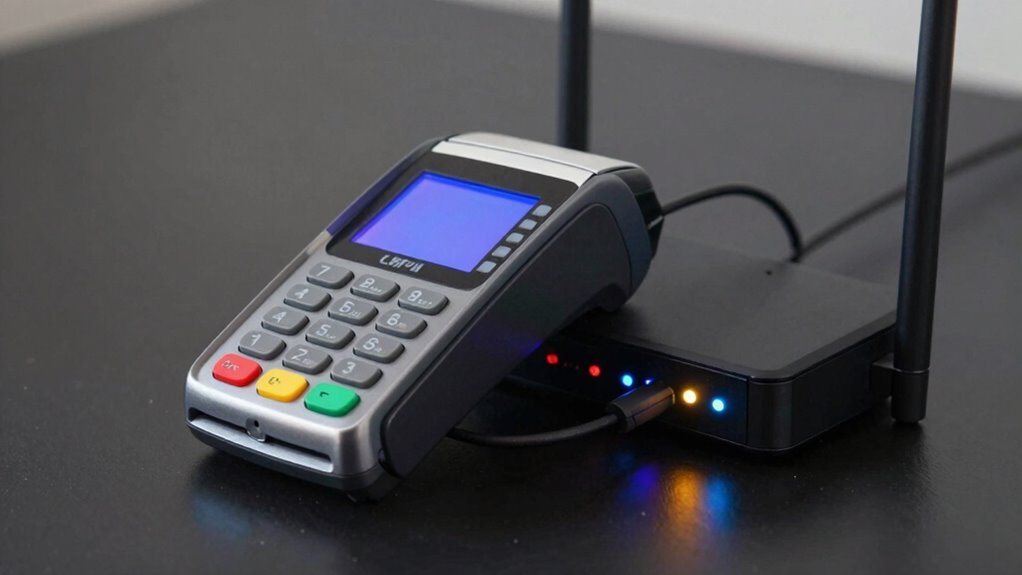

Sharing backup power between your payment terminal and router keeps transaction processing smooth and wireless connectivity stable during power outages. This guarantees your customers can pay securely and quickly, preventing frustration and revenue loss. It also simplifies system management, lowers costs, and reduces downtime. Maintaining continuous operation boosts customer trust and loyalty, even in unexpected situations. If you want to understand how this setup enhances your retail environment and keeps your business resilient, keep exploring these essential benefits.
Key Takeaways
- Shared backup power ensures continuous wireless connectivity for both devices during outages.
- It simplifies installation and maintenance by reducing the need for multiple backup systems.
- Keeps payment terminals and routers operational, preventing transaction disruptions and customer frustration.
- Enhances system reliability and reduces downtime in fast-paced retail environments.
- Supports compliance with industry standards and improves overall operational resilience.
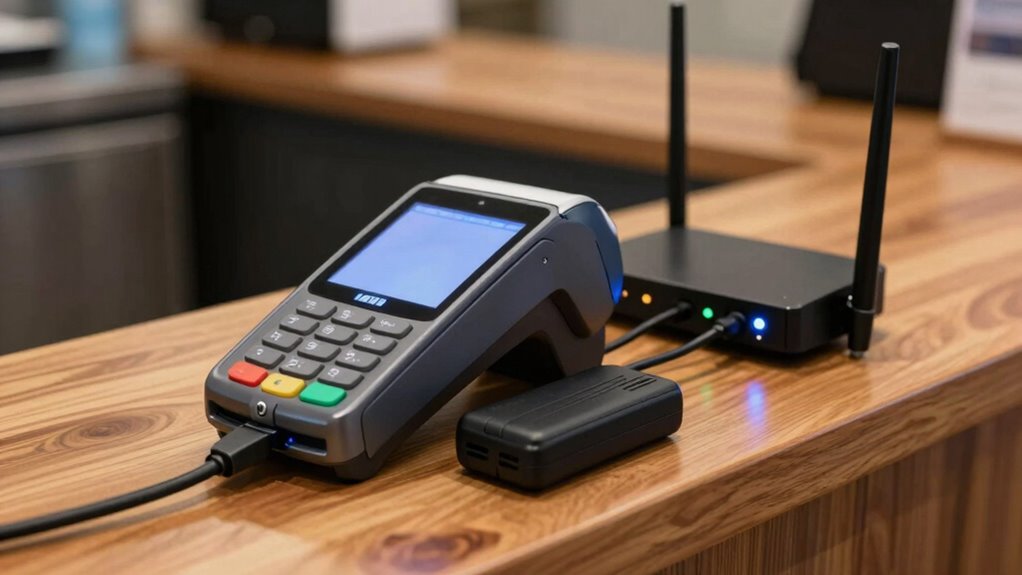
In today’s fast-paced retail environment, ensuring your payment terminals and routers stay operational during power outages is essential. When a power failure occurs, it can disrupt transactions, frustrate customers, and lead to lost sales. That’s why sharing backup power between your payment terminals and routers isn’t just a good idea—it’s a strategic move to maintain seamless wireless connectivity and keep your business running smoothly.
By having a shared backup power source, you reduce the risk of communication breakdowns. Payment terminals rely heavily on a stable connection to process transactions quickly and securely. If the router loses power, your wireless connectivity drops, causing delays or complete halts in checkout operations. Ensuring both devices are powered by the same backup system guarantees that your wireless network stays intact, so customers experience swift, uninterrupted service even during outages.
Power redundancy plays a vital role here. It’s not enough to back up just one device; both your payment terminal and router need reliable power sources. When they share backup power, you eliminate weak links in your system, minimizing downtime. This setup ensures that even if the main power goes out, your wireless connectivity remains active, allowing staff to complete transactions, verify payments, and access necessary cloud applications without interruption. The goal is to keep the checkout process seamless and efficient, regardless of external power issues.
Another advantage of sharing backup power is easier management and maintenance. Instead of juggling separate power sources or backup units, you only need to focus on one system. This simplifies installation, reduces costs, and makes troubleshooting more straightforward. Plus, it ensures consistency in power delivery, which can extend the lifespan of your devices and improve overall reliability. Additionally, this approach can help ensure compliance with industry standards and best practices for operational resilience. Implementing shared backup power also supports ongoing system integrity, preventing potential vulnerabilities caused by inconsistent power supply. Incorporating power management solutions can further optimize energy use and prolong backup system performance.
In addition, sharing backup power supports compliance with industry standards and best practices for operational resilience. Customers expect quick, secure transactions, and any hiccup during a power outage can damage their trust. By ensuring your payment terminals and routers are always powered, you provide a consistent experience that reinforces your commitment to service quality.
Furthermore, leveraging power redundancy enhances your ability to maintain connectivity and operational flow during unexpected outages, which is increasingly important as retail environments become more reliant on cloud-based applications and wireless networks. Ultimately, integrating shared backup power for your payment terminals and routers is a proactive step toward robust operational continuity. It safeguards wireless connectivity, guarantees power redundancy, and keeps your business functioning smoothly even when the lights go out. This approach not only minimizes revenue loss but also enhances customer satisfaction, making it a vital part of your retail infrastructure.
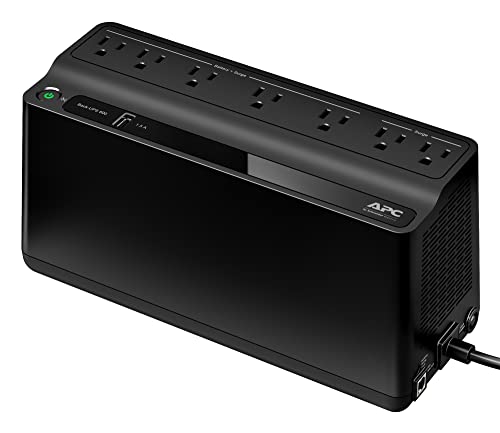
APC UPS 600VA/330W UPS Battery Backup for Computer, Router, NAS, BE600M1
- Battery Backup for Devices: Keeps computer and router running during outages
- Extended Runtime: Provides 23 minutes of backup at 100W load
- Surge Protection: Protects against power surges and spikes
As an affiliate, we earn on qualifying purchases.
As an affiliate, we earn on qualifying purchases.
Frequently Asked Questions
How Long Should Backup Power Last During an Outage?
You should aim for backup power to last at least 4-6 hours during a power outage, depending on your business needs. Assess your backup power capacity to guarantee it can sustain your payment terminal and router during outages, preventing disruptions. Longer outages require larger capacity batteries or generators. Regularly test your backup power system to confirm it functions properly when needed, ensuring uninterrupted payment processing and network connectivity.
Can Backup Power Be Integrated With Existing Security Systems?
Did you know that over 60% of security breaches happen during power outages? You can integrate backup power with your existing security system to guarantee continuous protection. Proper power management optimization enables seamless security system operation and prevents vulnerabilities during outages. By linking backup power, you enhance reliability and response times, keeping your payment terminals and network secure even when the main power fails.
What Are the Costs Associated With Backup Power Solutions?
The costs of backup power solutions vary based on your system’s needs, but a thorough cost analysis helps you compare options effectively. You’ll need to take into account initial investment, ongoing maintenance, and replacements. Battery lifespan impacts long-term expenses, as batteries need replacing every few years. Investing in reliable backup power may seem costly upfront, but it ensures your payment terminal and router stay operational during outages, preventing revenue loss and maintaining customer trust.
How Often Should Backup Power Batteries Be Replaced?
You should replace backup power batteries every 3 to 5 years, depending on their battery lifespan and usage. Regular maintenance guarantees reliable backup during outages. Keep an eye on performance indicators like reduced runtime or frequent recharging cycles, which signal the need for replacement. Staying proactive with your replacement frequency minimizes downtime, ensuring your payment terminal and router remain operational during power interruptions.
Are There Any Compatibility Issues With Different Payment Terminal Brands?
Like fitting puzzle pieces together, brand compatibility and power integration are vital. Most modern payment terminals and routers are designed for seamless compatibility, but some brands may have unique requirements. Check specifications and guarantee your backup power system supports the necessary connections. If you match the right power source with your devices, you’ll avoid disruptions, keeping transactions flowing smoothly, much like a well-orchestrated symphony where every instrument plays its part in harmony.

CyberPower CP1500PFCLCD PFC Sinewave UPS Battery Backup and Surge Protector, 1500VA/1000W, 12 Outlets, AVR, Mini Tower, UL Certified
- Power Capacity: 1500VA/1000W PFC Sine Wave UPS
- Number of Outlets: 12 outlets with surge protection
- Outlet Types: Six battery backup, six surge protected
As an affiliate, we earn on qualifying purchases.
As an affiliate, we earn on qualifying purchases.
Conclusion
So, next time your payment terminal and router decide to take an unannounced vacation during a power outage, remember: sharing backup power isn’t just smart—it’s a subtle act of rebellion against chaos. With both devices powered, you’ll keep transactions flowing and your reputation intact, proving that sometimes, a little foresight is the best form of sophistication. After all, who wants to be the business that lost it all because of a blackout? Not you.
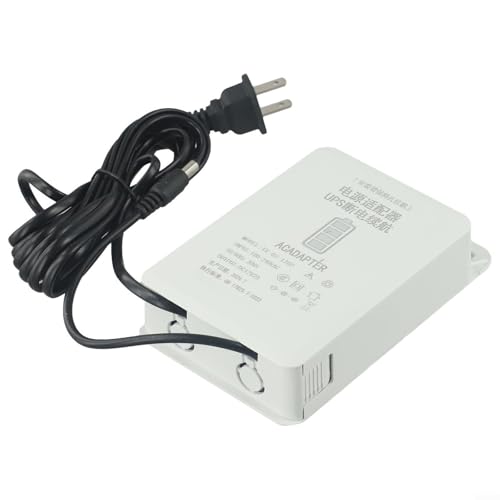
DC 12V-2A Mini UPS Battery Backup Interface with 6000mAh Capacity for WiFi, Router, Modem, and Security Cameras – Uninterruptible Power Supply Adapter for Outdoor Use
- Compact and Portable Design: Mini size for easy portability
- Reliable Power Backup: Ensures continuous device operation during outages
- Advanced Battery Protection: Over-current, over-voltage, over-charge, over-discharge protection
As an affiliate, we earn on qualifying purchases.
As an affiliate, we earn on qualifying purchases.
business continuity UPS for payment systems
As an affiliate, we earn on qualifying purchases.
As an affiliate, we earn on qualifying purchases.