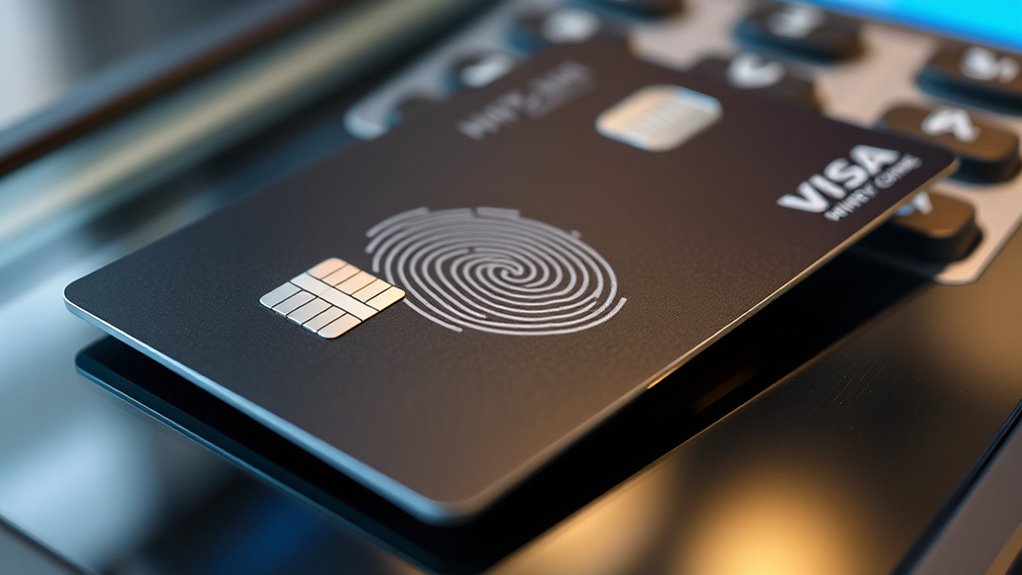

Biometric credit cards use built-in fingerprint sensors to verify your identity during payments. When you place your finger on the sensor, it captures and compares the unique ridges and patterns to your stored biometric data. If they match, the transaction is approved instantly, making payments faster and more secure. This technology reduces fraud and eliminates the need for PINs or signatures. Curious about how this technology keeps your info safe and what’s next? Keep exploring to find out.
Key Takeaways
- Fingerprint sensors embedded in the card scan the user’s biometric data during payment.
- The scanned fingerprint is compared to securely stored data within the card or secure element.
- If the biometrics match, the transaction is authorized instantly; if not, it is declined.
- Biometric data is encrypted and stored locally, preventing transmission over networks.
- This process enhances security by ensuring only the cardholder can approve payments using their fingerprint.
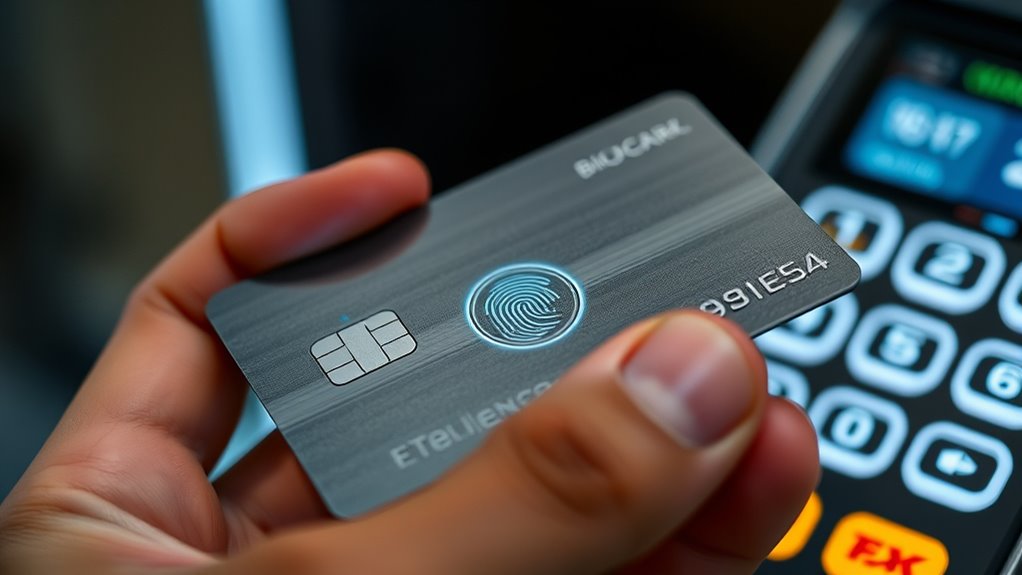
Biometric credit cards are revolutionizing the way you make transactions by integrating fingerprint or facial recognition technology directly into the card. This innovation offers a seamless, secure method for payments, reducing the need to remember PINs or carry multiple cards. When you use a biometric credit card, you simply authenticate your identity through your fingerprint or face, making the process faster and more convenient. Thanks to embedded sensors, the card captures your biometric data securely at the moment of transaction, verifying your identity instantly. This approach not only streamlines your checkout experience but also enhances security by ensuring that only you can authorize purchases with your unique biometric traits.
Biometric credit cards enable faster, more secure payments using fingerprint or facial recognition technology.
Security enhancements are at the core of biometric credit cards. Unlike traditional cards vulnerable to theft or duplication, biometric data is difficult to fake or steal. When you register your fingerprint or facial features, the data is encrypted and stored securely within the card or a dedicated secure element. During a transaction, the sensor scans your biometric, compares it to the stored data, and, if it matches, approves the payment. This process minimizes the risk of fraud, as stolen card details alone are insufficient to complete a purchase without your biometric confirmation. Furthermore, biometric verification adds an extra layer of security over PINs and signatures, which can sometimes be compromised or observed. The use of biometrics considerably reduces unauthorized transactions, giving you peace of mind that your money and information are better protected.
Additionally, the development of security standards for biometric data handling ensures consistent protection across devices and providers. However, privacy concerns do come into play with biometric credit cards. You might worry about how your sensitive biometric data is stored and whether it can be misused or hacked. Reputable manufacturers encrypt biometric data and store it locally, either on the card itself or within a secure element, rather than transmitting it over networks. This reduces the risk of interception. Still, there’s an ongoing debate about data privacy and how companies handle biometric information. You should always review the privacy policies of your card provider to understand how your data is protected and used. Some users may feel hesitant to adopt biometric technology due to these concerns, but the industry generally emphasizes strict security protocols to safeguard your biometric identifiers.
In essence, biometric credit cards offer a compelling blend of security enhancements and convenience, but they also require you to be mindful of privacy implications. By understanding how your biometric data is managed and trusting reputable providers, you can enjoy the benefits of faster, safer transactions without sacrificing your privacy. As technology continues to evolve, these cards are poised to become a standard, transforming the way you pay and protecting your financial information more effectively than ever before.

TEC ESS Enhanced Sign in Security USB Fingerprint Biometric Passkey Scanner – SecureTouch WireKey Fast Login <1s Windows Hello Business 360° Recognition TE-FPA-CA1
📱 QR CODE SETUP GUIDE: Scan the QR code on the packaging to access the setup page with…
As an affiliate, we earn on qualifying purchases.
As an affiliate, we earn on qualifying purchases.
Frequently Asked Questions
How Secure Are Fingerprint Sensors Against Hacking Attempts?
Fingerprint sensors on biometric credit cards are quite secure, but no system is completely hack-proof. They use advanced encryption to protect your biometric data, reducing risks of biometric privacy breaches. Manufacturers also incorporate hacking prevention features, such as liveness detection, to prevent spoofing attempts. While they considerably enhance security, you should stay cautious, keep your software updated, and monitor your accounts regularly to make sure your biometric data remains safe from hackers.
Can Multiple Users Register Their Fingerprints on One Card?
Yes, multiple users can register their fingerprints on one card. Most biometric credit cards support fingerprint registration for several users, allowing each person to unseal and authorize payments securely. You typically need to go through the fingerprint registration process individually, enrolling each user’s fingerprint. This feature makes it convenient for shared use, ensuring only authorized individuals can access the card’s functions while maintaining the biometric security benefits.
What Happens if the Fingerprint Sensor Malfunctions?
If the fingerprint sensor malfunctions, you might experience delays or inability to authorize payments. The sensor may need recalibration or cleaning to fix minor issues, but hardware damage could require professional repair or replacement. Regularly updating the device’s software and avoiding physical damage can prevent malfunctions. If problems persist, contacting customer support guarantees proper diagnosis and resolution, keeping your payment process smooth and secure.
Are Biometric Credit Cards Compatible With All Payment Terminals?
You’ll find that biometric credit cards aren’t compatible with all payment terminals yet. Some still rely on traditional magnetic stripe or contactless payment technologies, which may not support fingerprint authentication. To guarantee smooth transactions, check if the terminal has the necessary biometric capabilities. Otherwise, you might need to use a standard card or switch to a compatible device. Stay updated on terminal upgrades to enjoy seamless biometric payments.
How Long Does It Take to Authenticate a Fingerprint During a Transaction?
During a transaction, fingerprint recognition typically takes about one to two seconds for authentication. The authentication speed depends on the quality of the fingerprint sensor and the device’s processing power. When you use biometric credit cards, you’ll find that the quick fingerprint recognition process makes payments seamless and efficient. This fast authentication guarantees your transaction is secure while saving you time at checkout.

Fingerprint Cards, Applicant FD-258, 5 Cards
Standard FBI FD-258, FBI ver 5/15/17
As an affiliate, we earn on qualifying purchases.
As an affiliate, we earn on qualifying purchases.
Conclusion
Biometric credit cards make payments faster and more secure, so you don’t have to worry about forgotten passwords or stolen cards. Imagine confidently tapping your card, knowing your fingerprint is the key—no more fumbling or delays. It’s like having a personal guard that only you can access. As these cards become common, you’ll enjoy seamless transactions with peace of mind, knowing your identity is protected by your unique fingerprint every time you pay.

uAttend BN6000 Biometric Time Clock System for Small Business with Cloud-Based Employee Timecards
Accurate Biometrics – Fingerprint scanning ensures precise punch capture.
As an affiliate, we earn on qualifying purchases.
As an affiliate, we earn on qualifying purchases.

WHonor RFID Blocking Card 6 Pack, Bank Debit Credit Card Protector, Anti-Theft Contactless NFC Blocker, Entire Wallet Protection
Secure Your Information: Simply insert the RFID blocking card into your wallet to protect against digital pickpocketing. Block…
As an affiliate, we earn on qualifying purchases.
As an affiliate, we earn on qualifying purchases.