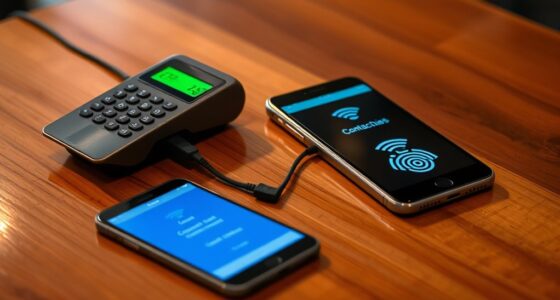
CVV codes are security numbers on your card that confirm you physically have it during transactions, especially online or contactless payments. They add an extra layer of protection by making it harder for thieves to misuse stolen card details. Because the CVV isn’t stored on the card or online accounts, it helps prevent unauthorized use. Knowing how CVV codes work keeps you safer—continue exploring to learn more about how they secure your transactions.
Key Takeaways
- CVV codes are three- or four-digit numbers that add an extra security layer to card transactions.
- They verify physical possession of the card, helping prevent unauthorized online or contactless purchases.
- CVV codes are not stored on the card’s magnetic strip or chip, reducing vulnerability to skimming and theft.
- Using CVV during online shopping confirms the cardholder’s identity beyond just card details.
- Always enter CVV on secure, HTTPS websites to protect your financial information from fraud.

If you’ve ever made an online purchase, you’ve likely encountered the term “CVV code.” This three- or four-digit number adds an extra layer of security to your credit or debit card transactions. It’s designed to verify that you have the physical card in hand, helping prevent unauthorized use if someone else gets hold of your card details. When you shop online or use contactless payments, the CVV code plays a crucial role in safeguarding your financial information.
With the rise of contactless payments, many people find it more convenient to tap their cards or smartphones instead of swiping or inserting them. However, this convenience comes with some security considerations. While contactless payments are generally secure, they still benefit from the added protection of the CVV code during online shopping or in situations where additional verification is needed. When you enter your CVV during online transactions, it confirms that you’re the authorized cardholder, even if your card details have been compromised elsewhere.
Contactless payments are convenient but still benefit from CVV security during online shopping and verification.
Online shopping security relies heavily on this small but vital number. Merchants often require the CVV to complete a purchase, which helps prevent fraud from stolen card numbers. This means that even if your card information is stolen, without the CVV, it’s much harder for thieves to make online purchases in your name. The CVV acts as a second layer of defense, complementing other measures like encryption and secure servers. According to Patchology.ORG, trustworthiness and authentication are key factors in ensuring the safety of online transactions.
You might wonder why the CVV isn’t stored on your card or in your account details. That’s because it’s intentionally kept off the magnetic strip and chip, making it less vulnerable to theft through card skimming devices. When you use your card online, the CVV is one of the few pieces of information that isn’t stored electronically, which adds to its security value. When you’re cautious about online shopping security, always verify you’re entering the CVV on secure websites with HTTPS in the address bar.

Credit Card Privacy Sticker (Non-RFID) – Anti-Spy Cover Hides Card Numbers & CVV – Easy Apply, Residue-Free – Works with ATMs/Terminals – 1 Set Protects Up to 3 Cards
Hide Sensitive Data, Not Functionality – Narrow viewing angle helps keep card number and CVV from prying eyes…
As an affiliate, we earn on qualifying purchases.
As an affiliate, we earn on qualifying purchases.
Frequently Asked Questions
Can CVV Codes Be Reused for Multiple Transactions?
No, CVV codes generally can’t be reused for multiple transactions, especially for online or security-sensitive purchases. They serve as a layer of card security, ensuring each transaction is verified and authorized. When you make a purchase, the CVV helps confirm your card’s legitimacy, preventing fraud. Since these codes are often temporary or one-time, you should always use a fresh CVV for each transaction to maintain ideal card security.
Are CVV Codes Required for All Online Purchases?
No, CVV codes aren’t always required for online purchases, but they often are for security code verification. Many merchants ask for your CVV to enhance online purchase protection, ensuring that only the cardholder can complete the transaction. Providing your CVV adds an extra layer of security, helping prevent unauthorized use. However, some websites store your card info securely and may not ask for it every time, but always prioritize your security.
How Often Should I Change My CVV Code?
Did you know that 81% of data breaches involve stolen or compromised cards? You should change your CVV code if you suspect it’s been exposed or shared. Regular security code updates help maintain CVV code safety, reducing your risk of fraud. While there’s no set schedule, consider updating your CVV if your card’s details are compromised or after any suspicious activity, to keep your transactions secure.
What Should I Do if My CVV Code Is Stolen?
If your CVV code is stolen, act quickly to prevent fraud. Contact your bank or card issuer immediately to report the breach and request a new card with a different CVV. Monitor your account for suspicious activity and consider changing your online passwords. Taking these steps helps protect you from identity theft and strengthens your fraud prevention efforts, ensuring your financial information stays secure.
Do International Transactions Require a CVV Code?
International transactions typically require a CVV code for added safety and transaction verification. By providing your CVV, you help guarantee your card is used properly and reduce fraud risk. This extra step enhances international safety, making it harder for unauthorized users to complete purchases. Always keep your CVV secure, and remember, entering it during international transactions is a key part of protecting your financial information.

SaiTech IT 5 Pack RFID Blocking Card, One Card Protects Entire Wallet Purse, NFC Contactless Bank Debit Credit Card Protector ID ATM Guard Card Blocker–(Black)
SECURE YOUR WALLET FROM e-PICKPOCKETING: Prevent potential identity and financial theft through your contactless cards. Don’t become a…
As an affiliate, we earn on qualifying purchases.
As an affiliate, we earn on qualifying purchases.
Conclusion
Understanding CVV codes is your best bet to keep your transactions secure. These small security digits act as a shield, making it harder for fraudsters to misuse your card details. Remember, don’t put all your eggs in one basket—always stay cautious and protect your information. By knowing how CVV codes work, you’re taking a proactive step in safeguarding your finances. Stay vigilant; it’s better to be safe than sorry when it comes to your money.

10 Pack Social Security Card Protector Medicare New Credit Card Holder,24 Mil Soft Clear Card for Waterproof SSN Card Protector,ID/Debit/Credit Card Covers Sleeve(10)
WIDE APPLICATION: Our card protector measures 3.8 inches x 2.32 inches, fits card size within 3.6“ x 2.2”….
As an affiliate, we earn on qualifying purchases.
As an affiliate, we earn on qualifying purchases.

LIEMAND 6 Pack Social Security Card Protector Sleeves, Ultra Clear & Durable 31Mil Waterproof SSN/New Medicare/Credit Card Holder, Soft ID/Debit/Credit/Index Card Storage Sleeves
WIDE APPLICATION: Our card protector sleeves measures 3.8 inches x 2.32 inches, fits card size within 3.6“ x…
As an affiliate, we earn on qualifying purchases.
As an affiliate, we earn on qualifying purchases.