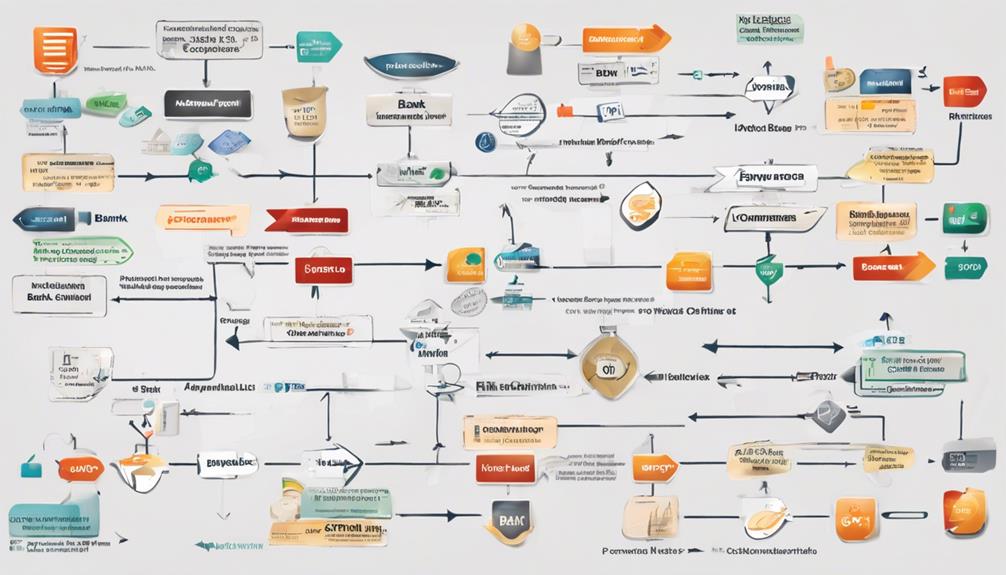
The evolution of card security has moved from magnetic stripe cards, which stored data easily copied and became vulnerable to fraud, to contactless and EMV chip technology that generate unique transaction codes for higher safety. Now, mobile wallets and biometric verification, like fingerprint or facial recognition, add extra layers of protection and convenience. As technology advances, understanding these changes helps you stay ahead in secure payment methods—discover how each step improves your financial safety.
Key Takeaways
- Magnetic stripe cards, initially popular, were vulnerable to cloning and fraud, prompting the development of more secure technologies.
- EMV chip cards introduced microprocessor-based security, generating unique transaction codes to prevent cloning.
- Contactless and mobile payment methods enhanced convenience but still faced security challenges, leading to additional safeguards.
- Industry standards like PCI DSS established comprehensive security protocols to protect cardholder data across the payment ecosystem.
- Biometrics, such as fingerprint and facial recognition, now provide advanced authentication, making card security more robust and user-friendly.
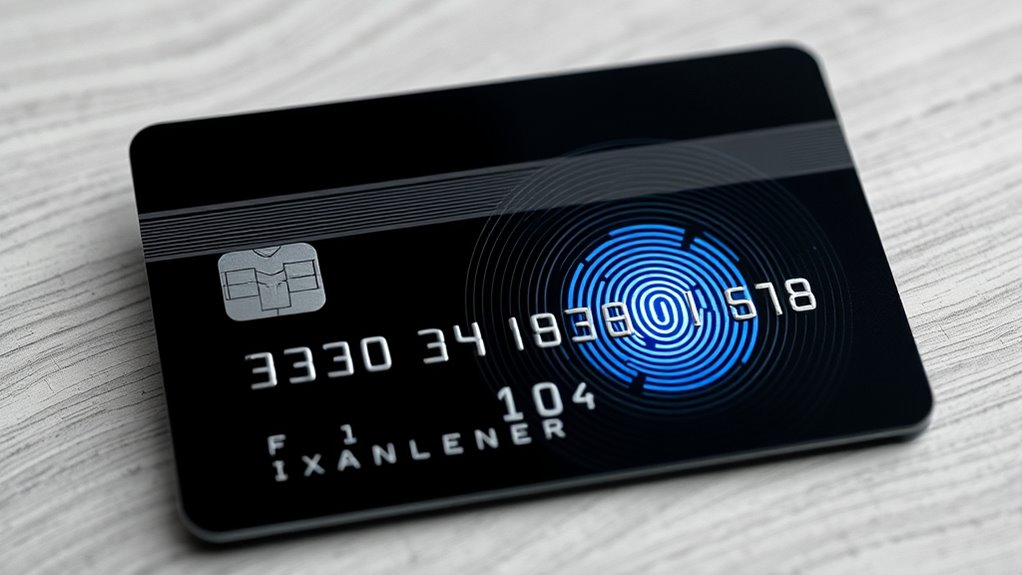
The evolution of card security reflects a continuous effort to protect users and their financial data from fraud and theft. When magnetic stripe cards first appeared, they were hailed as a technological breakthrough, making transactions faster and more convenient. However, their convenience came with significant security flaws. These cards store data on a magnetic strip that’s easy to copy, making them vulnerable to cloning and fraud. As a result, fraud rates increased, especially during the late 1990s and early 2000s, causing concern across the industry. Physical wear and tear on swipe cards and readers also added to the inefficiencies, leading to higher maintenance costs and more frequent failures. To address these issues, contactless technology emerged, reducing the need for physical contact and improving transaction speed. Despite these advancements, magnetic stripe cards remained susceptible to data theft, prompting the industry to seek more robust security measures. Magnetic stripe technology was initially praised for its simplicity but proved inadequate against modern fraud techniques. The introduction of EMV chip technology marked a significant milestone. These microprocessor-based chips, developed under the standards of Europay, Mastercard, and Visa, offered a much higher level of security compared to magnetic stripes. Unlike the static data stored on magnetic strips, EMV chips generate unique transaction codes, making cloning much more difficult. When paired with a PIN, these chips greatly reduced card-present fraud, offering users a safer way to pay. As EMV became globally adopted, it became the standard for secure transactions, helping to cut down on fraud losses and improve consumer confidence. While initially more costly to implement, EMV technology proved its worth by saving money in the long run through fraud reduction. The rise of mobile wallets and digital payments further transformed card security. With services like Google Wallet and Apple Pay, you can now make secure transactions using your smartphone. These digital wallets incorporate advanced security features such as passcodes, fingerprint recognition, and facial recognition, adding multiple layers of protection. They also eliminate the risk of losing or stealing physical cards, boosting convenience and security. The rapid growth of mobile wallets has accelerated the shift toward contactless payments worldwide, making transactions faster and more secure for consumers. This shift aligns with the broader trend of embracing digital solutions to enhance security and ease of use. To ensure these advancements stay ahead of evolving threats, the industry introduced the Payment Card Industry Data Security Standard (PCI DSS) in 2004. This set of security standards, managed by the PCI Security Standards Council, mandates best practices for handling cardholder data. Regular updates keep PCI DSS aligned with emerging risks, requiring merchants and financial institutions to comply to protect consumer information. A comprehensive approach to security standards is essential for maintaining consumer trust in digital payments. This regulatory framework underscores the importance of maintaining rigorous security protocols at every stage of the payment process. Altogether, these developments—from magnetic stripes to biometrics—highlight a relentless pursuit of safer, more reliable card security systems that adapt to the changing landscape of fraud and technology.

ISO7816 Contact EMV SIM eID PC/SC USB CCID Smart IC Chip Card Reader Writer Programmer with 2pcs SLE4442 Cards + SDK Kit(Program Required) for Professional Engineer
Technical Required: This device design for professional engineer and who knows how to program for contact Chip Cards….
As an affiliate, we earn on qualifying purchases.
As an affiliate, we earn on qualifying purchases.
Frequently Asked Questions
How Do Biometric Card Security Methods Compare in Cost?
You’ll find that biometric card security methods vary in cost, with fingerprint recognition being the most affordable, often under $20 for basic scanners. Facial and iris recognition systems are more expensive, costing hundreds to thousands of dollars per unit. While initial costs may seem high, they’re offset by enhanced security, reduced fraud, and long-term savings. As technology advances, these costs are expected to decrease, making biometrics an increasingly economical choice.
What Future Technologies Might Replace Current Card Security Features?
You’re curious about what future technologies could replace current card security features. You’ll likely see more advanced biometric systems, like multimodal authentication combining fingerprints, facial recognition, and iris scans, providing even higher security. AI and machine learning will become smarter at detecting fraud in real-time, while dynamic, software-driven features will evolve to keep up with new threats. Contactless, tokenization, and passwordless methods will continue to enhance convenience and security for your transactions.
Are Biometric Cards Vulnerable to Hacking or Spoofing?
You might wonder if biometric cards are vulnerable to hacking or spoofing. Yes, they can be, since attackers use techniques like spoofing with fake fingerprints or masks, and intercept data during transmission. Despite encryption and secure storage, no system is completely foolproof. You should stay aware of potential risks, verify your devices and cards use the latest security measures, and always monitor for suspicious activity to protect your biometric data.
How Do Privacy Laws Impact Biometric Card Implementation?
Privacy laws greatly impact how you implement biometric cards. You need to guarantee clear, informed consent and transparent disclosures before enrollment, respecting state-specific requirements. Security measures must protect biometric data from breaches, and data retention should be limited to necessary purposes. Failing to comply risks legal action and damages. So, you must embed consent mechanisms, secure data handling, and comply with varying state laws to avoid legal and reputational issues.
What Training Is Needed for Merchants to Adopt New Security Systems?
You need thorough training on new security systems to guarantee smooth adoption. This includes understanding updated PCI DSS requirements, like multi-factor authentication, and learning how to implement advanced technologies such as encryption and tokenization. You should also be trained on recognizing suspicious activity, handling secure data practices, and adapting operational workflows. Regular staff education on the latest threats, compliance standards, and security tools will help you stay prepared and maintain a secure payment environment.

Access Device Fraud and Related Financial Crimes
Used Book in Good Condition
As an affiliate, we earn on qualifying purchases.
As an affiliate, we earn on qualifying purchases.
Conclusion
You’ve seen it all—magstripe cards, PINs, chips, and now biometrics. The leap in security technology is nothing short of revolutionary, transforming your card from a simple piece of plastic into a fortress of protection. Every upgrade is like adding layers of invincibility, making fraud nearly impossible. As you embrace these innovations, remember: your card’s security has become so advanced, it’s practically indestructible, guarding your money with the power of science and technology itself.

Square Terminal – Credit Card Machine to Accept All Payments | Mobile POS
With Square Terminal, you can ring up sales, accept payments, and print receipts, all with one device. Use…
As an affiliate, we earn on qualifying purchases.
As an affiliate, we earn on qualifying purchases.
Universal Tactical MOLLE Holster Army Mobile Phone Belt Pouch EDC Security Pack Carry Accessory Kit Waist Bag Case Compatible iPhone 13 14 15 Pro XS Max XR 7 8 Plus for Samsung Galaxy S10 S9 S8 Plus
Approximate dimensions: 17cm X 9.0cm X 2.5cm / 6.7 x 3.5 x 0.98inch(L x W x T ),…
As an affiliate, we earn on qualifying purchases.
As an affiliate, we earn on qualifying purchases.