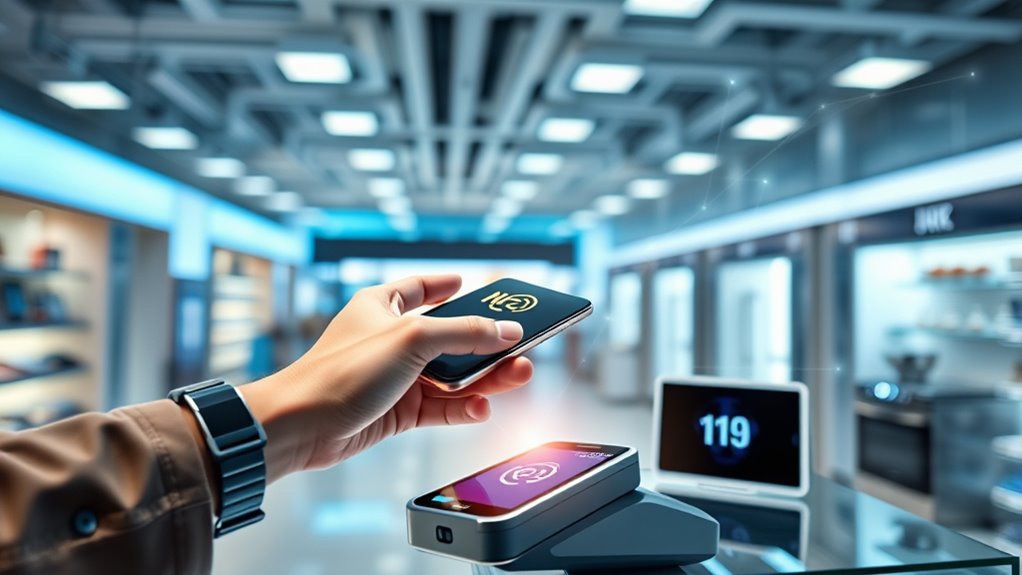

Connected devices like wearables and smart vending machines handle transactions using IoT technology and secure NFC communication. You simply tap or wave your device at a compatible terminal, which quickly processes your payment. Data is stored securely inside the device, reducing fraud risks. These devices make paying faster, easier, and contactless, transforming daily routines. If you keep exploring, you’ll discover how these innovations are shaping the future of seamless payments everywhere.
Key Takeaways
- Connected devices use NFC technology to enable contactless, quick transactions by tapping or waving at payment terminals.
- Secure data storage within IoT devices protects payment information from theft and hacking risks.
- Smart vending systems process payments directly from wearable or mobile devices, often automating reordering and inventory management.
- IoT-enabled devices support seamless, contactless payments across retail, transit, and food services, enhancing user convenience.
- Continuous advancements aim to make IoT transactions more intuitive, faster, and more secure, transforming everyday payment experiences.
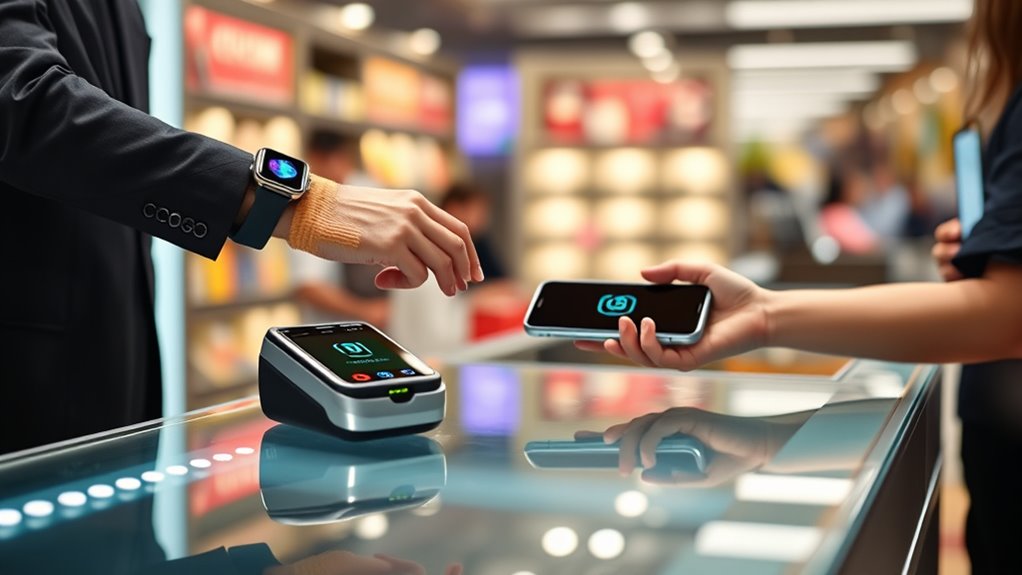
Have you ever wondered how the Internet of Things (IoT) is transforming the way we make payments? Today, connected devices are revolutionizing transactions, making them faster, more seamless, and often more secure. One of the most noticeable ways IoT impacts payments is through wearable payments. Instead of fumbling for cash or cards, you can now simply tap your smartwatch or fitness band at a payment terminal. These devices use near-field communication (NFC) technology, allowing you to complete transactions with a quick tap or wave. This convenience isn’t just about speed; it also enhances security since your payment info is stored securely within the device, reducing the risk of theft or fraud associated with traditional card payments. Wearable payments are gaining popularity because they fit naturally into your daily routine, whether you’re running errands, exercising, or commuting. Additionally, secure data storage in these devices helps protect your financial information from cyber threats, further boosting confidence in IoT-enabled payments.
Beyond personal wearables, IoT is transforming how vending machines operate through smart vending systems. These intelligent machines are connected to the internet, enabling them to process payments directly from your mobile device or wearable. When you approach a smart vending machine, you can select your snack or drink via a touchscreen or even through a connected app on your phone or smartwatch. Payments are handled instantly and securely, eliminating the need for cash or physical cards. This integration not only speeds up the purchasing process but also allows for dynamic inventory management. The vending machine can automatically notify operators when stock is low, reorder supplies, or even suggest personalized options based on your previous choices. Smart vending exemplifies how IoT-enabled devices create a more efficient, user-friendly experience that’s tailored to modern expectations.
These innovations are just the beginning. IoT-connected devices are continuously improving, making payments more intuitive and integrated into your everyday life. As more businesses adopt wearable payment options and smart vending machines, you’ll find yourself benefiting from quicker transactions, enhanced security, and personalized services. The seamless connection between your device and payment systems means you no longer need to carry cash or multiple cards. Instead, your wearable device or smartphone becomes your wallet, automatically handling transactions in the background. This shift not only saves time but also opens up new possibilities for contactless payments in various environments, from retail stores to restaurants and even public transportation. As IoT continues to evolve, expect payments to become even more integrated, secure, and effortless, changing the way you shop, eat, and go about your daily routine.

JAKCOM R4 Smart Ring Classic Version Intelligent Wearable Device Build-in 4 RFID Cards & 128GB Wireless Disk Sharing & Many NFC Functions for iPhone Android in Wearable Technology (12)
The R4 whole body is entirely made of micro-crystal Zr ceramics, With excellent refractive index and chromatic dispersion,…
As an affiliate, we earn on qualifying purchases.
As an affiliate, we earn on qualifying purchases.
Frequently Asked Questions
How Do Iot Devices Ensure Payment Security?
You guarantee payment security on IoT devices by using biometric authentication, like fingerprint or facial scans, to verify your identity. Additionally, these devices rely on encrypted communication, which scrambles data during transmission, preventing hackers from intercepting sensitive information. By combining biometric authentication with encryption, IoT devices protect your transactions, making payments safer and reducing the risk of fraud or unauthorized access.
What Are the Privacy Concerns With Iot Payment Data?
You should be aware that privacy concerns with IoT payment data include potential breaches of sensitive information. Data encryption helps protect your payment details from unauthorized access, but vulnerabilities still exist. Also, ensuring your devices obtain proper user consent is essential, as it guarantees you’re aware of how your data is used. Staying informed and cautious about the permissions you grant helps safeguard your privacy in IoT transactions.
How Do Iot Devices Authenticate User Transactions?
Think of your IoT device as a security guard checking your ID. It uses biometric verification, like fingerprint or facial recognition, to confirm your identity instantly. Additionally, token-based authentication generates a unique digital key for each transaction, preventing fraud. These methods guarantee only you can authorize payments, making your transactions both secure and seamless, much like a trusted guard recognizing you in a crowded room.
What Are the Common Iot Payment Protocols?
You’ll find that common IoT payment protocols often rely on wireless standards like NFC, Bluetooth, and Wi-Fi to enable seamless transactions. These protocols communicate with payment gateways, guaranteeing secure data transfer. You should verify your devices support these wireless standards, as they facilitate quick, reliable payments. Using these protocols, IoT devices can authenticate and process transactions efficiently, making your experience smooth and secure every time you make a payment.
How Does Iot Handle Transaction Errors or Failures?
When you face transaction errors or failures in IoT, the system employs fault tolerance and error recovery techniques. You’ll notice automatic retries, backup communication channels, or fallback procedures to guarantee the transaction completes successfully. Devices actively monitor transaction status, quickly detect errors, and initiate recovery processes. This approach minimizes disruptions, maintains data integrity, and ensures seamless transaction handling even amid network issues or device malfunctions.

HAHA Vending Smart Combo Vending Machine for Business with AI Technology Vending Machine for Sale, Card Reader & App Control Refrigerated Commercial US-360
Higher Sales per Vending Machine: These AI-powered coolers from HAHA Vending let you offer a wider variety of…
As an affiliate, we earn on qualifying purchases.
As an affiliate, we earn on qualifying purchases.
Conclusion
As you navigate the world of connected devices, remember that payments are the heartbeat keeping everything alive. IoT transforms your everyday transactions into seamless, effortless experiences—like a well-oiled machine working in harmony. Embrace this digital symphony, where each device acts as a note, creating a melody of convenience and security. Stay ahead in this connected era, and let your transactions flow as smoothly as a river, carving new paths into the future.
JAKCOM R4 Smart Ring Classic Version Intelligent Wearable Device Build-in 4 RFID Cards & 128GB Wireless Disk Sharing & Many NFC Functions for iPhone Android in Wearable Technology (12)
The R4 whole body is entirely made of micro-crystal Zr ceramics, With excellent refractive index and chromatic dispersion,…
As an affiliate, we earn on qualifying purchases.
As an affiliate, we earn on qualifying purchases.
HAHA Vending Smart Combo Vending Machine for Business with AI Technology Vending Machine for Sale, Card Reader & App Control Refrigerated Commercial US-360
Higher Sales per Vending Machine: These AI-powered coolers from HAHA Vending let you offer a wider variety of…
As an affiliate, we earn on qualifying purchases.
As an affiliate, we earn on qualifying purchases.