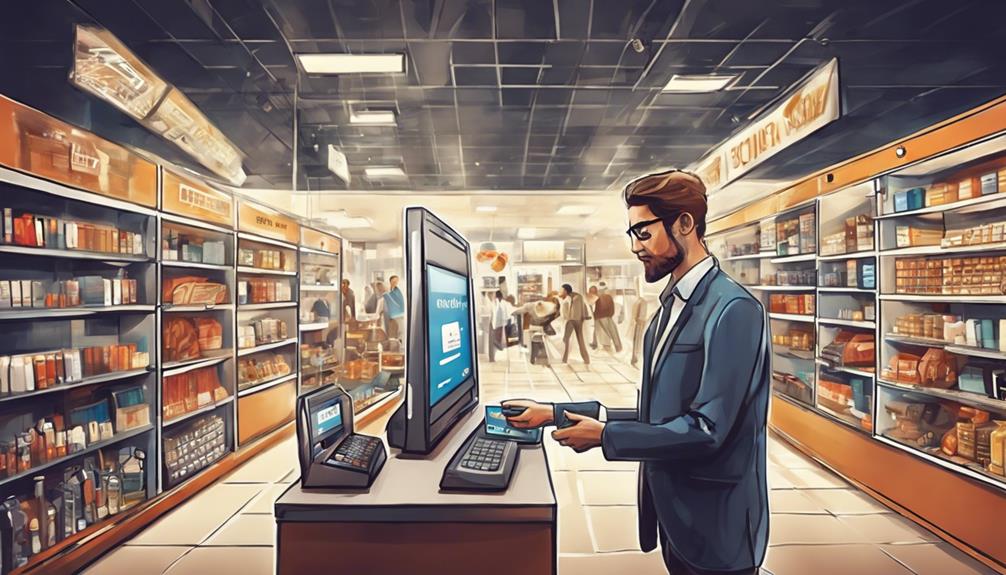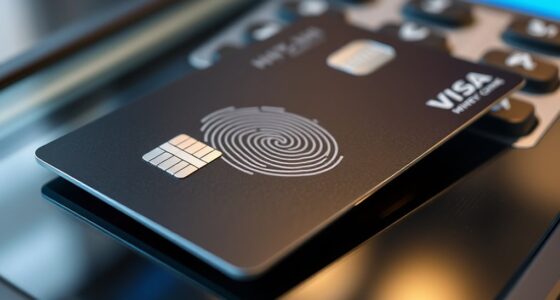
Banks play essential roles on both sides of your card payment. The issuer authenticates your identity, verifies funds, and provides a secure way to pay, while the acquirer processes your transaction, communicates with merchants, and guarantees your payment goes through smoothly. Both use complex security measures to protect your information and prevent fraud. To understand how these banks work together seamlessly to enable your card payments, keep exploring the details below.
Key Takeaways
- The issuer authenticates the cardholder and approves transactions based on funds or credit availability.
- The acquirer processes payment requests, communicates with merchants, and forwards transactions through card networks.
- Issuers use security features like biometric authentication and tokenization to ensure transaction safety.
- Acquirers handle transaction authorization, settlement, and support dispute resolution for merchants.
- Both banks collaborate via payment networks to facilitate secure, swift, and verified card payments.
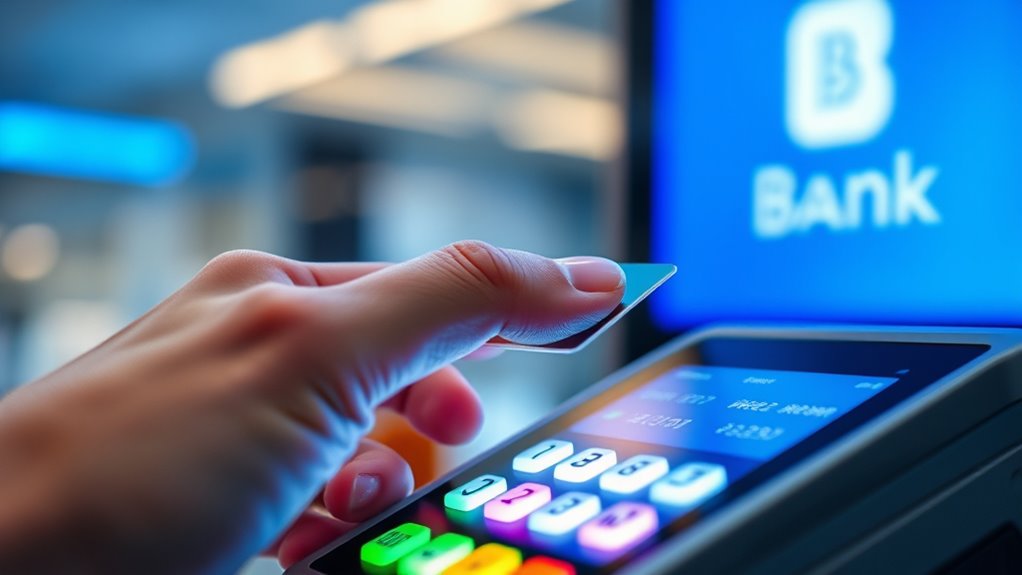
Have you ever wondered how electronic payments actually work behind the scenes? When you tap your phone or swipe your card, a complex process unfolds almost instantly. Behind every successful transaction, there are two key players: the issuer and the acquirer. Understanding their roles helps you see how your money moves securely from your account to the merchant’s account.
The issuer is the bank or financial institution that issues your card or digital payment method, like a mobile wallet. When you use your mobile wallet or credit card, the issuer’s primary responsibility is to authenticate your identity and ensure you have sufficient funds or credit. They’re like the gatekeepers, verifying that you’re authorized to make the payment. Mobile wallets, for example, use tokenization—a security feature that replaces your actual card details with a unique digital token—to protect your information. This makes it harder for fraudsters to steal your data and helps with fraud prevention. The issuer also provides the backing for any chargebacks or disputes you may have, acting as your financial advocate if issues arise. On the other side, the acquirer, often a bank or payment processor, is the entity that directly communicates with the merchant’s bank to process your payment. When you make a purchase, the acquirer receives your payment request and forwards it through a network—like Visa or Mastercard—to the issuer for approval. Once the issuer confirms that everything is in order, the acquirer receives an authorization code and completes the transaction, transferring funds from your account to the merchant’s account.
This process happens in seconds, but a lot of safeguards are in place to prevent fraud. Mobile wallets, in particular, play a indispensable role in fraud prevention by using biometric authentication, dynamic security codes, and encrypted communication channels. These features help guarantee that only you can authorize payments made through your mobile device. Additionally, both issuers and acquirers monitor transactions for suspicious activity, using advanced algorithms and real-time alerts to flag potential fraud. This layered security approach is essential because it minimizes the chances of unauthorized transactions and protects your financial information. Furthermore, the use of color accuracy and contrast ratios in the technology behind card processing and verification systems enhances the security features and visual clarity of transaction details.
In essence, your card payment is a coordinated effort between your issuer and the acquirer, working seamlessly behind the scenes. They ensure your transaction is swift, secure, and protected. So next time you pay with your mobile wallet or credit card, remember the sophisticated systems in place—powered by issuers and acquirers—to keep your money safe and your payments smooth.

2026 Mobile Pixels Wallet Tracker Card, Works with (iOS and Android), Ultra Slim Rechargeable Bluetooth Tracker, Tracker Key Finder, Portable Item Locator for Wallet, Bags, Luggage (1- Pack)
【Ultra-Slim 1.6mm Design】At only 1.6mm thick—equivalent to just two credit cards—this tracker card slides effortlessly into any wallet,…
As an affiliate, we earn on qualifying purchases.
As an affiliate, we earn on qualifying purchases.
Frequently Asked Questions
How Do Issuers and Acquirers Collaborate During a Transaction?
During a transaction, issuers and acquirers collaborate by exchanging information for payment authorization, ensuring your card has enough funds and verifying your identity. Once authorized, the acquirer processes the payment and communicates with the issuer to complete the transaction. They work together to settle the funds, ensuring the merchant gets paid and your account is debited accurately, streamlining the entire payment process for a seamless experience.
What Security Measures Do Issuers Implement for Cardholder Protection?
You’re protected by your issuer through robust fraud prevention measures like real-time transaction monitoring and multi-factor authentication. They also use data encryption to safeguard your sensitive information from hackers. These security measures work together to detect suspicious activity promptly and keep your card details secure, giving you peace of mind during every purchase. Your issuer’s proactive approach helps prevent fraud and ensures your transactions remain safe and private.
How Do Fees Differ Between Issuers and Acquirers?
You’ll find that issuer fees are usually tiny, like a drop in the ocean, mainly covering annual fees and transaction costs. Meanwhile, acquirers have a more complex fee structure, including merchant discounts and processing fees, which they share through revenue sharing with merchants. These differences mean issuers focus on cardholder protections, while acquirers handle the hefty fees that keep the payment ecosystem running smoothly.
Can a Merchant Choose Both an Issuer and an Acquirer?
You can’t choose both an issuer and an acquirer directly, as these roles are handled by different banks. However, your merchant branding influences which acquirer you work with, while your card issuance is managed by the issuer. You select your acquirer based on transaction processing needs, and your card issuer issues the cards customers use. Both play vital roles in enabling seamless payments, but they operate independently.
What Role Does Technology Play in Issuer and Acquirer Functions?
Technology plays a essential role in how issuers and acquirers operate. You rely on digital authentication to securely verify your identity during transactions, ensuring you’re the rightful cardholder. Both entities use advanced fraud detection systems to monitor transactions in real-time, preventing unauthorized activity. These technological tools streamline your payment experience, enhance security, and reduce fraud risks, making your card payments safer and more efficient every time you use your card.

FIDO2 U2F Security Key Passkey Two-Factor Authentication (2FA) USB Key PIN+Touch (Non-Biometric) USB-A Type TrustKey T110
Security Key : Protect your online accounts against unauthorized access by using FIDO2 and U2F authentication with T110….
As an affiliate, we earn on qualifying purchases.
As an affiliate, we earn on qualifying purchases.
Conclusion
Understanding the roles of issuers and acquirers shows how they work together to keep your card payments seamless. Did you know that in 2022, over 150 billion card transactions were processed worldwide? This massive flow of data relies on these banks’ behind-the-scenes efforts. Next time you swipe or tap, remember the complex teamwork between your bank and the merchant’s bank—making every purchase smooth and secure, just like magic happening right under your fingertips.

Payment Tokenization The Ultimate Step-By-Step Guide
As an affiliate, we earn on qualifying purchases.
As an affiliate, we earn on qualifying purchases.

Contract and Procurement Fraud Investigation Guidebook
As an affiliate, we earn on qualifying purchases.
As an affiliate, we earn on qualifying purchases.