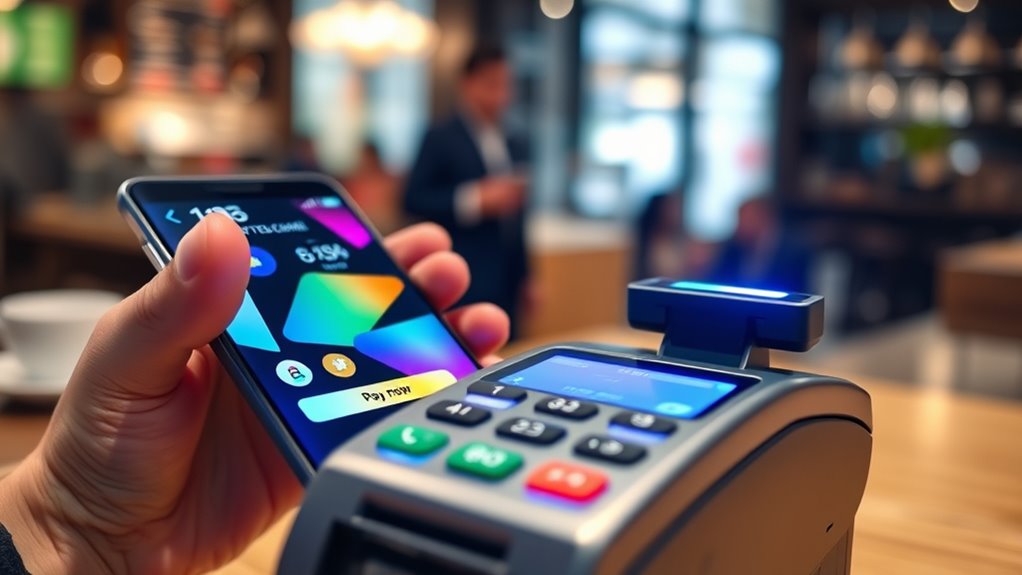

To integrate card payments into your mobile app, you use specialized SDKs that handle secure transaction processing within your app environment. These SDKs support user authentication through methods like biometrics, PINs, or OTPs, while employing encryption and tokenization to protect sensitive data. They also comply with industry standards like PCI DSS, ensuring security and trust. If you keep exploring, you’ll discover how these tools can enhance user experience and keep transactions safe.
Key Takeaways
- Mobile payment SDKs provide APIs and tools for seamless, secure card payment integration within mobile apps.
- They utilize encryption and tokenization to protect card data during transactions.
- SDKs often include user authentication methods like biometrics, PINs, or OTPs for added security.
- Industry standards like PCI DSS compliance ensure trustworthiness and data security.
- Advanced features such as AI fraud detection enhance transaction security and user confidence.
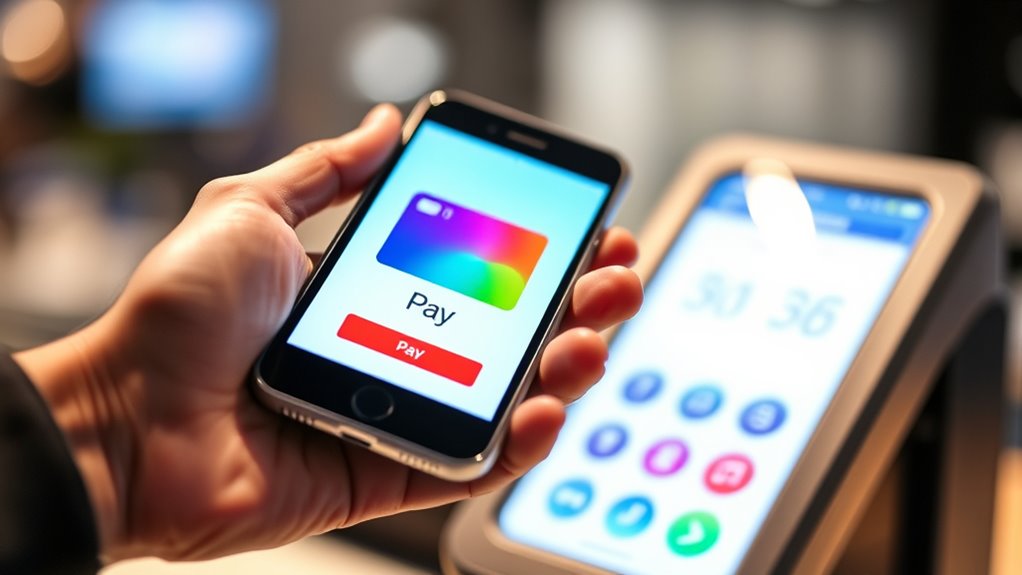
Mobile payment SDKs are vital tools that enable developers to integrate secure and seamless payment functionalities into their apps. When you embed these SDKs, you’re providing users with a smooth way to make transactions without leaving your app, which enhances user experience and trust. One of the key aspects of implementing these SDKs is guaranteeing robust security protocols. Security protocols are the backbone of mobile payments because they protect sensitive financial data from malicious attacks. These protocols include encryption standards like TLS (Transport Layer Security), which secure data as it travels between your app and payment servers, making it nearly impossible for hackers to intercept or decipher the information. Additionally, tokenization plays a significant role by replacing card details with unique tokens that have no intrinsic value, ensuring that actual card data isn’t stored on your servers or transmitted during transactions.
User authentication is another critical element that you must prioritize when integrating mobile payment SDKs. Effective user authentication verifies that the person initiating the payment is authorized to do so, adding an extra layer of security. Common methods include biometric authentication such as fingerprint or facial recognition, PIN codes, or one-time passwords (OTPs). These methods help prevent unauthorized transactions, especially in case a device gets lost or stolen. When you set up user authentication properly, you’re reducing the risk of fraud and ensuring that each transaction is legitimate. Many SDKs come with built-in authentication modules or support integration with existing authentication systems, making it easier for you to implement these security measures without building everything from scratch.
Furthermore, these SDKs often support multi-factor authentication (MFA), which combines two or more verification methods, adding even more security layers. This way, even if someone manages to bypass one security step, they’ll still need to pass additional checks to complete a payment. The combination of strong security protocols and user authentication not only protects your users’ financial information but also boosts their confidence in your app’s safety. Remember, maintaining security isn’t a one-time setup; it’s an ongoing process that involves regular updates and adherence to industry standards like PCI DSS (Payment Card Industry Data Security Standard). By doing so, you guarantee your app remains compliant and trustworthy, fostering long-term customer relationships. Ultimately, integrating a mobile payment SDK with robust security protocols and user authentication mechanisms is vital for creating a safe, reliable, and user-friendly payment experience.
additional security measures can be implemented through AI-driven analysis to identify suspicious transactions in real-time, further strengthening your app’s defenses.
Top picks for "mobile payment sdks"
Open Amazon search results for this keyword.
As an affiliate, we earn on qualifying purchases.
Frequently Asked Questions
How Do SDKS Ensure Payment Security and Fraud Prevention?
You can trust SDKs to guarantee payment security and prevent fraud by implementing strong encryption protocols that protect sensitive data during transactions. They also use advanced fraud detection techniques, monitoring for suspicious activity and verifying user identities. This combination of encryption and fraud detection helps secure your payments, reducing risks of theft or unauthorized access, so you can confidently make and receive payments through your mobile app.
Can SDKS Be Customized to Fit Unique Branding Needs?
Did you know that 78% of consumers say branding influences their purchase decisions? Yes, SDKs can be customized to fit your branding needs through SDK flexibility. You can tailor interfaces, colors, and logos to match your app’s style, creating a seamless experience. This customization helps reinforce your brand identity, making your app more recognizable and trustworthy. So, yes, SDKs offer the flexibility needed for unique branding, enhancing user engagement and loyalty.
What Are the Compatibility Requirements for Different Mobile Platforms?
You need to guarantee platform compatibility by checking SDKs support your target mobile platforms, like iOS and Android. Keep SDK versioning in mind, as newer versions often add features or fix bugs, so regularly update your SDKs. Make sure your development environment matches SDK requirements, and verify that the SDK integrates seamlessly with your app’s existing codebase across different device types and OS versions for smooth functionality.
How Do SDKS Handle Multi-Currency and International Transactions?
Over 150 currencies are supported by most payment SDKs, making international transactions seamless. You’ll find that SDKs automatically handle currency support and fetch real-time exchange rates, ensuring your customers see accurate prices. This minimizes errors and builds trust. By integrating these features, your app can smoothly process multi-currency payments, providing a global shopping experience that adapts effortlessly to different regions and reduces the complexity of international transactions.
What Is the Typical Integration Timeline for a New SDK?
You typically spend 2 to 6 weeks on SDK onboarding, depending on your app’s complexity. During this time, you’ll work closely with developer support to understand integration steps, troubleshoot issues, and customize the SDK for your needs. The process involves reviewing documentation, implementing code, and testing transactions. With good support, you’ll find the timeline smooth, ensuring your app quickly accepts secure card payments worldwide.
Conclusion
By now, you realize that integrating mobile payment SDKs transforms your app into a seamless, unstoppable payment powerhouse. With just a few lines of code, you can turn your app into a gateway that’s faster than lightning and more secure than Fort Knox. Embrace these SDKs, and watch your user experience soar to heights so incredible, they’ll think you’ve uncovered the secrets of the universe. Get ready to revolutionize your app’s payment game today!