Partial authorization at the point of sale means your payment is approved for only part of the total amount when your funds are limited. Instead of declining your entire purchase, the bank approves a portion, allowing you to complete that part and pay the rest later. This process helps you make smaller purchases when funds are tight. Understanding how it works can help you avoid surprises at checkout, and there’s more to discover if you keep exploring this topic.
Key Takeaways
- Partial authorization approves only part of a transaction when funds are limited.
- It allows the merchant to accept a partial payment instead of declining the entire sale.
- The customer is responsible for paying the remaining balance later.
- Not all merchants or payment systems support partial authorizations.
- It differs from a full transaction decline, which rejects the entire purchase.
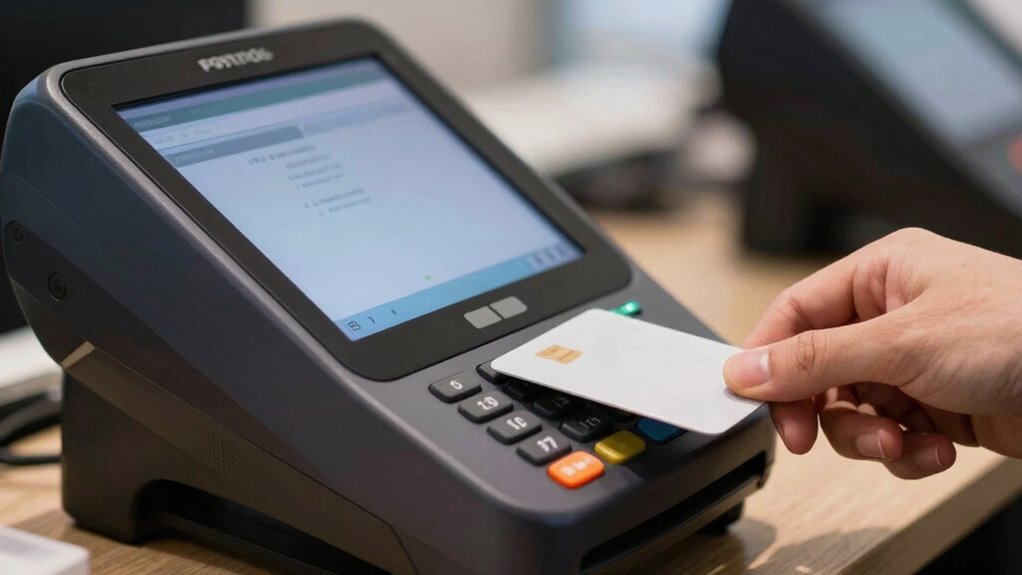
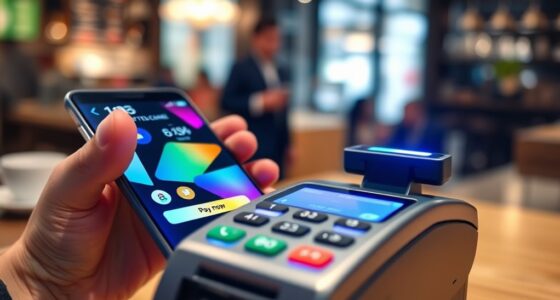
Have you ever wondered what happens when a card transaction isn’t fully approved? When you swipe or insert your card at the point of sale, the payment processor communicates with your bank or card issuer to verify that you have enough funds or credit. Usually, this process results in an outright approval or decline. But sometimes, the situation isn’t so straightforward. That’s where partial authorization comes into play. Instead of declining the entire transaction, the bank authorizes only a portion of the amount you’re attempting to spend. This typically occurs when your available funds or credit are insufficient to cover the full purchase but are enough to cover part of it.
Partial authorization allows your bank to approve part of a transaction when funds are limited.
In such cases, the merchant receives a partial authorization, meaning they can accept what’s approved and complete the sale for that amount. You’re then responsible for covering the remaining balance with another form of payment or through other arrangements. Partial authorization allows transactions to proceed in situations where a full approval isn’t possible, providing flexibility for both you and the merchant. However, it can also introduce some complexities. For instance, if the merchant isn’t prepared for a partial authorization, they might face issues with inventory or pricing, especially if the remaining balance isn’t settled immediately. This is why understanding merchant liability is important—merchants generally bear some risk if a transaction is only partially authorized. They could end up with a sale for less than expected or face disputes if the remaining amount isn’t paid promptly. Additionally, some payment systems are designed to handle partial payments more efficiently, which can influence how transactions are processed. Moreover, merchants may need to adjust their inventory management strategies to accommodate these types of transactions. Recognizing how authorization processes work can also help both merchants and consumers reduce potential errors and improve transaction flow. Furthermore, an understanding of the different payment authorization types can help you better navigate various checkout scenarios.
A transaction decline, on the other hand, happens when the bank or card issuer refuses to approve any part of the purchase, often due to insufficient funds, exceeding credit limits, or suspected fraud. Unlike partial authorization, a decline means the entire transaction is rejected, and you must find an alternative way to pay. Partial authorization, *consequently*, offers a middle ground—allowing some payment to be accepted while leaving the rest unresolved. Understanding the authorization process can help you better anticipate potential issues during checkout.
From your perspective, understanding partial authorization helps you navigate situations where your available funds are limited but you still want to make a purchase. It’s worth noting that not all merchants or payment systems support partial authorization, and policies can vary. Sometimes, merchants prefer full authorizations to avoid complications, but when partial ones are accepted, you should be aware that you’ll need to settle the remaining balance separately. Being aware of these processes minimizes surprises at checkout and helps you plan your payments accordingly.
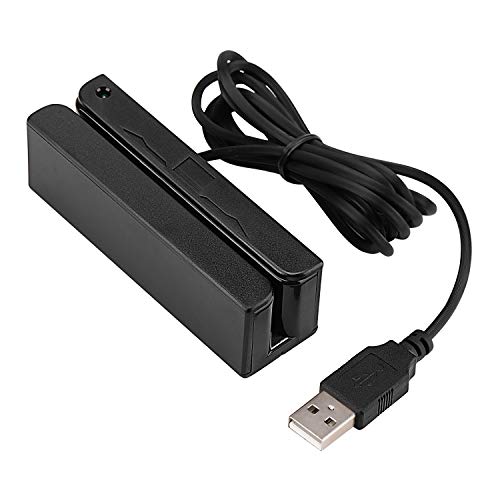
MSR90 USB Swipe Magnetic Credit Card Reader 3 Tracks Mini Smart Card Reader MSR605 MSR606 Deftun
MSR90 is a USB emulation keyboard interface that not need any driver or software,USB simply plug and play
As an affiliate, we earn on qualifying purchases.
As an affiliate, we earn on qualifying purchases.
Frequently Asked Questions
Can Partial Authorization Affect My Credit Score?
Partial authorization typically doesn’t directly affect your credit score, but it can have a financial impact. When a transaction is only partially approved, it may lead to over-limit fees or declined payments, which can be reported to credit bureaus if they result in missed payments or negative marks. Keep an eye on your credit reporting to guarantee your account remains in good standing, avoiding potential long-term effects on your credit.
How Often Do Partial Authorizations Occur?
Partial authorizations happen more often than you might think, usually during busy transaction processes or when merchant policies limit available funds. They occur whenever a merchant attempts to verify funds but can’t authorize the full amount. While the frequency varies, understanding that these partial transactions are part of the normal process helps you stay prepared. Keep an eye on your account, as these partial authorizations may appear unexpectedly during your shopping adventures.
Are Partial Authorizations Common in Certain Industries?
Partial authorizations are common in industries like hospitality, healthcare, and automotive services, where industry-specific practices often involve charging only part of the total amount due. Merchant policies vary, but many merchants accept partial approvals to accommodate customers with available funds or to secure a deposit. As a customer, understanding these practices helps you manage expectations during transactions, especially in industries with complex billing processes.
Will I Be Charged Twice for Partial Payments?
No, you won’t be double-charged for partial payments. Think of payment processing like a relay race—each payment is a handoff, not a repeat lap. Merchant policies usually guarantee you’re only billed once per authorized amount. If you’re unsure, check with the merchant beforehand. They’ll clarify how partial authorizations work, so you avoid any surprises, and your financial race stays smooth without any double hurdles.
How Can I Prevent Partial Authorizations?
To prevent partial authorizations, you should check your merchant policies and guarantee clear customer notifications. Inform customers beforehand that partial payments might occur, especially for large or pre-authorized transactions. Always verify the payment amount with the customer before processing. Implementing transparent communication and setting expectations helps reduce confusion and prevents unintended partial authorizations, ensuring smoother transactions and better customer satisfaction.
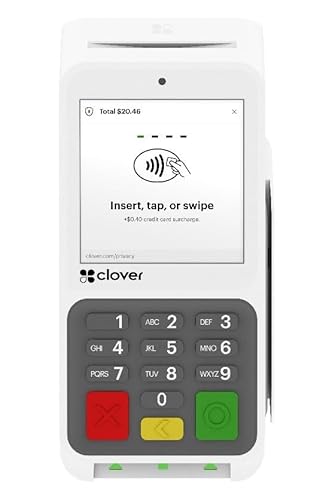
Clover Compact Payment Terminal – Requires New Merchant Processing Account Through Powering POS.
This is a stand alone credit/debit payment terminal, does not connect to a Clover Station or Mini. Plug…
As an affiliate, we earn on qualifying purchases.
As an affiliate, we earn on qualifying purchases.
Conclusion
Think of partial authorization as a gentle tap on your card’s shoulder, signaling that not all your funds are ready to dance together just yet. It’s a temporary pause, like a whisper in the storm, giving you a glimpse of available credit while the full amount waits patiently in the wings. So, next time you see a partial authorization, remember—it’s just the card’s way of saying, “Hold on, I’m still lining up the pieces for the perfect transaction.”
Clover Compact Payment Terminal – Requires New Merchant Processing Account Through Powering POS.
This is a stand alone credit/debit payment terminal, does not connect to a Clover Station or Mini. Plug…
As an affiliate, we earn on qualifying purchases.
As an affiliate, we earn on qualifying purchases.

Square Terminal – Credit Card Machine to Accept All Payments | Mobile POS
With Square Terminal, you can ring up sales, accept payments, and print receipts, all with one device. Use…
As an affiliate, we earn on qualifying purchases.
As an affiliate, we earn on qualifying purchases.