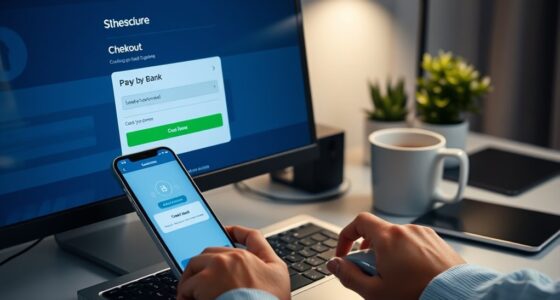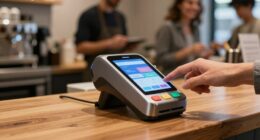

Tap-to-phone technology allows you to turn your smartphone into a contactless payment terminal using NFC. With a compatible device and a secure payment app, you can accept card payments directly without bulky hardware. This method speeds up transactions, improves customer experiences, and keeps data protected through encryption and tokenization. Many providers adhere to industry standards, ensuring安全and reliability. Continue exploring to discover how this innovative technology can transform your payment options.
Key Takeaways
- Tap-to-Phone transforms smartphones into contactless payment terminals using NFC technology and secure payment apps.
- It eliminates the need for traditional card readers, streamlining business operations and reducing hardware costs.
- Advanced encryption and tokenization protect sensitive payment data during transactions.
- Easy setup with compatible devices and adherence to industry standards ensures secure and reliable payments.
- Regular updates and security best practices help maintain a safe environment for contactless transactions.
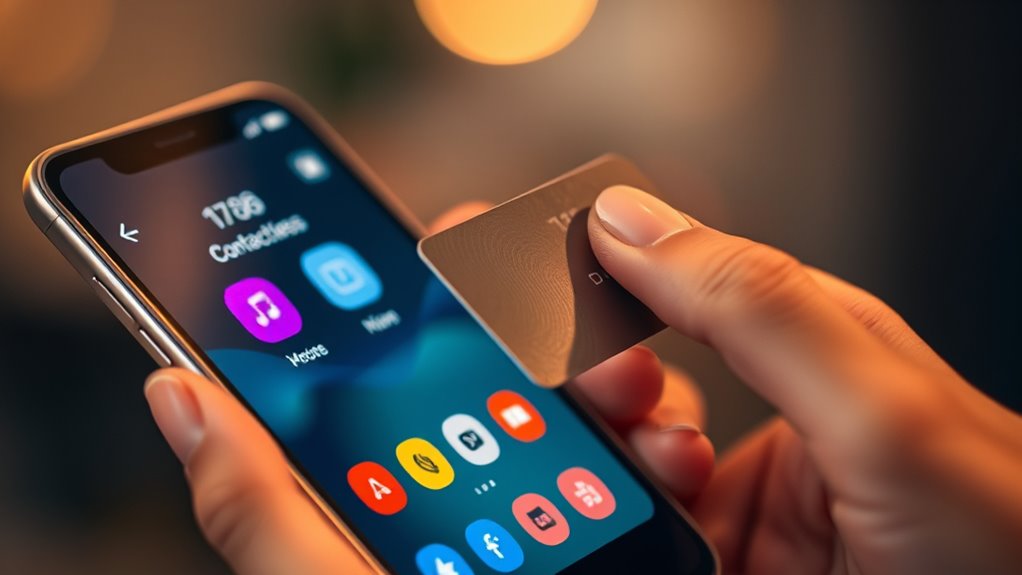
Have you ever wondered how your smartphone can turn into a payment terminal? Thanks to tap-to-phone technology, you can now accept contactless payments directly through your device, making transactions faster and more convenient. This innovation leverages near-field communication (NFC) technology, allowing customers to simply tap their cards or smartphones to your device, which then processes the payment instantly. It’s a game-changer for small businesses, freelancers, and anyone wanting to eliminate bulky card readers or cash handling. All you need is a compatible smartphone with NFC capabilities and a secure payment app.
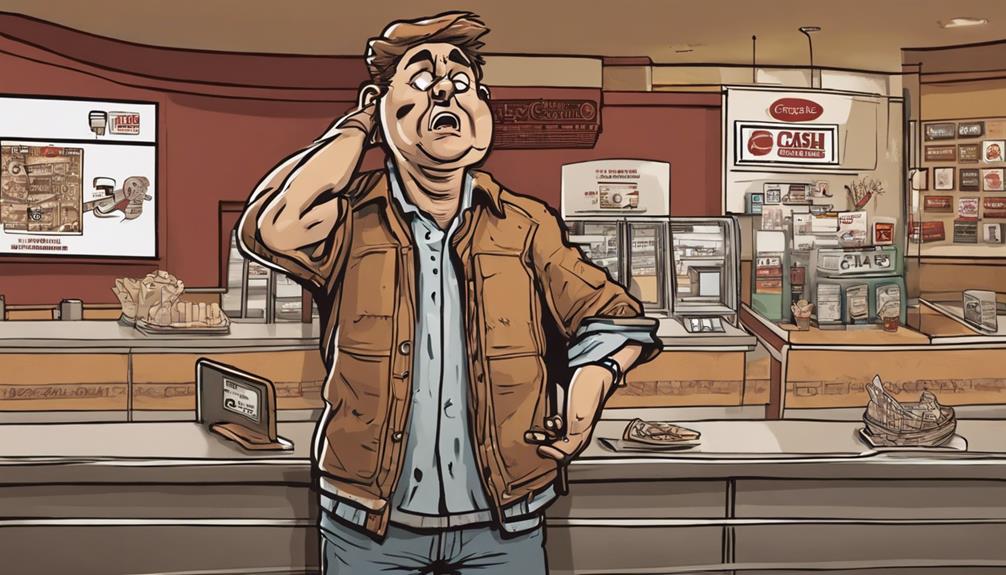
When you enable tap-to-phone, you’re fundamentally transforming your phone into a contactless payment terminal. Customers no longer need to swipe, insert, or even carry cash; they just tap or hover their payment method near your device. This seamless contactless payments process not only speeds up checkout times but also enhances the customer experience by reducing friction during transactions. Plus, since the payments are processed digitally, you can easily track sales, generate reports, and manage your business finances more efficiently. It’s a simple yet powerful way to modernize your payment options without extra hardware.
However, with increased convenience comes the importance of mobile security. You need to make sure that your device and payment applications are protected against potential threats. Leading tap-to-phone solutions incorporate advanced encryption protocols and tokenization techniques to safeguard sensitive payment data. When a customer makes a contactless payment, their card or device’s data isn’t stored on your phone; instead, a unique token replaces the actual card number, ensuring that even if someone intercepts the data, it can’t be used fraudulently. Additionally, many apps require authentication, like fingerprint or PIN verification, adding an extra layer of mobile security. This means you can confidently accept contactless payments, knowing that both your business and your customers’ information are protected.
Implementing tap-to-phone technology is straightforward, and the security measures in place are robust enough to meet industry standards. As you adopt this system, ensure that your device’s software and payment apps stay up-to-date, as updates often include crucial security patches. You should also choose reputable payment providers that prioritize mobile security and comply with PCI DSS standards. By doing so, you’ll create a secure environment for contactless transactions, building trust with your customers and safeguarding your business from potential fraud. In the end, tap-to-phone tech not only simplifies payments but also emphasizes the importance of security in the digital age, making your smartphone a powerful tool for modern commerce. Additionally, understanding reliable backup power options can help ensure your payment system remains operational during power outages or technical failures.
Top picks for "phone tech smartphone"
Open Amazon search results for this keyword.
As an affiliate, we earn on qualifying purchases.
Frequently Asked Questions
What Security Features Protect Tap-To-Phone Transactions?
You’re protected during tap-to-phone transactions by strong security features like encryption protocols that secure your data, making it unreadable to hackers. Biometric authentication, such as fingerprint or facial recognition, adds an extra layer of safety by ensuring only you can authorize payments. These combined measures help prevent fraud and keep your financial information secure every time you tap your phone to make a payment.
Can All Smartphones Support Tap-To-Phone Technology?
Not all smartphones support tap-to-phone technology. Your device’s compatibility depends on its hardware and software requirements, such as NFC capability and specific operating system versions. If your phone lacks NFC or the necessary software, you can’t turn it into a card terminal. To use tap-to-phone features, verify your device meets these compatibility standards, and update your software if needed to access the latest payment functionalities.
How Does Tap-To-Phone Compare to Traditional Card Readers?
You’re 50% more likely to enjoy faster transactions with tap-to-phone compared to traditional card readers. Unlike static devices, tap-to-phone leverages mobile wallet integration and adheres to contactless payment standards, making payments seamless and secure. While traditional readers require physical contact or swiping, your smartphone can instantly process payments, reducing wait times and enhancing customer experience. It’s a smarter, more flexible way to handle transactions in today’s digital world.
Are There Any Additional Costs for Merchants Using This Tech?
You might face some additional costs when using tap-to-phone tech, such as transaction fees that vary by provider and hardware expenses if you need compatible accessories or upgrades. While you save on traditional card reader costs, keep in mind that transaction fees can add up, especially with high-volume sales. It is crucial to compare different providers to find a solution that balances low fees with minimal hardware expenses.
What Are the Limitations of Tap-To-Phone Payment Acceptance?
You might face limitations with tap-to-phone payments, such as mobile compatibility issues if your device isn’t updated or supported. Transaction speed can sometimes be slower during peak times or with poor network connections, affecting customer experience. Additionally, some older phones or certain operating systems may not endorse this technology. Always make certain your device is compatible and has a reliable internet connection to optimize payment acceptance.
Conclusion
So, next time you whip out your phone to pay, remember—your device might just be turning into a tiny, invisible card reader. It’s funny how we’ve turned our smartphones into everything but phones themselves. Ironically, the very device designed for calls and selfies now silently handles your payments, making cash and cards almost obsolete. Who would’ve thought that your trusty phone would soon be the one doing all the work, while you just sit back and swipe?