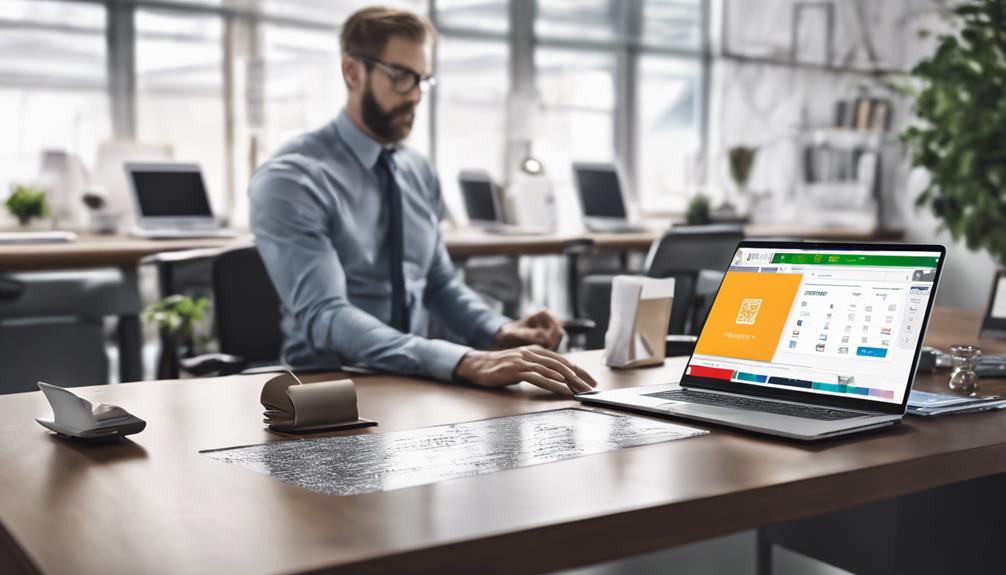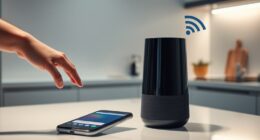
Unattended payment systems like kiosks and vending machines enable you to quickly complete transactions without a cashier. They use digital methods such as credit cards, mobile wallets, or contactless payments, making purchases fast and contactless. These systems employ encryption and tokenization to keep your information secure and have features like biometric verification or PIN entry for added security. With real-time monitoring and tamper-proof hardware, they guarantee safe, reliable operation. To see how it all works, keep exploring the details.
Key Takeaways
- Unattended payment systems enable cashless transactions via digital methods like credit cards and mobile wallets.
- They feature user-friendly interfaces that prompt item selection and facilitate quick, contactless payments.
- Advanced security protocols such as encryption, tokenization, and hardware tamper-proofing protect transaction data.
- Real-time monitoring and remote management allow operators to oversee multiple machines and respond to issues promptly.
- Authentication methods like PIN, biometrics, or QR codes ensure user verification and prevent unauthorized access.

Have you ever wondered how transactions happen seamlessly without a cashier present? It’s all thanks to unattended payment systems like kiosks and vending machines that handle cashless transactions effortlessly. These systems are designed to provide convenience, speed, and safety, allowing you to make purchases anytime without waiting in line or interacting with a human teller. When you approach a kiosk or vending machine, you’re immediately prompted to select your item or service, then proceed to pay using digital methods such as credit cards, mobile wallets, or contactless payments. This process not only speeds things up but also minimizes contact, which is especially important in today’s health-conscious world.
The core of these systems is their ability to process cashless transactions securely. They employ advanced security protocols to protect your payment information from potential threats. For example, encryption technologies secure your credit card data during transmission, preventing hackers from intercepting sensitive details. Many machines also utilize tokenization, replacing your actual card information with a unique digital token that’s useless if compromised. These security measures ensure your financial data remains confidential, giving you peace of mind as you make quick, contactless payments.
Secure transactions with encryption and tokenization protect your payment data from threats.
Behind the scenes, these unattended systems are built with multiple layers of security protocols. They often integrate real-time monitoring and remote management, which allow operators to oversee numerous machines from a central location. This setup helps to detect suspicious activities immediately and respond swiftly to any security threats, reducing the risk of fraud or theft. Additionally, these systems are regularly updated with the latest security patches, ensuring they stay resilient against emerging cyber threats. The goal is to maintain a safe environment where you can confidently complete transactions without worry.
Another key aspect of these systems is their ability to authenticate users efficiently. They often include features like PIN entry, biometric verification, or QR code scanning to verify your identity quickly. These measures add an extra layer of security and help prevent unauthorized access. Furthermore, many vending machines and kiosks are equipped with tamper-proof hardware and secure payment modules that are difficult to manipulate or break into. Privacy policies and compliance with security standards are also crucial for maintaining user trust in unattended systems.
In essence, unattended payment systems provide a streamlined experience that combines convenience with robust security protocols. They’re designed to serve you efficiently while safeguarding your financial information, all without requiring a cashier’s presence. As technology continues to evolve, expect these systems to become even smarter, more secure, and more user-friendly, making your transactions faster and safer than ever before.
Frequently Asked Questions
How Secure Are Unattended Payment Systems Against Cyber Threats?
Unattended payment systems are fairly secure against cyber threats if they use strong data encryption and regularly update their cybersecurity measures. You should be aware of cybersecurity vulnerabilities like malware or hacking attempts, but many systems implement advanced security protocols to safeguard your data. By choosing machines with robust encryption and security features, you can reduce your risk of exposure to cyber threats and ensure safe transactions.
What Maintenance Is Required for Kiosk and Vending Machine Payment Systems?
Think of your kiosk and vending machines as a finely tuned orchestra that needs regular tuning. You should perform hardware calibration to guarantee all parts work harmoniously and conduct software updates to keep security and functionality sharp. Regular cleaning and inspection also help prevent jams and technical glitches. By staying proactive with these maintenance tasks, you keep your payment systems reliable, secure, and ready to serve customers smoothly every time.
Can These Systems Handle Multiple Currency Transactions?
Yes, these systems can handle multi-currency support, allowing you to accept various currencies. They often include currency conversion features, making transactions seamless for international users. When a customer pays in a different currency, the system automatically converts it to the local currency, ensuring accurate transactions. This capability enhances user convenience and broadens your customer base, especially in locations with diverse visitors or travelers.
How Do Refunds and Disputes Work in Unattended Payment Setups?
Think of refunds and disputes in unattended payment setups as steering through a modern labyrinth. When you request a refund, the system follows a clear refund process, verifying the transaction before returning funds. If disputes arise, you’ll engage dispute resolution protocols, often through customer service or automated systems. This guarantees your concerns are addressed efficiently, maintaining trust and smooth transactions just like a well-designed maze guides you to the exit.
What Are the Initial Costs for Installing Unattended Payment Solutions?
Your initial costs for installing unattended payment solutions typically include hardware expenses like card readers, touchscreens, and secure payment modules. Installation costs vary depending on the complexity of the setup, location, and equipment quality. Expect to spend a few thousand dollars upfront, covering hardware, setup, and optional software integration. Keep in mind that ongoing maintenance and updates are also important, but the initial investment largely concentrates on durable, reliable hardware to guarantee smooth transactions.
Conclusion
While unattended payment systems might seem impersonal, they’re designed to make your life easier and faster. Imagine never waiting in line again or missing out on a quick snack because of payment hassles. Yes, there’s a trust factor, but with advanced security measures, your transactions stay safe. Embrace these innovations—they’re not just about convenience but about giving you more time for what truly matters. Don’t let doubts hold you back from a smoother, simpler experience.