
APIs in payments act as the bridge between your application and various payment systems. They let you securely process transactions, support features like tap-to-pay and online checkout, and help prevent fraud through layered security measures. By integrating APIs, you can effortlessly add new payment options and ensure user authentication with features like biometric verification and tokenization. Keep exploring to discover how these APIs keep payments fast, safe, and reliable.
Key Takeaways
- APIs act as secure bridges enabling developers to connect applications with payment systems for seamless transactions.
- They provide standardized protocols for integrating diverse payment methods and onboarding new payment providers.
- APIs support user authentication features like multi-factor and biometric verification to ensure secure access.
- They incorporate layered security measures such as encryption and real-time monitoring to prevent fraud.
- APIs facilitate features like tokenization and contactless payments, enhancing security and user experience.
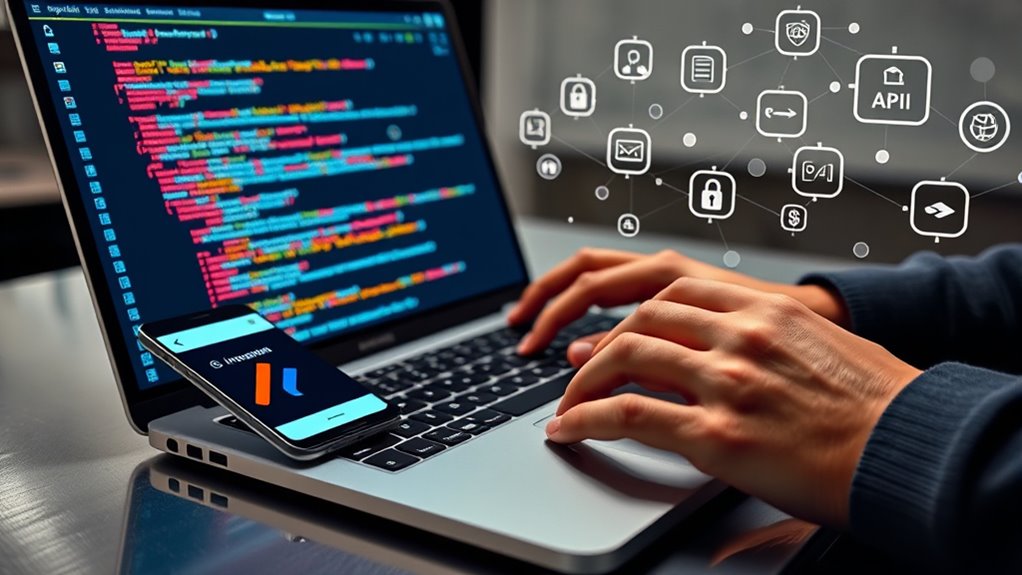
Have you ever wondered how digital payments happen so seamlessly? The answer lies in the power of APIs, or Application Programming Interfaces, which act as the bridges connecting your devices to various payment systems. When you tap to pay or enter your card details online, APIs work behind the scenes to guarantee your transaction goes smoothly. They allow different software systems to communicate securely and efficiently, making the entire payment process quick and reliable. As a developer, understanding how APIs facilitate this connection is key to building trusted payment solutions.
One of the most essential roles APIs play in payments is in fraud prevention. Payment APIs are designed with layered security measures that help detect and prevent fraudulent activities. They incorporate real-time monitoring, anomaly detection, and encryption protocols to safeguard sensitive data. When you make a purchase, these APIs verify transaction details against multiple security checks, reducing the risk of fraud. This ongoing vigilance is indispensable because digital transactions are prime targets for cybercriminals. By integrating robust fraud prevention features, APIs help maintain the integrity of payment systems, protecting both merchants and consumers.
User authentication is another fundamental aspect APIs handle to guarantee safe transactions. When you enter your payment information or log into your account, APIs facilitate secure authentication processes. This often involves multi-factor authentication (MFA), biometric verification, or tokenization, which adds layers of security beyond just entering a password. APIs verify your identity swiftly, ensuring that only authorized users can access sensitive financial information. This process not only enhances security but also improves user experience because it minimizes delays and friction during transactions. As a developer, designing APIs with strong user authentication mechanisms is essential to gaining user trust and complying with regulatory standards.
APIs also streamline the onboarding process for new payment methods or systems. They provide standardized protocols that allow different payment providers to integrate seamlessly into existing platforms. This flexibility enables you to expand your payment options without overhauling your entire infrastructure. Furthermore, APIs enable features like tokenization, which replaces sensitive card data with secure tokens, further reducing exposure to theft or misuse.
Additionally, incorporating cybersecurity best practices into API development is crucial to protect payment data from emerging threats and vulnerabilities. In essence, APIs serve as the backbone of modern digital payments. They enable secure, fast, and reliable transactions by incorporating fundamental features like fraud prevention and user authentication. As you develop or integrate these APIs, focusing on their security capabilities guarantees your payment system remains trustworthy and resilient against threats. Whether it’s enabling contactless payments, online shopping, or mobile banking, APIs empower developers to connect users with payment systems effortlessly while maintaining the highest standards of security.
Top picks for "payment apis developer"
Open Amazon search results for this keyword.
As an affiliate, we earn on qualifying purchases.
Frequently Asked Questions
How Secure Are Payment APIS Against Cyber Threats?
Payment APIs are generally secure, but you should stay vigilant. They use strong encryption protocols to protect sensitive data during transmission, reducing the risk of interception. Additionally, fraud detection measures are integrated to identify suspicious activities quickly. While no system is foolproof, employing best practices, keeping software updated, and monitoring transactions can considerably enhance security against cyber threats. Stay proactive to safeguard your payment data effectively.
What Are the Costs Associated With Integrating Payment APIS?
You’ll find that integrating payment APIs involves transaction fees charged per payment, which can vary depending on the provider and payment method. Additionally, there are integration costs, including developer time, potential licensing fees, and setup expenses. These costs can add up initially but often lead to smoother, faster transactions later. To manage expenses effectively, compare providers, understand fee structures, and plan for ongoing maintenance costs.
How Do APIS Handle Currency Conversions and International Transactions?
APIs handle currency conversions and international transactions by accessing real-time exchange rates, ensuring accurate conversions during cross-border payments. When you process an international payment, the API automatically applies the latest rates, converting the currency seamlessly. This reduces manual work, minimizes errors, and speeds up transactions, giving your customers a smooth experience. By leveraging exchange rate data, APIs simplify global commerce and help you manage multiple currencies efficiently.
Can Payment APIS Support Recurring Billing and Subscriptions?
Yes, payment APIs support recurring billing and subscriptions through built-in features for subscription management and billing automation. You can easily set up plans, manage customer subscriptions, and automate billing cycles, reducing manual effort. These APIs handle billing updates, cancellations, and renewals seamlessly, ensuring a smooth experience for your customers and consistent revenue flow for your business. This integration simplifies managing ongoing payments and keeps your subscription services running smoothly.
What Are the Best Practices for API Error Handling in Payments?
Imagine your payment API as a vigilant lighthouse guiding transactions safely. To guarantee smooth sailing, you should implement robust error handling by logging errors diligently and setting up fallback mechanisms. This way, you catch issues early, maintain transaction integrity, and prevent disruptions. Clear error messages help users understand problems, while fallback options keep payments flowing even when unforeseen errors occur. Prioritize these best practices to keep your payment system resilient and trustworthy.
Conclusion
As you delve into the world of payment APIs, you realize it’s like opening a door to seamless transactions and smooth connections. With every line of code, you’re weaving a digital bridge, turning complex systems into a simple handshake. Just as a ripple spreads across the water, your integration creates waves of efficiency, making payments feel effortless. Embrace these tools, and watch your payment processes flow as naturally as a gentle stream.