

Finding the right stock market investment book comes down to one question: are you trying to understand how the market works, or are you trying to execute your first trade this week? The best overall pick is The Intelligent Investor, Third Edition, because its value-investing framework has survived decades of market cycles and teaches judgment rather than shortcuts. For absolute beginners, The Little Book of Common Sense Investing distills the same philosophy into a fraction of the reading time, while Stock Investing For Beginners is the most action-oriented option if you want to buy your first stock quickly. The main tradeoff across this category is depth versus accessibility — the classics take longer to work through, while modern beginner guides are faster but sometimes oversimplify risk. Teen-focused titles add a third dimension, prioritizing habit-building over technical detail. Keep reading for the full breakdown of all 14 books and which reader each one actually serves.

Get smart everyday buys delivered free with Prime
- Fast, free delivery on millions of items
- Prime Video, Amazon Music and more included
- Member-only deals all year
Key Takeaways
- The Intelligent Investor and The Little Book of Common Sense Investing form a natural pair — the same philosophy at two very different reading commitments — and together they anchored the top of this comparison.
- Four of the fourteen books target teens and young adults specifically, but they differ sharply: Investing 101 for Teens is the most substantive, while A Teenager’s Guide to Investing leans motivational over educational.
- Several beginner guides duplicate each other’s content almost entirely; the differentiators turned out to be whether they cover ETFs and dividends or stop at individual stock buying.
- Stock Market Investing is Math is the only title in the lineup that teaches valuation formulas, making it the clear bridge between beginner guides and the heavier classics.
- Books promising to help you ‘start making money today’ consistently ranked lower — speed-focused framing tended to mean thinner treatment of risk, fees, and market downturns.


| stock market investment book | Format | Experience Level |
|---|---|---|
| Stock Market Explained: A Begi | Paperback and Kindle eBook | Beginner |
| Understanding Stocks | Paperback and eBook | Beginner to intermediate |
| The Stock Market Made Easy: A | Paperback and Kindle eBook | Absolute beginner |
| Stock Investing For Beginners: | Paperback | Absolute beginner |
| Investing 101 for Teens and Yo | Paperback and Kindle eBook | Beginner, no prior knowledge |
| Investing QuickStart Guide: Th | Book (QuickStart Guides series) | — |
| Stock Market Investing is Math | Book | — |
| Stock Investing 101 for Teens: | Book | — |
| The Little Book of Common Sens | Book | — |
| The Intelligent Investor | Book (Third Edition) | — |
| The Stock Market Cash Flow: Fo | Paperback | Intermediate |
| Investing for Beginners Made S | Book | Beginner |
| A Beginner’s Guide to the Stoc | Paperback | Beginner |
More Details on Our Top Picks
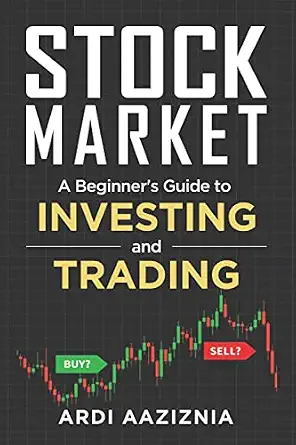
Stock Market Explained: A Beginner’s Guide to Investing and Trading in the Modern Stock Market
Stock Market Explained earns its spot by covering both investing and trading in one volume, which most beginner books deliberately avoid. Where The Stock Market Made Easy stays focused on passive investing, this guide walks through order types, charting basics, and how modern brokerage apps actually behave — the practical mechanics a first-time investor confronts on day one. The tradeoff is breadth over depth: readers who want a single strategy to follow will find the dual focus dilutes both topics. Compared with the Investing QuickStart Guide, it leans less on jargon and more on plain-English explanation, making it a friendlier entry point. This pick makes the most sense for someone who wants to understand the whole playing field before deciding whether they’re a long-term investor or an active trader.
Pros:- Covers investing and trading side by side, so readers can compare approaches
- Explains modern market mechanics like order types and brokerage platforms
- Plain-English tone with minimal jargon for true first-timers
- Part of a personal finance series that supports continued learning
Cons:- Dual focus means neither investing nor trading gets advanced treatment
- Strategy guidance is general rather than actionable step-by-step
Best for: Complete beginners who want a single overview covering both buy-and-hold investing and active trading before committing to either path
Not ideal for: Readers seeking depth in one discipline — value investors and serious traders alike will outgrow it quickly
- Format:Paperback and Kindle eBook
- Series:Personal Finance and Investing
- Topic Coverage:Investing and trading fundamentals
- Experience Level:Beginner
- Language:English
- Style:Plain-English explanatory guide
Our verdict“Choose this if you want a wide-angle introduction to today’s markets rather than a deep playbook for one style.”
Understanding Stocks, Third Edition
Now in its third edition, Understanding Stocks is the most polished and systematically organized title in this batch. Unlike the conversational tone of Stock Investing For Beginners, this book reads like a mini-textbook: clearly sequenced chapters move from what a share actually is through valuation, technical analysis, and market psychology. That structure makes it the strongest reference-style option here — the kind of book you revisit when you need a term explained properly. The tradeoff is tone: compared with the friendlier Stock Market Explained, it can feel dry, and a casual reader may stall mid-way. It also assumes a bit more patience than the teen-oriented titles in this roundup. Compared with the dense The Intelligent Investor, though, it’s far more approachable while still being rigorous, which is exactly the gap it fills.
Pros:- Third-edition content updated for current market practices
- Logical chapter progression from basics through analysis techniques
- Covers fundamental and technical analysis in one framework
- Works as a durable reference after the first read
Cons:- Drier, more instructional tone than conversational beginner guides
- More pages and denser material demand real reading commitment
Best for: Detail-oriented beginners who prefer a textbook-style structure and want a reference they’ll return to
Not ideal for: Casual readers wanting a light, motivational first book — the systematic pacing can feel academic
- Edition:Third Edition
- Format:Paperback and eBook
- Topic Coverage:Stocks, valuation, fundamental and technical analysis
- Experience Level:Beginner to intermediate
- Structure:Textbook-style chapter progression
- Language:English
Our verdict“This is the pick for readers who want an organized, re-readable foundation rather than a quick pep talk.”
The Stock Market Made Easy: A Beginner’s Guide to Understanding Stocks, ETFs, Dividends, Investing, and How the Market Really Works
The Stock Market Made Easy stands out for ETFs and dividends, the building blocks of passive wealth-building that many beginner books treat as an afterthought. While Stock Market Explained splits attention with trading, this guide stays firmly on the buy-and-hold track, explaining how index funds, dividend payers, and market mechanics fit together. That focus makes it a natural stepping stone toward The Little Book of Common Sense Investing, which argues the index-fund case more forcefully but assumes you already know the vocabulary. The drawback is what’s missing: no trading content and little on individual stock analysis, so readers hoping to pick companies themselves get only a sketch. Compared with Understanding Stocks, it’s lighter and faster to finish, which suits readers who want clarity over completeness.
Pros:- Dedicated, well-explained coverage of ETFs and dividend investing
- Explains how the market actually operates, not just what to buy
- Short and digestible for readers with limited time
- Coherent single philosophy rather than scattered tactics
Cons:- Little guidance on evaluating individual companies
- Too basic for readers who already own a brokerage account
Best for: Hands-off beginners who plan to build wealth through ETFs and dividend stocks rather than active trading
Not ideal for: Aspiring stock-pickers or traders — individual analysis and trading strategies are barely covered
- Format:Paperback and Kindle eBook
- Topic Coverage:Stocks, ETFs, dividends, market mechanics
- Experience Level:Absolute beginner
- Investing Style:Passive, buy-and-hold focused
- Length:Concise introductory guide
- Language:English
Our verdict“The right first book if your goal is simple, passive portfolio building — skip it if you want to analyze or trade stocks.”
Stock Investing For Beginners: How To Buy Your First Stock And Grow Your Money
Most beginner books explain the market; this one walks you through buying your first share. That action-first framing is what separates Stock Investing For Beginners from broader titles like Understanding Stocks — it’s structured around getting a hesitant reader from zero to a completed first purchase. Compared with Investing 101 for Teens and Young Adults, it skews toward working adults who want their money growing now rather than decades-out compounding lessons. The conversational tone keeps momentum, and the step-by-step approach removes the paralysis that stops many first-timers. The tradeoff is longevity: once you’ve made that first trade, the book’s job is largely done, and readers wanting valuation skills or portfolio theory will need a follow-up like Stock Market Investing is Math. Think of it as a launch pad, not a library.
Pros:- Concrete, step-by-step path to a first stock purchase
- Encouraging tone that reduces hesitation for anxious beginners
- Short enough to finish and act on within days
- Focused on practical outcomes over theory
Cons:- Limited depth once the first purchase is made
- Light on risk management and valuation fundamentals
Best for: Nervous first-time investors who want step-by-step guidance to make their first stock purchase quickly
Not ideal for: Readers past the first-trade stage — it lacks the depth on valuation and portfolio strategy to serve as a long-term reference
- Format:Paperback
- Topic Coverage:First stock purchase and basic growth investing
- Experience Level:Absolute beginner
- Approach:Action-oriented, step-by-step
- Audience:Adult first-time investors
- Language:English
Our verdict“If paralysis is your problem, this is the book that gets you moving — just plan to graduate to something deeper after.”
Investing 101 for Teens and Young Adults: Start Investing Early, Build Lifelong Wealth, and Avoid Costly Mistakes
Investing 101 for Teens and Young Adults earns its role by making compound interest and early habits the centerpiece — a framing adult-focused books like Stock Investing For Beginners can’t offer. Its strongest material is on avoiding costly beginner mistakes, from chasing hype stocks to panic selling, which matters more when a sixty-year horizon is at stake. Compared with A Teenager’s Guide to Investing in the Stock Market, it covers a wider range of vehicles and speaks to college-age readers as well as teens, not just high schoolers. The compromise is technical depth: there’s little on valuation or reading financial statements, and an experienced adult reader will find it too elementary. For its intended audience, though, that simplicity is the point — the message lands before bad habits form.
Pros:- Frames investing around long time horizons and compounding
- Strong emphasis on avoiding common early mistakes
- Relatable examples aimed at a young audience
- Broad enough to cover teens and young adults alike
Cons:- Minimal coverage of stock valuation or financial statements
- Too elementary for any reader with existing market knowledge
Best for: Teens and college students who want to understand compound growth and start investing before their first real paycheck
Not ideal for: Adult readers with investing experience — the content and examples are pitched well below their level
- Format:Paperback and Kindle eBook
- Topic Coverage:Early investing, compound growth, mistake avoidance
- Experience Level:Beginner, no prior knowledge
- Audience:Teens and young adults
- Core Theme:Lifelong wealth building from an early start
- Language:English
Our verdict“The best entry point in this lineup for a young reader starting from zero — adults should choose a more advanced title.”
This pick earns its place as the most structured entry point in the lineup. Where Stock Market Explained offers broad coverage, this guide organizes material into a progressive learning path, so a complete novice can move from opening a brokerage account to placing a first trade without gaps in knowledge. The writing stays practical rather than academic, which makes it a better fit than the dense The Intelligent Investor for someone just starting out.
The tradeoff is breadth over depth — readers who want valuation math will get more from Stock Market Investing is Math, and this guide keeps its focus on getting beginners functional fast rather than turning them into analysts.
Pros:- Clear, structured progression from basics to first trades
- Covers account setup and practical mechanics, not just theory
- Approachable tone that doesn’t assume prior finance knowledge
- Broad enough to give readers a foundation across investing topics
Cons:- Surface-level treatment of valuation and analysis
- Readers will outgrow it quickly and need a follow-up book
Best for: Complete beginners who want a step-by-step curriculum rather than a reference book
Not ideal for: Intermediate investors — most chapters will repeat concepts they already apply
- Format:Book (QuickStart Guides series)
- Topic:Stock market investing and wealth building
- Audience:Beginners
- Style:Structured, step-by-step guide
- Series:Trading & Investing – QuickStart Guides
- Focus:Navigating the stock market and growing wealth
Our verdict“This is the right first purchase for someone who wants a guided path from zero to their first investment.”
Stock Market Investing is Math: A Beginner’s Guide to the Formulas for Valuing Stocks and Building Wealth
Most beginner books in this roundup, like The Stock Market Made Easy, explain what stocks are; this one teaches you how to actually calculate what a stock is worth. That makes it the standout choice for readers who want to move past definitions and into valuation formulas — the math behind deciding whether a price is fair.
The tradeoff is obvious: it demands more from the reader. Compared with the Investing QuickStart Guide, this is a slower, more technical read, and anyone uncomfortable with numbers will find it a slog. But for buyers who want their first book to build analytical skill rather than confidence alone, this option makes more sense than the lighter introductory picks.
Pros:- Teaches concrete valuation formulas rather than vague principles
- Bridges the gap between beginner guides and advanced analysis texts
- Builds transferable analytical skills for evaluating any stock
Cons:- More demanding read than typical beginner books
- Less coverage of practical topics like account setup and trading mechanics
Best for: Analytically minded beginners who want to understand valuation formulas, not just investing vocabulary
Not ideal for: Math-averse readers or casual investors content with index funds — the formulas will feel like homework
- Format:Book
- Topic:Stock valuation formulas and wealth building
- Audience:Beginners comfortable with math
- Focus:Quantitative valuation methods
- Style:Formula-driven and instructional
- Approach:Analytical rather than conceptual
Our verdict“Choose this if you want your first investing book to teach you how to value stocks rather than simply describe the market.”
Stock Investing 101 for Teens: Understand the Market, Build Wealth, and Avoid Costly Beginner Mistakes
Among the teen-oriented titles in this roundup — Investing 101 for Teens and Young Adults and A Teenager’s Guide to Investing in the Stock Market — this one stands out for its tight focus on mistake prevention. Rather than promising quick riches, it frames investing around avoiding costly early errors, which is arguably the highest-value lesson for a first-time investor with a small account.
The language is pitched squarely at teenage readers, which is its strength and its ceiling. An adult beginner would get more from Understanding Stocks, Third Edition, and any teen who finishes this book will need a more advanced follow-up within a year. As a starting point, though, it does its job well.
Pros:- Language and examples tailored specifically to teenage readers
- Strong emphasis on avoiding common and expensive beginner mistakes
- Covers market fundamentals and long-term wealth building
- Short enough to hold a younger reader’s attention
Cons:- Too basic for anyone with prior investing exposure
- Will be quickly outgrown and needs a follow-up title
Best for: Teenagers opening their first brokerage account who need age-appropriate, mistake-focused guidance
Not ideal for: Adults or readers with any investing knowledge — the content is pitched too young and too basic
- Format:Book
- Target Audience:Teens
- Topic:Stock investing / personal finance
- Focus:Market basics, wealth building, mistake prevention
- Reading Level:Teen-friendly
- Approach:Introductory and protective
Our verdict“The best gift-style pick for a teen starting from zero, especially one prone to impulsive decisions.”
The Little Book of Common Sense Investing: The Only Way to Guarantee Your Fair Share of Stock Market Returns
Written by Vanguard founder John C. Bogle, this is the most persuasive case in the roundup for a single strategy: buy low-cost index funds and hold them. Where The Stock Market Cash Flow encourages broader market engagement, Bogle argues the opposite — that most investors beat themselves through fees and trading, and that simplicity wins.
Compared with The Intelligent Investor, this is far more accessible; a beginner can absorb its core argument in a weekend. The tradeoff is that it argues one position relentlessly. Readers who want to pick individual stocks should look elsewhere in this list, and experienced investors may find the message repetitive after the first few chapters.
Pros:- Author founded Vanguard and created the first index fund
- Makes a clear, evidence-backed case for low-cost index investing
- Short and accessible enough for complete beginners
- Helps readers resist high-fee products and impulsive trading
Cons:- One-note philosophy that dismisses active strategies
- Feels repetitive for readers already sold on index funds
Best for: Hands-off investors who plan to build wealth through index funds and want conviction in that strategy
Not ideal for: Readers interested in stock picking or active trading — Bogle’s argument dismisses that path entirely
- Format:Book
- Author:John C. Bogle, founder of Vanguard
- Topic:Index fund investing
- Strategy:Low-cost, long-term, passive investing
- Audience:Beginners to intermediate investors
- Length:Compact ‘Little Book’ format
Our verdict“If you plan to invest through index funds, this short book will give you the discipline to stick with it.”
The Intelligent Investor, Third Edition: The Definitive Book on Value Investing
This is the heavyweight of the lineup — Benjamin Graham’s definitive text on value investing, and the book most likely to still sit on a reader’s shelf in twenty years. Where Investing QuickStart Guide optimizes for speed, this one builds a durable mental framework: margin of safety, market psychology, and the discipline to treat price and value as different things.
The tradeoff is real. The prose is dense and dated in places, and a true beginner may abandon it before the ideas land — the Little Book of Common Sense Investing is a far easier first read. This edition makes the most sense for readers who already know the basics and want the foundational text rather than a friendly introduction.
Pros:- Widely regarded as the definitive book on value investing
- Principles have remained relevant across decades of market cycles
- Builds deep analytical discipline, not just tactics
- Third edition updates the classic material for modern readers
Cons:- Dense, demanding prose that many beginners never finish
- Far more time investment required than quicker guides in this list
Best for: Serious students of investing who want the foundational value-investing text and will work through dense material
Not ideal for: First-time investors looking for a quick start — the density makes it a poor entry point
- Format:Book (Third Edition)
- Author:Benjamin Graham
- Topic:Value investing
- Approach:Foundational principles, long-term orientation
- Difficulty:Intermediate to advanced
- Audience:Dedicated students of investing
Our verdict“Buy this once you know the basics and want the book that will shape how you think about markets for life.”
The Stock Market Cash Flow: Four Pillars of Investing for Thriving in Today’s Markets
This pick stands apart from primer-style entries like The Stock Market Made Easy by organizing everything around a four-pillar framework, which gives intermediate readers a repeatable structure rather than scattered tips. Where most beginner books in this roundup stop at explaining what a stock is, this one pushes toward cash flow thinking — how markets generate returns and how to position a portfolio around that reality. The framework approach makes it a natural next step after finishing a foundational guide. The tradeoff is that it assumes you already speak the language; readers who don’t know what an index fund does will feel lost within the first chapters. Compared with The Intelligent Investor, it’s more contemporary in tone but less rigorous in its analytical depth.
Pros:- Framework-based approach gives readers a repeatable decision structure
- Goes beyond basics into cash-flow-oriented market thinking
- More current in tone than classic value-investing texts
- Works well as a second book after a primer
Cons:- Assumes prior knowledge and skips foundational explanations
- Less analytically rigorous than The Intelligent Investor
- Framework may feel abstract without worked examples
Best for: Intermediate investors who have finished a beginner book and want a structured framework for market strategy
Not ideal for: Complete novices — the four-pillar structure assumes familiarity with basic concepts like asset classes and market cycles
- Format:Paperback
- Focus:Investing strategy and market cash flow
- Structure:Four-pillar framework
- Experience Level:Intermediate
- Primary Topic:Stock market investing
- Style:Strategy and framework-driven
Our verdict“A strong second-stage read for investors ready to graduate from definitions to an actual strategy.”
Investing for Beginners Made Simple: A Step-by-Step Guide to the Stock Market, ETF Investing, and Building Wealth for Financial Freedom (The Wealth Series)
Its clearest differentiator is the starting-with-little-money angle. While A Beginner’s Guide to the Stock Market teaches mechanics, this one opens with the question most nervous beginners actually have: can I even invest with what I have? The step-by-step structure breaks the process into sequential actions rather than chapters of theory, and the ETF coverage fills a gap that stock-only beginner books leave empty. Compared with Investing QuickStart Guide, which is broader but denser, this trades thoroughness for approachability. The tradeoff cuts both ways — experienced readers, or even those who’ve finished Understanding Stocks, will find little here they don’t already know, and the financial-freedom framing leans motivational in places where some readers want hard numbers.
Pros:- Explicitly addresses investing with small amounts of money
- Step-by-step structure removes decision paralysis
- Includes ETF coverage often missing from stock-only beginner guides
- Low-jargon writing that complete novices can follow
Cons:- Too basic for anyone past the beginner stage
- Motivational financial-freedom framing may frustrate numbers-focused readers
Best for: True beginners with limited starting capital who want a sequential, low-jargon path into ETFs and stocks
Not ideal for: Investors with any experience — the step-by-step pacing becomes padding once you know the basics
- Series:The Wealth Series
- Format:Book
- Focus:Stock market, ETF investing, wealth building
- Structure:Step-by-step guide
- Experience Level:Beginner
- Target Audience:Small-budget first-time investors
- Style:Simplified and sequential
Our verdict“The gentlest on-ramp in this lineup for small-budget beginners who want to be told exactly what to do next.”
A Beginner’s Guide to the Stock Market: Everything You Need to Start Making Money Today
This is the action-first primer of the roundup: unlike The Little Book of Common Sense Investing, which argues a philosophy before teaching mechanics, this book front-loads the practical steps — opening an account, placing a trade, reading a quote — so readers can act quickly. That makes it a good match for impatient beginners who abandoned longer guides halfway through. Compared with Stock Market Explained, it’s leaner and more directive, though that brevity is also its main weakness: topics like valuation, risk management, and market history get compressed into quick summaries that leave readers executing before they fully understand why. The start making money today framing also sets aggressive expectations that a calmer, index-oriented book would temper.
Pros:- Front-loads practical steps like opening accounts and placing trades
- Lean and readable for readers who bounce off longer guides
- Covers the complete first-trade workflow in one place
- Directive tone reduces hesitation for new investors
Cons:- Compresses valuation and risk into shallow summaries
- Aggressive ‘make money today’ framing may encourage rushed decisions
Best for: Impatient beginners who want to understand mechanics and make their first trade within days
Not ideal for: Readers wanting depth on valuation and risk — the fast pace comes at the cost of context
- Format:Paperback
- Focus:Stock market basics and first trades
- Experience Level:Beginner
- Structure:Action-oriented primer
- Style:Practical and directive
- Primary Topic:Stock market mechanics
Our verdict“The fastest route from zero to first trade, best paired with a deeper book before real money is at stake.”

How We Picked
My ranking logic for this comparison rested on four criteria. Conceptual accuracy came first: books that explained why markets behave the way they do outranked books that only listed what to do. Reader fit came second — a brilliant book aimed at the wrong reader is a bad recommendation, so I judged each title against its intended audience, whether that was a total novice, a teen, or someone ready for value-investing theory. Practical usability was the third filter: does the reader finish the book knowing their actual next step, or just knowing vocabulary?
The fourth criterion was longevity of value. Some books teach a strategy that expires with the next market trend; others teach a decision-making framework that compounds over decades. That is why the two Bogle- and Graham-influenced titles rank near the top despite being the least flashy, and why ‘get started fast’ titles cluster lower — speed was consistently traded against depth, risk education, and honesty about losing periods. Where two books covered the same ground, I ranked the one with clearer structure and broader coverage of ETFs and dividends higher.
| stock market investment book | Format | Experience Level |
|---|---|---|
| Stock Market Explained: A Begi | Paperback and Kindle eBook | Beginner |
| Understanding Stocks | Paperback and eBook | Beginner to intermediate |
| The Stock Market Made Easy: A | Paperback and Kindle eBook | Absolute beginner |
| Stock Investing For Beginners: | Paperback | Absolute beginner |
| Investing 101 for Teens and Yo | Paperback and Kindle eBook | Beginner, no prior knowledge |
| Investing QuickStart Guide: Th | Book (QuickStart Guides series) | — |
| Stock Market Investing is Math | Book | — |
| Stock Investing 101 for Teens: | Book | — |
| The Little Book of Common Sens | Book | — |
| The Intelligent Investor | Book (Third Edition) | — |
| The Stock Market Cash Flow: Fo | Paperback | Intermediate |
| Investing for Beginners Made S | Book | Beginner |
| A Beginner’s Guide to the Stoc | Paperback | Beginner |
Factors to Consider When Choosing 14 Best Stock Market Investment Books
Before choosing from the fourteen books above, it helps to understand what actually separates a useful investing book from a disappointing one. These are the factors I weighed — and the mistakes I saw repeated across the weaker titles in this category.Match the Book to Your Starting Point, Not Your Ambition
The most common buying mistake is purchasing a book for the investor you want to be instead of the investor you are now. Someone who cannot yet explain what an ETF is will abandon The Intelligent Investor within two chapters and conclude investing is too complicated — when the real problem was a mismatch. Conversely, a reader who already understands diversification will get almost nothing new from a book that spends a chapter explaining what a ticker symbol is. Be honest about your current knowledge: if terms like index fund, dividend, and market order are unfamiliar, start with a beginner title and plan to graduate. If you can explain those to a friend, skip the entry-level books entirely and go straight to the classics. The best purchase is the one you will actually finish, not the one that looks most sophisticated on a shelf.
Watch for Books That Skip Risk and Downturns
A quiet pattern in this category: the faster a book promises results, the less space it devotes to losing money. Titles that frame investing as a way to start making money today often gloss over drawdowns, fee drag, and the psychological reality of watching a portfolio fall thirty percent. Before buying, check whether a book discusses bear markets, position sizing, or how index funds behave during crashes. Books grounded in the Bogle and Graham tradition treat downturns as inevitable features of investing rather than footnotes, which is why they age so well. A book that only teaches the upside is teaching half the subject. This single filter eliminates more weak titles than any other test I applied.
Decide Whether You Want Philosophy or Mechanics
Investing books generally split into two camps: those that teach how to think about markets and those that teach how to act in them. The philosophy camp — value investing, index investing, margin of safety — changes your decision-making for decades but rarely tells you which button to press in a brokerage app. The mechanics camp walks you through buying your first stock step by step but can leave you without a framework for deciding what to buy. Neither approach is wrong, but buying only one type leaves a gap. A practical pattern many readers follow: start with a mechanics book to get moving, then read a philosophy book before your account balance grows large enough for mistakes to hurt. Knowing which type you are buying prevents the disappointment of expecting a playbook and receiving a treatise.
Consider Age-Appropriate Content Carefully
Teen investing books vary more in quality than any other segment of this category. Some are genuinely simplified versions of adult content with longer time horizons factored in; others are motivational pamphlets with a few definitions sprinkled through. When buying for a teenager, check whether the book explains compound growth with real numbers or just asserts that starting early matters. Time horizon is a teenager’s single biggest advantage, and a good teen book should show the math of investing at sixteen versus thirty-six rather than just celebrating youth. Also consider tone: a book that talks down to its reader will be abandoned quickly. The strongest teen titles in this lineup treat their audience as capable adults with less starting knowledge, not as children.
Edition and Publication Date Matter More Than You Expect
Several titles in this comparison exist in multiple editions, and the differences are not cosmetic. Understanding Stocks, Third Edition and The Intelligent Investor, Third Edition both updated examples and commentary to reflect modern market structure — commission-free trading, fractional shares, and the rise of ETFs — while older editions reference a marketplace that no longer exists. Older classics can still teach timeless principles, but a new investor juggling outdated practical advice with current reality gets confused. Before buying, confirm you are getting the most recent edition, especially for books that discuss specific platforms, fees, or tax rules. The philosophy may be eternal; the mechanics expire. Paying attention to this detail costs nothing and prevents the most avoidable form of buyer’s remorse.
Frequently Asked Questions
Should I start with The Intelligent Investor or a modern beginner guide?
Unless you already understand basic concepts like diversification, valuation ratios, and market cycles, start with a modern beginner guide first. The Intelligent Investor rewards readers who bring foundational vocabulary, and its chapters on market fluctuations make far more sense once you know how a brokerage account works. A reasonable path is to read one of the action-oriented beginner titles, open an account, and then tackle Graham once you have real money decisions to think about. The common failure mode is buying the classic first, stalling in chapter three, and delaying investing for months. The exception is a reader who enjoys dense nonfiction regardless of topic — for that person, the classic works as a starting point.
Do teen investing books work for adults, or should adults skip them?
Mostly skip them. The teen titles in this lineup trade depth for accessibility, and an adult reader will outgrow them within a week. The genuine exception is Investing 101 for Teens and Young Adults, which covers mistakes and mindset in a way that transfers to any age. The real risk for adult readers is the opposite one: assuming teen books are too basic and missing that their strongest chapters — on avoiding costly early mistakes — apply universally. If you are an adult buying for a teenager, read the book alongside them rather than handing it over; the conversations it starts matter as much as the content. For self-education, though, the adult beginner guides cover the same ground with more substance per page.
Is one book enough, or do I need several of these?
One well-chosen book is enough to start investing — the barrier is action, not information. But one book is not enough to invest well over a lifetime, because different books solve different problems. A sensible minimal stack is one mechanics book to get started, one philosophy book like The Little Book of Common Sense Investing to shape your long-term approach, and later something like Stock Market Investing is Math if you want to evaluate individual stocks yourself. Reading five beginner guides in a row is the most common waste of money in this category, since their content overlaps heavily. Space your purchases out and let each book answer a question you actually have.
Are the math-based investing books too difficult for beginners?
The math in Stock Market Investing is Math sits at roughly high-school algebra level — percentages, ratios, and compounding — so difficulty is rarely the real obstacle. The obstacle is motivation: formulas feel abstract until you understand why valuation matters, which is the job of a conceptual beginner book. If you can calculate a percentage return and read a simple ratio table, the book is accessible; if those tasks feel shaky, build arithmetic confidence first. The payoff is real, though, because understanding valuation formulas protects you from the most expensive beginner error: overpaying for popular stocks. Treat the math book as a second purchase, not a first one, and the difficulty question mostly resolves itself.
How current do stock market books need to be in 2026?
Timeless principles — compounding, diversification, margin of safety — do not expire, but anything touching mechanics does. Books discussing trading commissions, available order types, fractional shares, or tax rules should be recent editions, since the practical landscape has shifted considerably in the past several years. A book explaining how to pay $7 per trade teaches you a marketplace that no longer exists. My rule of thumb: philosophy can be fifty years old without penalty, but any book giving step-by-step account instructions should be checked against your actual brokerage app before you follow it. The strongest picks in this comparison either updated their editions recently or deliberately avoided platform-specific advice altogether.
Conclusion
After comparing all fourteen titles, the decision comes down to reader type. For best overall, The Intelligent Investor, Third Edition remains the book most likely to make you a better investor for decades, not just this year. For best value, The Little Book of Common Sense Investing delivers the highest wisdom-per-page in the lineup at a shorter reading commitment. For complete beginners, Stock Investing For Beginners or The Stock Market Made Easy get you from zero to first trade without overwhelming you. For younger readers, Investing 101 for Teens and Young Adults is the standout of the four teen titles. And for the specific need of stock valuation, Stock Market Investing is Math is the only pick that teaches the formulas behind the philosophy. Whichever you choose, pick the book you will actually finish — an unread classic helps no portfolio.
Halloween Picks
halloween
As an affiliate, we earn on qualifying purchases.