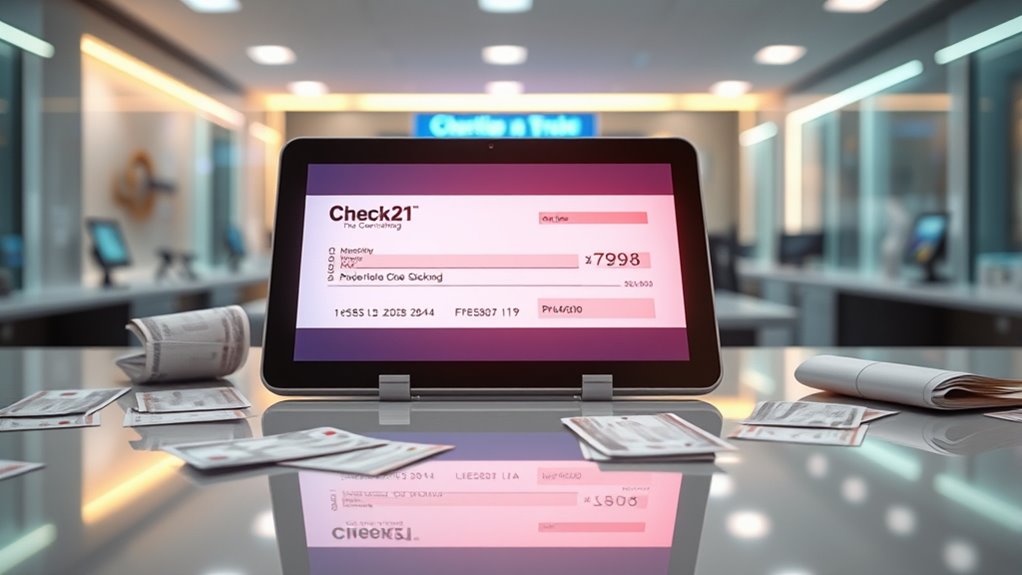

Electronic checks use digital authentication and secure transmission methods to process payments faster and more safely than traditional paper checks. Thanks to the Check21 Act, banks can convert paper checks into electronic images, allowing transactions to clear electronically without mailing physical documents. This system relies on digital signatures, encryption, and strict regulations to guarantee security and accuracy. Keep exploring to discover how these innovations are transforming the way checks are processed digitally.
Key Takeaways
- The Check21 Act allows electronic conversion and transmission of paper check images for faster clearing.
- Digital authentication ensures secure transfer and verification of check data during the electronic process.
- Checks are processed electronically via image exchange, reducing the need for physical transportation.
- Secure banking standards and regulations govern the transmission, clearing, and dispute resolution of digital checks.
- Check21 enhances speed, security, and efficiency in today’s digital check clearing system.
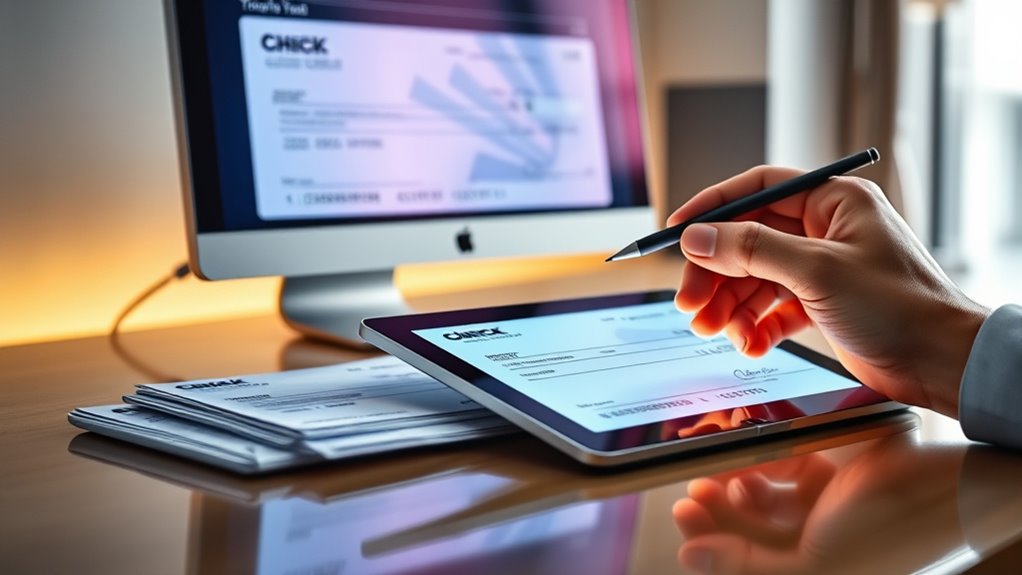
Electronic checks, also known as e-checks, have become a popular alternative to traditional paper checks by allowing you to make secure, digital payments directly from your bank account. They offer a fast, convenient way to pay bills or transfer funds without the need for mailing or physically handling checks. When you initiate an e-check, your bank verifies your identity using digital authentication methods, guaranteeing that only authorized users can authorize transactions. This process not only enhances security but also builds trust in the digital payment system. As e-checks grow in popularity, banking regulations have evolved to oversee and standardize their use, providing a framework that protects consumers and financial institutions alike. These regulations set clear guidelines for the electronic transfer of funds, guaranteeing that transactions are processed accurately and securely, much like traditional checks but with added layers of safety.
Digital authentication plays an essential role in maintaining the integrity of e-check transactions. When you submit an electronic check, your bank employs various verification methods—such as encryption, multi-factor authentication, and digital signatures—to confirm your identity. These measures prevent unauthorized access and reduce the risk of fraud. The use of digital signatures, in particular, provides a cryptographic assurance that the check was initiated by you and has not been altered during transmission. This technology, combined with strict banking regulations, creates a secure environment where e-checks can be trusted for both personal and business transactions. The regulations mandate compliance with security standards, such as the use of secure channels for data transmission and rigorous audit trails, to guarantee that every electronic check is processed with transparency and accountability. Additionally, understanding the importance of sleep and mental health can contribute to overall well-being, including better decision-making in financial transactions.
Because e-checks are governed by banking regulations, you can feel confident that your payments are protected under the law. These rules specify how banks must handle electronic check data, how disputes are resolved, and how fraud prevention measures are implemented. They also define the technical standards for digital authentication, ensuring interoperability between different banking systems and payment processors. This regulatory oversight fosters a secure ecosystem where you can perform transactions confidently, knowing that your financial data is safeguarded and that the process adheres to legal requirements. As technology continues to advance, banking regulations adapt to incorporate new security features, making electronic checks a reliable and efficient option for digital payments. Overall, the combination of digital authentication and strong banking regulations guarantees that your e-check transactions are fast, safe, and compliant with industry standards.

Digital Check TS240-50IJ Check Scanner – 50 DPM, with Inkjet
- Brand: Digital Check
- Model Number: TS240-50IJ
- Scanning Speed: 50 DPM
As an affiliate, we earn on qualifying purchases.
As an affiliate, we earn on qualifying purchases.
Frequently Asked Questions
How Secure Are Electronic Checks Compared to Traditional Checks?
Electronic checks are generally more secure than traditional checks because they use advanced encryption protocols to protect your information during transactions. Additionally, they benefit from robust fraud prevention measures that detect suspicious activity quickly. You can trust that digital checks reduce the risk of theft and forgery, making your payments safer. While no system is entirely invulnerable, these security features substantially enhance protection compared to paper checks.
Can Electronic Checks Be Canceled Once Sent?
Yes, electronic checks can be canceled after they’re sent, but it depends on the timing and the recipient’s processing. You use digital signatures for authenticity and fraud prevention, which helps secure the transaction. To cancel, you need to act quickly and contact your bank or payment provider. They can sometimes stop the check before it’s processed, especially if you spot the issue early, reducing the risk of fraud.
What Are the Main Differences Between Check21 and ACH Transactions?
Check21 and ACH transactions differ mainly in digital security and transaction speed. Check21 allows you to convert paper checks into digital images, speeding up processing and reducing fraud risk with enhanced security. ACH transactions are typically slower but reliable for recurring payments. While Check21 offers quicker, more secure digital check clearing, ACH provides a cost-effective, steady method for batch payments. Both improve efficiency but serve different banking needs.
Are Electronic Checks Accepted Worldwide or Only in the U.S.?
Electronic checks aren’t widely accepted worldwide, mainly limited to the U.S. and some regions with similar banking systems. You might face hurdles with global acceptance, as cross-border payments often prefer methods like wire transfers or international card transactions. If you’re making international transactions, relying solely on electronic checks could slow things down or cause issues, so consider alternatives better suited for cross border payments.
How Long Does It Take for an Electronic Check to Clear?
Most electronic checks clear within one to two business days, making payment processing quick and efficient. In digital banking, 90% of transactions settle within this timeframe, ensuring you get your money faster. The speed varies depending on the banks involved and whether the check is processed electronically or manually. You’ll appreciate the convenience of instant updates, and you can typically access cleared funds sooner than with traditional paper checks.

Digital Check TellerScan TS250-55IJ Check Scanner
- Supported by Financial Institutions: Verify compatibility before purchase
- High-Speed Document Scanning: 55, 75, or 120 documents per minute
- Network-Ready Connectivity: Ethernet-over-USB switchable
As an affiliate, we earn on qualifying purchases.
As an affiliate, we earn on qualifying purchases.
Conclusion
As you navigate the digital river of payments, Electronic Checks and Check21 act as swift currents guiding your transactions smoothly to their destination. No longer do you need to ride the waves of paper checks; instead, you sail effortlessly through a sea of pixels and data. Embrace this technological tide, and watch your financial flows become faster, safer, and more seamless—transforming the way you clear checks in today’s digital world.

Effective Methods for Software Testing: Includes Complete Guidelines, Checklists, and Templates
- Condition: Used Book in Good Condition
As an affiliate, we earn on qualifying purchases.
As an affiliate, we earn on qualifying purchases.

LCD Electronic Signature Pad USB Digital Signature Tablet Handwriting Capture Sign Pad Support PDF Word Excel WPS Secondary Development Kit for Office Finance Hospital Government OA System Windows
- Display Signature on Tablet and Computer: Shows signatures on both screens
- Battery-Free Stylus: No charging needed for smooth drawing
- Ideal for Digital Signatures: Perfect for e-signatures and remote work
As an affiliate, we earn on qualifying purchases.
As an affiliate, we earn on qualifying purchases.