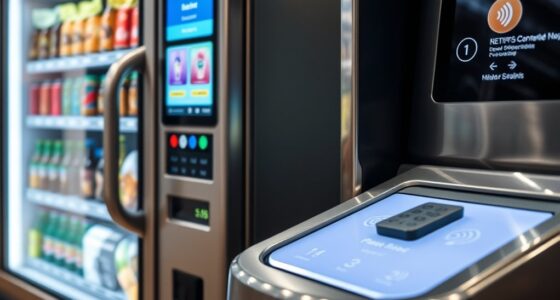
Your phone replaces your card through advanced technologies like NFC and QR codes, which enable contactless payments. When you tap your device near a terminal, secure communication transfers transaction data instantly. Your phone stores digital versions of your card info safely, protected by encryption and biometric security like fingerprint or facial recognition. Innovations keep your transactions safe and fast. Keep exploring to discover how these systems come together to make your mobile wallet smarter and more secure.

Get smart everyday buys delivered free with Prime
- Fast, free delivery on millions of items
- Prime Video, Amazon Music and more included
- Member-only deals all year
Key Takeaways
- Mobile wallets store encrypted digital versions of payment card information on smartphones.
- NFC technology enables contactless communication between your phone and payment terminal.
- Biometric authentication (fingerprint, facial recognition) secures transactions without physical cards.
- Secure elements and encryption protocols protect sensitive financial data during transactions.
- QR codes and tap-and-go features facilitate quick, hygienic, card-free payments via smartphones.
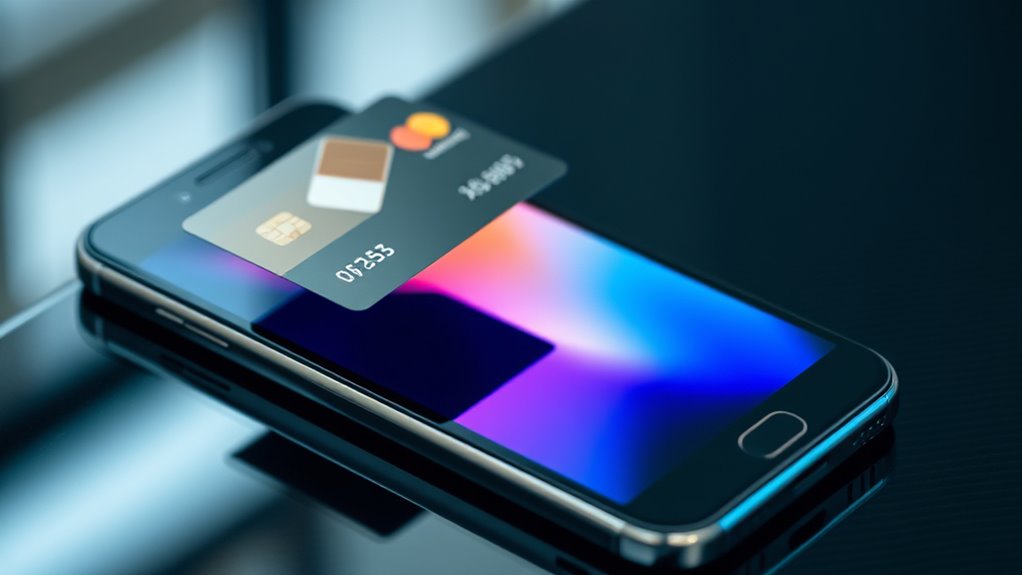
Mobile wallets have become an essential part of everyday transactions, offering a convenient and secure way to make payments using your smartphone. They replace traditional cards by storing your payment information digitally and allowing you to pay quickly through contactless methods. With technologies like NFC (Near Field Communication) and QR codes, your phone communicates seamlessly with payment terminals, enabling smooth, tap-and-go transactions. This shift has led to a significant rise in contactless payments, which grew by 32% in recent years, reflecting how consumers now prefer faster, more hygienic ways to pay.
Mobile wallets simplify payments with secure, contactless technology, transforming smartphones into powerful financial tools.
The global market for mobile wallets is booming. By 2025, it’s projected to reach nearly USD 350 billion, and by 2035, it could surpass USD 3.8 trillion. This rapid growth is driven by increasing smartphone adoption worldwide, especially in regions like Asia-Pacific, which holds a 32.3% market share. Countries such as China and India are at the forefront, with nearly 90% of urban adults in China using digital wallets regularly and transaction volumes soaring by 60% in India in 2023. Governments are supporting this trend; India’s UPI platform, for instance, has propelled digital wallet use, and Brazil’s Pix system aims to streamline mobile payments nationally.
Major players like Apple Pay and Google Pay dominate the scene, commanding over 70% of active users in North America alone. These platforms leverage advanced security features such as biometric authentication—fingerprint scans and facial recognition—to build trust and protect your financial data. They also utilize secure elements embedded in phones and encryption protocols to guard against fraud. Additionally, ongoing innovations in biometric security are making mobile wallets even safer for consumers. European regulations like PSD2 push for secure, compliant mobile wallet solutions, encouraging banks and fintech firms to develop robust, user-friendly services.
Your adoption of mobile wallets is only increasing. In 2023, there were about 3.9 billion digital wallet users globally; this number is expected to reach 5 billion by 2025. In Europe, nearly half of online shoppers prefer using digital wallets, while African countries see rapid growth in mobile money services like M-Pesa, with active users rising by over 30% in a single year. This expansion is supported by ongoing infrastructure improvements, partnerships between tech firms and financial institutions, and government initiatives that promote digital literacy and smartphone access. Furthermore, the continuous development of security features and regulatory frameworks is making mobile wallets safer and more trustworthy for consumers worldwide.
All these factors highlight how your phone is transforming from a simple communication device into a powerful, secure tool for managing your finances. As technology advances, the integration of security features and regulatory support ensures that your mobile wallet remains a safe, efficient, and increasingly popular way to pay, replacing your card with just a tap or scan.
NFC contactless payment smartphone
As an affiliate, we earn on qualifying purchases.
As an affiliate, we earn on qualifying purchases.
Frequently Asked Questions
How Secure Are Mobile Wallets Against Hacking?
You’re wondering how secure mobile wallets are against hacking. They actually offer strong protection through encryption, tokenization, and biometric authentication like fingerprint or face ID. Even if your device is lost or stolen, remote wiping and requiring biometrics block unauthorized access. Plus, major providers haven’t reported widespread breaches as of 2025. But stay vigilant, enable all security features, and keep your device updated to maintain this high level of security.
Can I Use Mobile Wallets Internationally?
Yes, you can use mobile wallets internationally, but it depends on the platform and location. Platforms like Apple Pay and Google Pay are accepted in many countries, especially in North America and Europe. In regions like China and India, Alipay and UPI are dominant. Make sure your wallet supports international transactions, and check if the merchant accepts your specific wallet to guarantee seamless payments abroad.
What Happens if My Phone Battery Dies?
When your phone’s battery dies, your ability to use contactless payments or access cards depends on the Power Reserve and Express Mode. If you’ve enabled Express Mode for your cards, you can still hold your phone near a reader to pay or access certain services, even with a dead battery. Without this setup, or if Power Reserve is exhausted, you’ll need a physical card or key to proceed.
Are Mobile Wallets Accepted Everywhere?
You might wonder if mobile wallets are accepted everywhere. While they’re widely used, acceptance isn’t universal yet. In urban areas and in regions like Southeast Asia, North America, and Europe, many merchants support contactless payments via NFC or QR codes. However, small shops or rural locations may lack the necessary infrastructure. Security concerns and regional regulations also slow full adoption, so it’s best to carry a backup payment method just in case.
How Do Mobile Wallets Handle Refunds and Disputes?
Ever wonder how your mobile wallet acts like a digital safety net? When you request a refund, it’s credited instantly to your digital balance, and you can reuse it immediately. If there’s a dispute, you can easily report it through the app. Secure authentication and fraud detection keep your funds safe. This smooth process boosts your confidence, ensuring quick resolutions and a seamless experience every time you make a transaction or seek a refund.
biometric security mobile wallet
As an affiliate, we earn on qualifying purchases.
As an affiliate, we earn on qualifying purchases.
Conclusion
Now, as you glide your phone past the scanner, imagine a tiny digital vault within your device, effortlessly swapping your card for a tap. Your phone whispers secrets of secure transactions, turning your pocket into a sleek, invisible wallet. With a simple swipe, you hold the power of a hundred cards, seamlessly blending technology and everyday life. It’s not just a wallet; it’s your smart, invisible companion ready to unseal the future.
digital wallet encryption protection
As an affiliate, we earn on qualifying purchases.
As an affiliate, we earn on qualifying purchases.
As an affiliate, we earn on qualifying purchases.
Columbus Day / Indigenous Peoples' Day Picks
long weekend sales
As an affiliate, we earn on qualifying purchases.