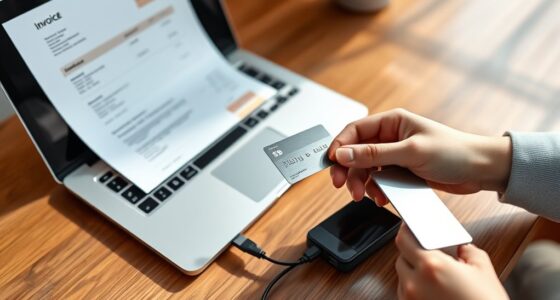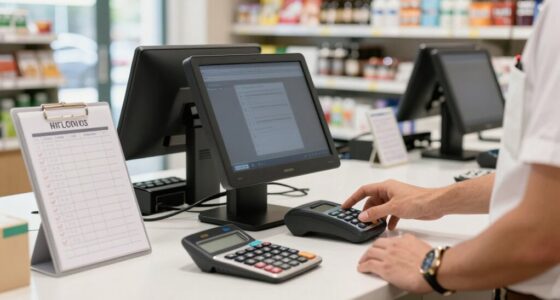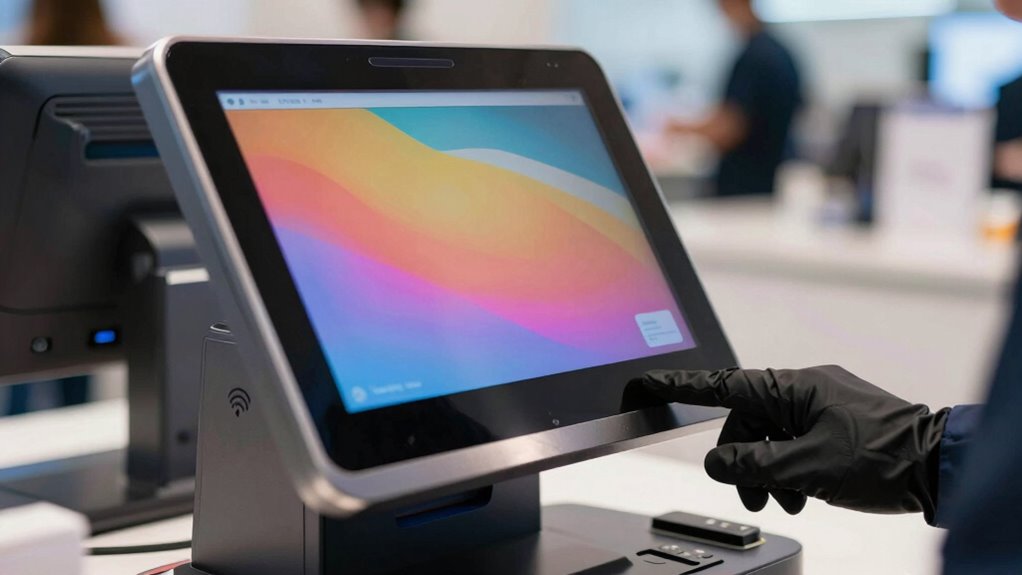

To evaluate a new checkout device before rollout, start by checking its compatibility with your existing POS, inventory, and payment systems. Test its user interface for ease of use and gather feedback from frontline staff. Assess its durability and reliability by reviewing reviews and certifications. Confirm vendor support, training, and warranty options. Consider long-term performance and industry standards. Keep these factors in mind to guarantee a smooth deployment—if you want to learn more, keep exploring the key steps involved.

Get smart everyday buys delivered free with Prime
- Fast, free delivery on millions of items
- Prime Video, Amazon Music and more included
- Member-only deals all year
Key Takeaways
- Verify compatibility with existing POS, inventory, and payment systems to prevent integration issues.
- Test user interface for ease of use, involving frontline staff for feedback and usability insights.
- Assess device durability through reviews and industry certifications to ensure it withstands daily retail use.
- Confirm vendor support, training resources, and maintenance plans for smooth onboarding and ongoing assistance.
- Review long-term performance data and industry standards to ensure reliability and safety over time.
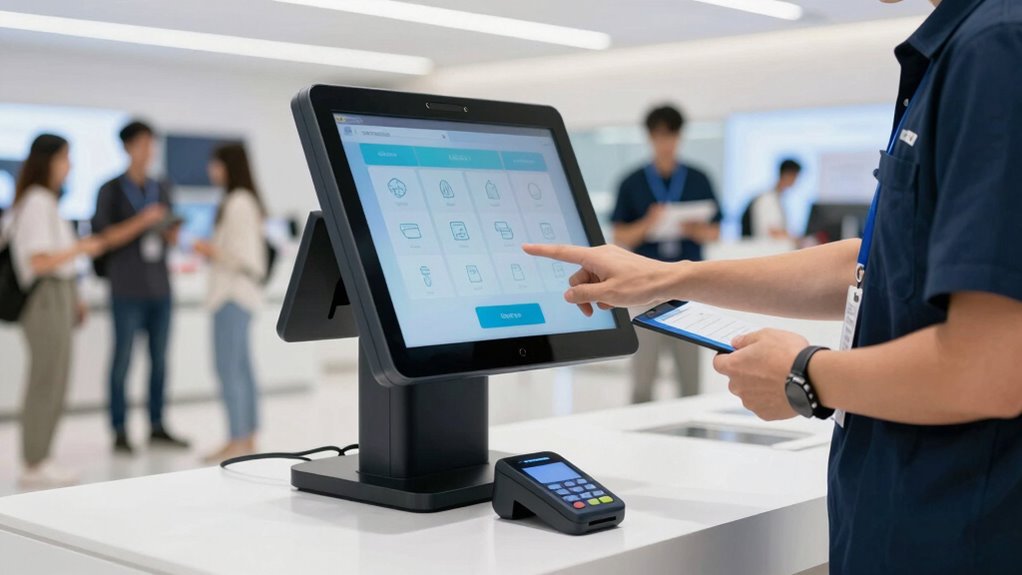
Next, focus on technical compatibility. Your new checkout device must seamlessly connect with your existing POS systems, inventory management software, and payment processors. Check whether the device supports the necessary communication protocols and software integrations. Compatibility issues can cause delays, errors, or system crashes, so verify specifications thoroughly before making a decision. Furthermore, consider the device’s hardware requirements, such as power needs and network connectivity, to avoid unexpected complications during rollout.
Beyond technical specs, evaluate the device’s user interface and ease of operation. A user-friendly design minimizes training time and reduces the risk of errors at checkout. Test the device yourself or with a small team to observe how intuitive it is to navigate. If possible, involve frontline employees in the evaluation process, since they’ll be the primary users. Their feedback on usability can reveal potential issues that might not be obvious from technical specifications alone. Incorporating user experience principles can further improve the overall functionality and acceptance of the device.
Another critical aspect is reliability and durability. You want a device that can withstand daily use in a busy retail environment. Look into reviews or case studies from other businesses that have used the device, paying special attention to reports of technical glitches or hardware failures. Reliability directly impacts customer satisfaction and operational efficiency, so don’t compromise on sturdy construction and dependable performance. Incorporating industry standards can also guide you toward more durable options. Additionally, considering product testing and certification can provide assurance of the device’s quality and safety. Understanding how these standards relate to long-term performance can help you select a device that remains dependable over time.
Finally, consider the vendor’s support and training offerings. A responsive customer service team and extensive training resources can help you troubleshoot problems quickly and get your staff up to speed. During the evaluation phase, ask about warranties, maintenance plans, and software updates. These elements ensure that your investment remains secure and functional over time. Additionally, understanding digital content concepts related to device management can help streamline ongoing support and updates.
Products Worth Considering

Logitech MX Mechanical Full-Size Wireless Mechanical Keyboard, Tactile Quiet Switches, Backlit Keys, Bluetooth, USB-C, Multi-Device, Graphit

Logitech MX Mechanical Mini Mac Wireless Keyboard Low-Profile – Space Grey

HP Sprocket Photo Booth Machine Instant Color Photo Printer with 10.1 Touchscreen, LED Ring Light, 250+ Frames, 3×4 ZINK Paper, QR Code Shar
As an affiliate, we earn on qualifying purchases.
Frequently Asked Questions
How Long Does the Device Typically Last Before Needing Replacement?
The device typically lasts 3 to 5 years before needing replacement, depending on its durability and usage. You should monitor its performance regularly, as frequent malfunctions or decreased efficiency signal it’s nearing the end of its lifespan. To reduce replacement frequency, choose a device known for high durability, perform routine maintenance, and train staff properly. This proactive approach helps guarantee smooth operations and maximizes your investment.
What Training Is Required for Staff to Operate the Device Efficiently?
You need to provide thorough staff training to guarantee user proficiency with the new checkout device. Focus on hands-on demonstrations, clear step-by-step instructions, and troubleshooting tips. Make certain staff are familiar with all features and common issues. Regular practice sessions help reinforce skills, and offering ongoing support ensures everyone remains confident and efficient. Proper training minimizes errors, speeds up transactions, and enhances overall customer experience.
Are There Compatibility Issues With Existing POS Systems?
Think of your POS system as a puzzle, and the new checkout device as an essential piece. You’ll want to check for device integration issues and guarantee smooth user accessibility. During testing, I found that some devices caused compatibility issues, like a puzzle piece that doesn’t quite fit. Conduct thorough integration assessments and user tests to confirm the device works seamlessly with your existing systems, avoiding costly disruptions later.
What Are the Most Common Technical Problems Encountered?
You often encounter technical problems like device crashes, slow processing, or connectivity issues. Regular device maintenance helps prevent these problems, ensuring smooth operation. When issues arise, user troubleshooting becomes essential—checking connections, restarting the device, or updating software. Addressing these common technical problems quickly minimizes downtime and keeps checkout processes efficient, ultimately providing a better experience for both staff and customers.
How Secure Is the Device Against Data Breaches?
You’ll find that the device’s security depends on its data encryption and user authentication features. Guarantee it uses strong encryption protocols to protect sensitive information during transactions. Additionally, verify that it implements robust user authentication methods, like multi-factor authentication, to prevent unauthorized access. Regular updates and security patches are also vital. When these elements are in place, the device offers a high level of protection against data breaches.
Conclusion
As you stand at the crossroads of innovation, remember that each test is a brushstroke on your masterpiece. A well-evaluated device isn’t just a tool, but the heartbeat of your store’s future — reliable, smooth, ready to welcome customers like an open door. Trust your instincts, gather your insights, and let each step be a ripple that shapes confidence. Because in this journey, the right checkout device is the compass guiding you toward seamless success.