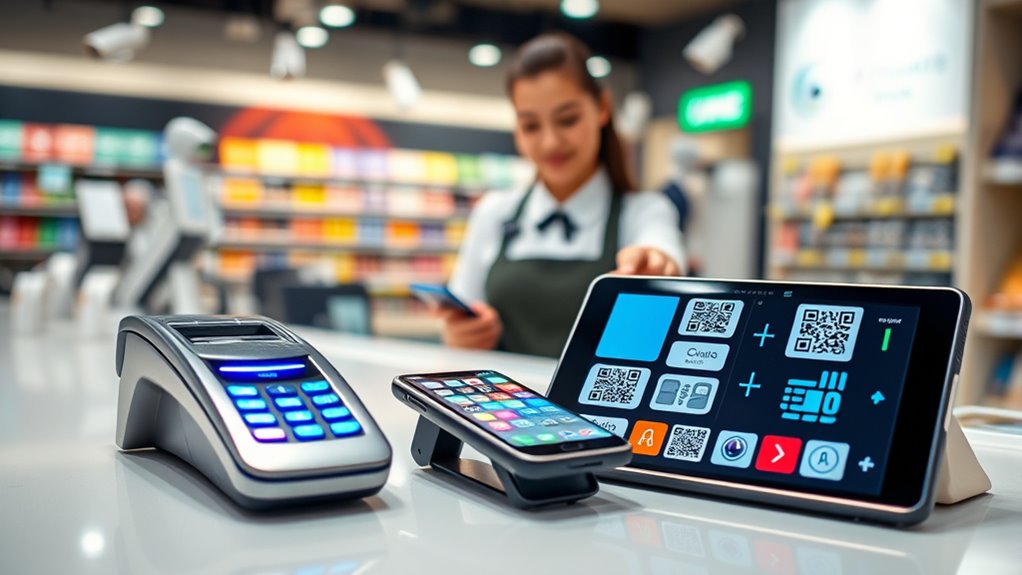

To expand your payment options without boosting fraud risk, start by offering secure mobile wallets like Apple Pay or Google Pay, which use tokenization for added safety. Integrate reputable crypto processors if you add cryptocurrencies, and stay compliant with regional regulations. Always implement strong authentication methods, monitor transactions in real-time, and educate staff about security practices. When you adopt these measures thoughtfully, you can diversify payment methods while keeping risks in check—more details follow to help you succeed.
Key Takeaways
- Implement strong authentication methods like MFA to verify customer identities during new payment method adoption.
- Use reputable payment processors with built-in fraud detection and security features for alternative currencies and mobile wallets.
- Regularly update and patch payment systems to address vulnerabilities and ensure compliance with security standards.
- Educate staff on recognizing suspicious transactions and maintaining vigilant monitoring of payment activities.
- Clearly communicate security measures to customers to build trust and encourage confident use of expanded payment options.
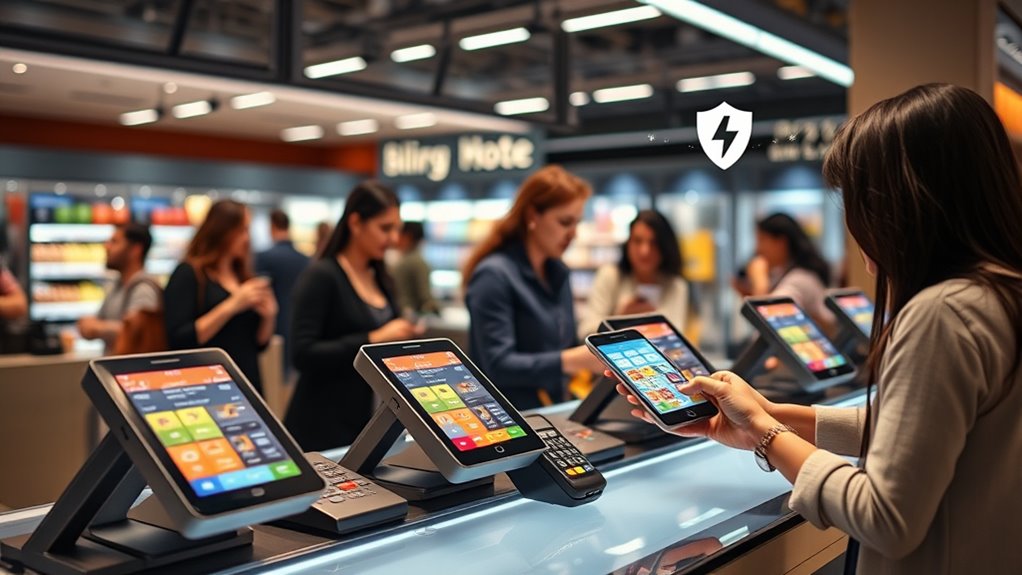
As digital commerce continues to grow, expanding payment options has become vital for businesses aiming to meet customer expectations. Offering a variety of payment methods can boost sales and improve customer satisfaction, but it also introduces new security challenges. You need to find ways to incorporate popular options like mobile wallets and alternative currencies without increasing your fraud risk. Mobile wallets, such as Apple Pay or Google Pay, provide a convenient and secure way for customers to pay using their smartphones. They utilize tokenization, which replaces sensitive card data with unique tokens, making transactions safer and reducing the chances of data theft. When integrating mobile wallets, guarantee your payment gateway supports these technologies and adheres to the latest security standards. This way, customers can enjoy quick, seamless payments without exposing their financial information.
Expanding payment options boosts sales and satisfaction while maintaining security with mobile wallets and tokenization.
Alternative currencies, including cryptocurrencies like Bitcoin or stablecoins, are gaining traction among tech-savvy consumers. Accepting these digital assets can set your business apart and attract a new customer base. However, cryptocurrencies are inherently volatile, and their decentralized nature can pose fraud risks if not handled properly. To mitigate this, use reputable crypto payment processors that offer fraud detection tools and compliance measures, like anti-money laundering (AML) protocols. Establish clear policies for cryptocurrency transactions, including conversion options to fiat currency when necessary, to reduce exposure to market fluctuations. It’s also vital to stay informed about regulations surrounding digital currencies in your region to ensure compliance and avoid penalties. Recognizing the importance of secure transaction methods is essential when diversifying your payment options in order to protect your business from potential vulnerabilities.
When expanding payment options, always prioritize strong authentication methods. Multi-factor authentication (MFA) and real-time transaction monitoring can help detect and prevent fraudulent activities before they occur. Educate your staff to recognize suspicious transactions and implement strict fraud prevention protocols. Additionally, keep your payment systems updated with the latest security patches and encryption technologies. Regular audits and vulnerability scans can help identify potential weaknesses before they’re exploited by cybercriminals.
Lastly, communicate transparently with your customers about the security measures you’ve put in place. Clear explanations of how their data is protected can build trust and encourage them to use new payment methods confidently. By carefully integrating mobile wallets and alternative currencies with robust security practices, you can expand your payment options effectively without exposing your business to unnecessary fraud risk. This balanced approach allows you to cater to evolving customer preferences while maintaining the integrity and safety of your transactions.
Frequently Asked Questions
How Can I Measure the Success of Expanding Payment Options?
You can measure payment success by tracking increased transaction volume, higher customer satisfaction, and improved conversion rates. Monitor how well new payment options perform regarding ease and speed, while also evaluating fraud prevention measures. Use data analytics to identify patterns and detect potential issues early. Regularly review these metrics to confirm your expanded payment options boost revenue without compromising security, ensuring your efforts effectively balance growth and fraud prevention.
What Are the Legal Considerations for Adding New Payment Methods?
You need to guarantee legal compliance and obtain regulatory approval when adding new payment methods. Check relevant laws in your jurisdiction, including consumer protection and data security regulations. Consult legal experts to verify that your new options meet all compliance standards. Stay updated on evolving regulations to avoid penalties. By proactively addressing legal considerations, you minimize risks and smoothly expand your payment choices, offering customers convenience while staying compliant.
How Do Different Regions Impact Payment Expansion Strategies?
Imagine steering a vast marketplace where each region is a unique island. You must adapt your payment strategies to regional differences and cultural considerations, like offering local currencies or popular payment methods. By understanding these nuances, you guarantee your expansion sails smoothly across diverse territories. Tailoring your approach respects local customs, builds trust, and minimizes risks, helping your business thrive globally without compromising security or customer satisfaction.
What Customer Feedback Should I Gather Before Expanding Options?
You should gather feedback on your customers’ security concerns and preferred payment methods. Ask if they feel comfortable with current options and which additional options they’d like to see. Understanding their preferences helps you choose secure, convenient methods that boost satisfaction. Also, inquire about any worries they have regarding fraud or data privacy, so you can address these concerns proactively and expand payment options confidently.
How Can I Ensure Consistent User Experience Across Multiple Payment Methods?
Think of your checkout flow as a well-orchestrated symphony; every instrument, or payment method, must harmonize. To guarantee consistent user experience, streamline the checkout process across all payment diversity options. Use clear, familiar interfaces and maintain similar steps, so customers feel at ease regardless of their chosen method. Regularly test each variation, gather user feedback, and refine to keep the experience seamless, confident, and music to your customers’ ears.
Conclusion
Now that you know how to expand your payment options safely, imagine the opportunities waiting just beyond the horizon. But here’s the catch—each new method brings potential risks you can’t ignore. Will your safeguards hold up? The key to opening growth without falling prey to fraud lies in staying vigilant and adaptable. Are you ready to take that next step? The real challenge is just around the corner—are you prepared to face it?