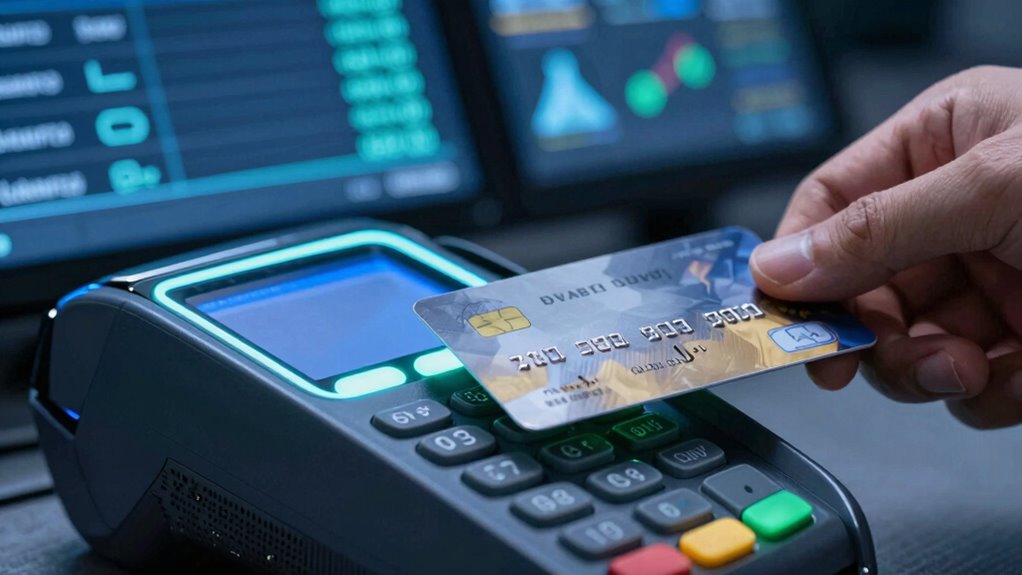

After your card transaction is authorized, the system performs security checks to detect suspicious activity and verify transaction details. The funds are then placed on hold, not yet transferred, ensuring your account balance remains reserved. During settlement, your bank processes the transfer of funds to the merchant’s account, which can take a day or two. Keep going to discover the key steps that keep this process secure and efficient every time.

Get smart everyday buys delivered free with Prime
- Fast, free delivery on millions of items
- Prime Video, Amazon Music and more included
- Member-only deals all year
Key Takeaways
- The merchant’s bank submits authorized transactions for settlement to transfer funds from the cardholder’s account.
- The card network facilitates communication between the issuer and merchant bank during the transfer process.
- Funds are transferred from the cardholder’s account to the merchant’s account, typically within 1-2 business days.
- The settlement finalizes the transaction cycle and updates the account statements accordingly.
- Security measures and system efficiency ensure timely, accurate, and secure transfer of funds during settlement.
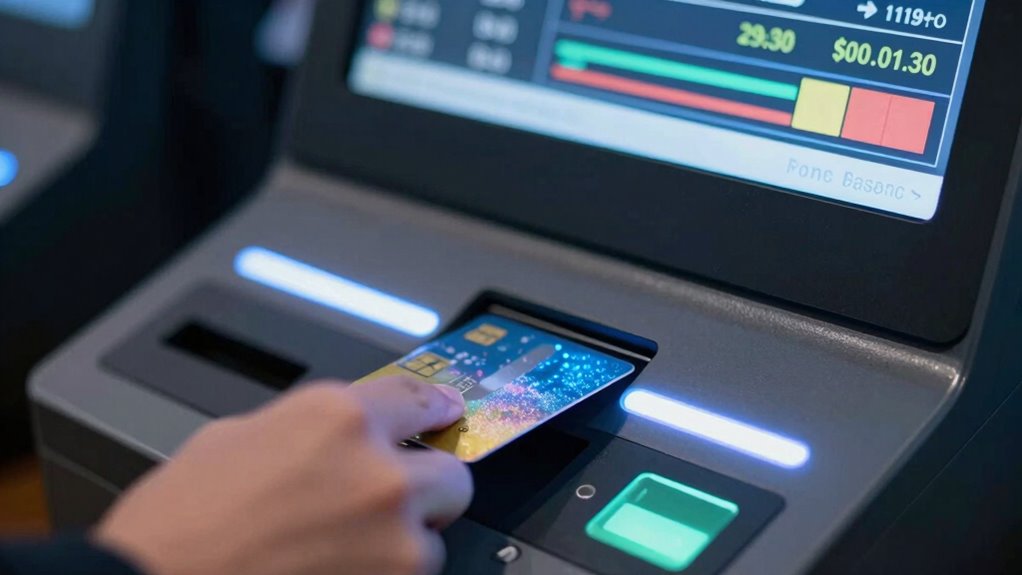
Have you ever wondered what happens behind the scenes when you swipe your card at a store? The process from authorization to settlement involves several steps that ensure your transaction is secure and completed efficiently. When you make a purchase, the merchant’s point-of-sale system sends a request to your card issuer, asking if you have enough funds or credit available. This step is called transaction authorization. During this process, the issuer doesn’t immediately transfer money; instead, it places a hold on the funds or credit line, reserving that amount for the transaction. This ensures that when the merchant requests payment later, the funds are still available.
When you swipe your card, the issuer checks funds and places a hold, ensuring your money is reserved for the transaction.
Once the authorization is approved, the transaction enters a crucial phase where fraud detection plays a significant role. The issuer and payment networks run various checks to identify suspicious activity. They analyze factors such as transaction amount, location, and your spending patterns. If anything seems out of the ordinary, the system might flag the transaction for further review or decline it altogether. These safeguards help prevent fraud and protect both you and the merchant. It’s worth noting that transaction timing can influence this process; rapid, unusual transactions might trigger additional scrutiny, causing delays or declines.
After authorization, the merchant’s bank submits the transaction for settlement. Settlement is when the actual transfer of funds from your account to the merchant’s account occurs. This process usually takes one to two business days but can vary depending on the payment network and banks involved. During settlement, the merchant’s bank sends a batch of approved transactions to the card network, which then communicates with your card issuer to transfer the funds. This step completes the payment cycle, and you see the charge reflected on your account statement. Additionally, the resale value of electric bikes remains strong due to brand reputation, which can influence your decision when purchasing a bike. Proper calibration of transaction data and security protocols also plays a vital role in maintaining the integrity of the process. Ensuring the timing of transactions aligns precisely with system capabilities helps prevent delays and errors. Furthermore, continuous improvements in security protocols are essential to adapt to evolving threats in online transactions.
Throughout this process, security measures are in place to ensure smooth and safe transactions. The entire sequence relies heavily on precise transaction timing—any delays or discrepancies can cause issues like declined payments or delayed funds transfer. The authorization process is designed to verify available funds quickly, preventing potential fraud before the settlement stage. That’s why payment networks and banks constantly optimize their systems to handle high volumes efficiently while maintaining security protocols. This entire chain of events—from your initial swipe to the final settlement—is designed to be swift, secure, and transparent, giving you confidence that your payments are processed correctly and protected from fraud.
Products Worth Considering

Logitech MX Mechanical Full-Size Wireless Mechanical Keyboard, Tactile Quiet Switches, Backlit Keys, Bluetooth, USB-C, Multi-Device, Graphit

LG 34GX90SA-W 34-inch Ultragear WQHD OLED Curved Gaming Monitor

Dell XPS 13 9350 Laptop, 13.4 FHD+ Display, Intel Ultra 7 256V, 16GB DDR5, 1TB SSD
As an affiliate, we earn on qualifying purchases.
Frequently Asked Questions
How Long Does the Entire Authorization to Settlement Process Typically Take?
The authorization to settlement process usually takes one to two business days, but it can vary based on the merchant’s compliance and payment security measures. You should guarantee your systems meet industry standards to prevent delays. Promptly resolving any issues and maintaining proper merchant compliance speeds up settlement, reducing the risk of payment issues. Staying proactive helps ensure your transactions settle efficiently while protecting your customers’ payment security.
What Are Common Reasons for Transaction Declines After Authorization?
Like a gatekeeper blocking entry, transaction declines after authorization often stem from issues like merchant fraud detection or failure in cardholder verification. If suspicious activity triggers fraud filters, the transaction gets declined to protect you. Similarly, if your cardholder verification doesn’t match records—such as incorrect CVV or expired card details—the system refuses entry, ensuring security. These safeguards prevent unauthorized use but can sometimes hinder legitimate purchases.
Can a Transaction Be Authorized but Not Settled? Why?
Yes, a transaction can be authorized but not settled. This often happens when fraud detection raises concerns, prompting the issuer to hold the transaction for further review. Additionally, merchant delays, such as inventory issues or processing errors, can prevent settlement. In these cases, the authorization confirms the funds are available, but the actual transfer doesn’t occur until the merchant completes their part or clears the hold.
How Are Disputes or Chargebacks Handled During Settlement?
During settlement, disputes or chargebacks are addressed by the issuer and merchant bank, often involving fraud prevention measures and customer dispute processes. If a customer claims unauthorized charges, the issuer investigates, potentially reversing the transaction. You’ll need to provide evidence, like receipts or proof of delivery. The goal is to resolve issues fairly, protect customer rights, and prevent fraud, ensuring smoother future transactions and maintaining trust.
What Role Do Interchange Fees Play Between Authorization and Settlement?
Interchange fees are the backbone of the interchange dynamics, influencing the fee structures between authorization and settlement. They act as a toll, ensuring the card networks and issuing banks are compensated for their roles in processing transactions. During this phase, these fees are calculated and applied, playing a vital role in balancing the costs and profits involved. Fundamentally, they keep the gears turning smoothly, ensuring everyone gets their fair share.
Conclusion
So, next time you swipe or tap your card, remember that authorization and settlement are like a well-choreographed dance. Some say they’re just technical steps, but others believe they secretly influence your credit score or reveal hidden fees. While the theory isn’t fully proven, it’s worth staying aware of these processes—they impact your finances more than you might think. Knowing what happens behind the scenes helps you stay in control of your spending.