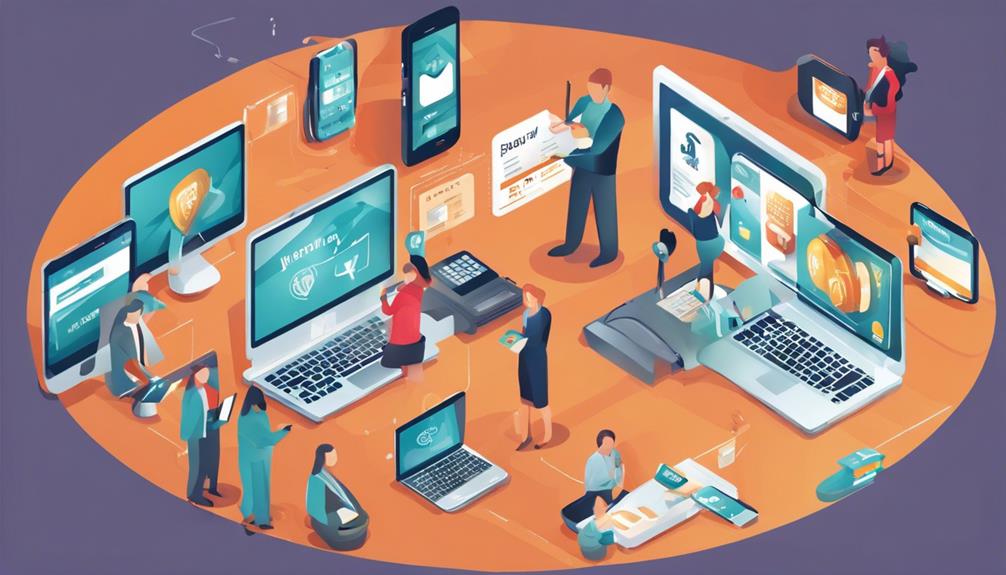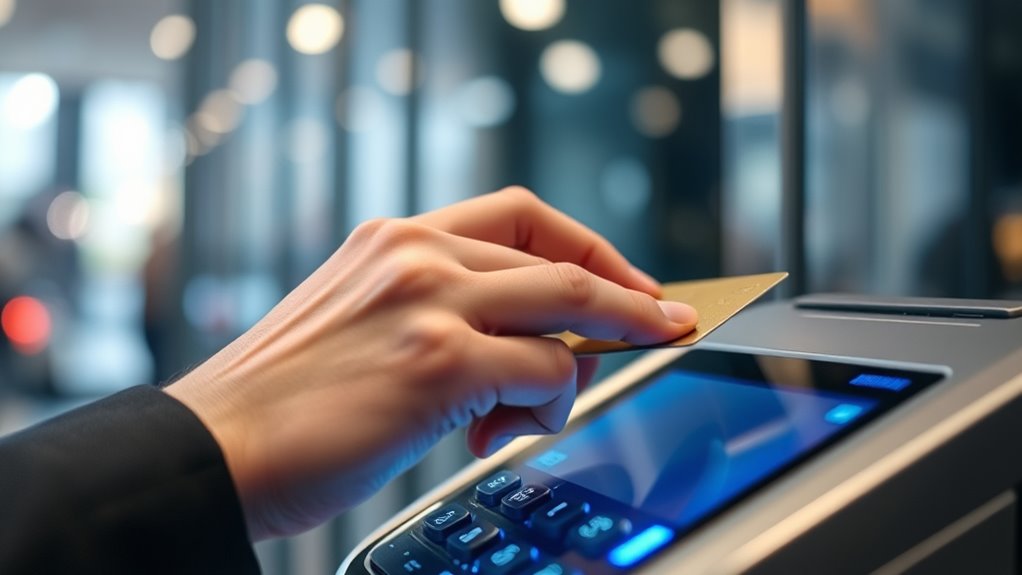

Your contactless payment limits vary because countries prioritize security differently, use diverse technologies, and follow unique regulations. Some set lower caps to reduce fraud risks, especially where infrastructure isn’t advanced or trust in digital payments is lower. Others lift restrictions thanks to stronger security measures like tokenization and biometrics, making larger transactions safer. To understand what influences these differences across nations, keep exploring how security, technology, and policies work together.
Key Takeaways
- Countries set transaction caps to mitigate fraud risk and protect against data interception during contactless payments.
- Advanced security features like tokenization and biometrics enable higher limits in some regions.
- Technological infrastructure and NFC adoption levels influence whether countries lift or impose caps.
- Regulatory policies and past fraud incidents shape the maximum transaction amounts allowed.
- Societal trust in digital security and security measures determines the willingness to support larger contactless payments.
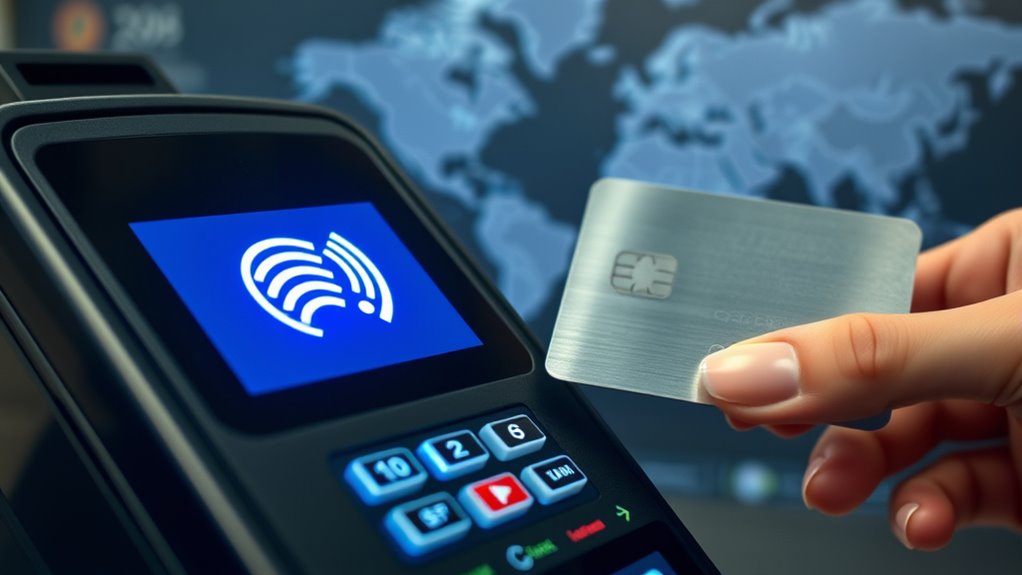
As contactless payment methods become increasingly popular, understanding their transaction limits is more important than ever. These limits aren’t just about convenience; they’re also about managing security concerns and accommodating technological differences across countries. When you use contactless payments, you might notice that some regions impose caps on how much you can spend in a single tap, while others allow higher or even unlimited transactions. Knowing why these differences exist helps you navigate the global landscape of digital payments with confidence.
Security concerns are a major factor behind transaction caps. Contactless payments rely on near-field communication (NFC) technology, which enables your card or device to communicate securely with the payment terminal. While this technology is designed to be safe, some countries set lower limits to minimize potential fraud risks. Smaller transaction caps serve as a safeguard, ensuring that if your card data is intercepted or compromised, the damage remains limited. Countries with higher or no caps often have additional security measures in place, such as tokenization or biometric verification, which allow for larger transactions with confidence. These measures mitigate risks and give both consumers and merchants peace of mind.
Security concerns drive contactless transaction caps, with lower limits in some countries to reduce fraud risks and higher limits supported by advanced security measures.
Technological differences also play a significant role. Not all regions have adopted the same level of contactless infrastructure or security standards. For instance, countries with advanced payment ecosystems and widespread NFC adoption tend to lift their transaction caps, enabling faster, more seamless payments. Conversely, regions still transitioning to contactless technology might impose stricter limits until their systems can support higher-value transactions securely. Additionally, the compatibility of mobile wallets and card readers varies—some systems might restrict transaction sizes to ensure smooth operation across diverse devices and networks. These technological disparities influence how much you can pay with a tap, shaping the overall user experience.
Furthermore, regulatory frameworks differ from country to country. Some governments require lower caps as part of their fraud prevention policies, while others promote higher limits to encourage cashless transactions. Cultural attitudes toward security and trust in digital payments also influence these policies. For example, nations that have experienced fraud issues in the past may be more conservative when setting limits, whereas countries with robust cybersecurity measures may feel comfortable allowing larger transactions without additional safeguards. Security protocols and their implementation are integral to how contactless limits are set and maintained across different regions.

3pk Service Charge Payment Signs, 3% Service Charge Notice, Countertop Display with Major Credit Cards and Contactless, Business Credit Card Payment Signs
PROFESSIONAL DISPLAY: 3pk of Service Charge signs clearly communicates credit card payment policies and the 3% service charge…
As an affiliate, we earn on qualifying purchases.
As an affiliate, we earn on qualifying purchases.
Frequently Asked Questions
How Do Contactless Limits Affect International Travelers?
As an international traveler, contactless limits can impact your payment experience. When crossing borders, currency exchange rates may cause your tap payments to hit limits faster, requiring you to use chip or swipe instead. Additionally, different countries have varying thresholds for payment authentication, which might lead to more frequent PIN prompts or declines. Staying aware of these limits helps you manage transactions smoothly and avoid surprises while traveling.
Can Contactless Payment Limits Change Without Notice?
Yes, contactless payment limits can change without notice. Merchants and financial institutions often update these limits to enhance fraud prevention, so you might see new caps unexpectedly. It’s important to stay aware of merchant acceptance policies, as some places may have stricter limits or require chip or PIN transactions. Always keep your bank informed of travel plans to avoid disruptions, and check for updates to stay protected and avoid surprises.
What Security Measures Protect Contactless Transactions?
Think of your contactless transaction as a fortress guarded by digital sentinels. Biometric authentication, like fingerprint or facial scans, acts as a personal key, ensuring only you can approve payments. Tokenization technology replaces sensitive card details with unique codes, making hackers’ job nearly impossible. These security measures work together, creating a shield that keeps your money safe while you tap and go, giving you peace of mind in a fast-paced world.
Are There Penalties for Exceeding Contactless Limits?
Yes, there can be penalties if you exceed contactless limits, especially if it leads to contactless fraud. Banks and merchants may suspend your tap payment privileges or require additional verification. Some countries adjust contactless limits to reduce fraud risks, so exceeding these limits may trigger security measures or limit adjustments. Always stay within the specified cap to avoid penalties or potential security concerns, and report any suspicious activity promptly.
How Do Contactless Limits Impact Small Businesses?
Contactless limits can affect your small business by influencing merchant acceptance, as some customers prefer quick tap payments. Higher transaction fees on contactless payments might cut into your profit margins, especially if you process many small transactions. If the limits are too low, it could discourage customers from using tap payments, potentially reducing sales. Balancing the convenience for customers with the costs and acceptance is key to managing your small business effectively.

Thetis FIDO2 Security Key Fingerprint USB A, Two Factor Authenticator, Multi-Layered Protection HOTP / U2F Compatible Windows, MacOS, Gmail, Linux for Office Business – Black
Embedded Fingerprint Sensor – Advanced embedded fingerprint sensor which facilitates a world-class one-of-a-kind password-less experience. A powerful security…
As an affiliate, we earn on qualifying purchases.
As an affiliate, we earn on qualifying purchases.
Conclusion
So, what’s next for contactless payments? With countries debating whether to raise caps or keep limits tight, one thing’s clear: the future of tap payments isn’t set in stone. Will tighter restrictions protect us or hinder convenience? As you navigate your daily transactions, stay alert—changes could be just around the corner. The question remains: how will these limits shape your payment habits tomorrow? Only time will tell.

Credit Card Wand Tap to Pay Holder, 3D Printed Tap to Pay Wand for Contactless NFC Payment, Magic Wand Card Holder for Debit or Credit Cards (Pink)
Fun Tap to Pay Experience: Turn everyday payments into a fun moment with this credit card wand, simply…
As an affiliate, we earn on qualifying purchases.
As an affiliate, we earn on qualifying purchases.
D'CENT Hardware Wallet – Biometric Cold Wallet for Crypto with Fingerprint Authentication | Secure Bluetooth Storage for Bitcoin, Ethereum, XRP, XDC, Solana, Stablecoins & More
UNMATCHED SECURITY WITH BIOMETRIC PROTECTION – Protect your crypto with certified EAL5+ Secure Element chip and advanced fingerprint…
As an affiliate, we earn on qualifying purchases.
As an affiliate, we earn on qualifying purchases.