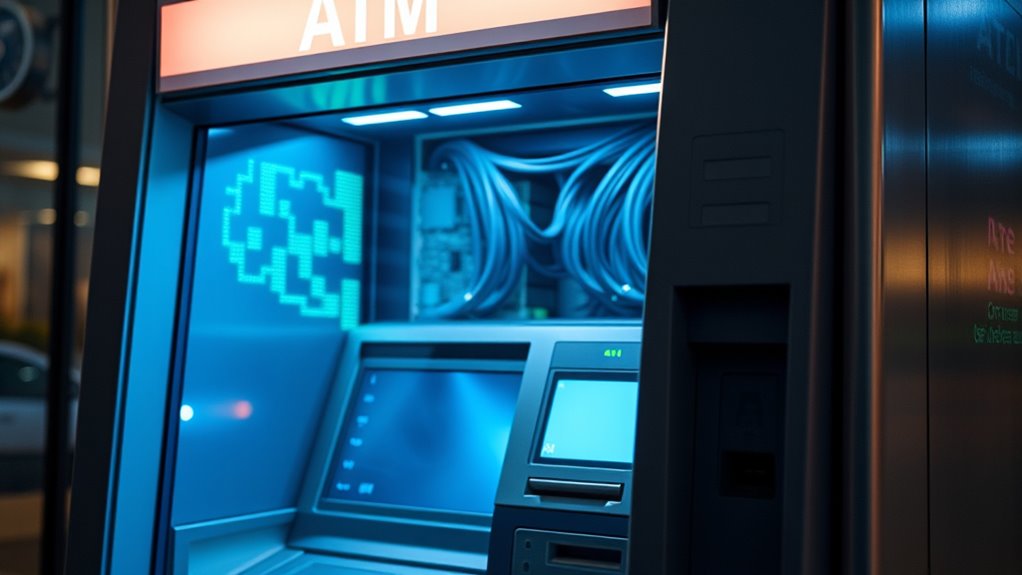

When you use an ATM, it connects to the bank’s payment network via a secure communication system. Your card and PIN are encrypted and sent for verification through this network, which authenticates your credentials in real-time. Once approved, the ATM checks your account balance, processes your transaction, and updates your records instantly. Behind the scenes, a sophisticated web of technologies guarantees your data stays protected—discover more about the systems that make this seamless experience possible.
Key Takeaways
- ATMs connect to payment networks to communicate securely with banks during transactions.
- They verify card and PIN details through encrypted communication with the bank’s server.
- Payment networks facilitate real-time authorization and fund transfer between the ATM and bank accounts.
- ATMs rely on secure networks and protocols to protect sensitive transaction data from interception.
- The networks enable seamless, quick cash withdrawals and account updates across various banking institutions.
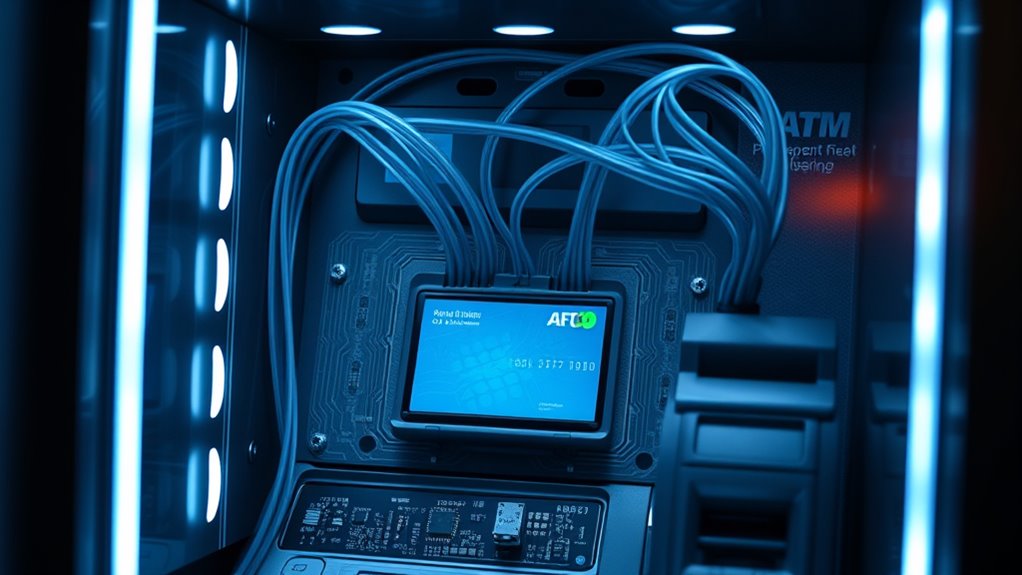
Automated Teller Machines (ATMs) are convenient devices that allow you to access your bank account and perform transactions without visiting a branch. When you insert your card and enter your PIN, the ATM begins a carefully coordinated process to guarantee your data is secure and your transaction is completed smoothly. The security protocols in place are designed to protect your sensitive information throughout the transaction flow. These protocols include encryption methods that safeguard your PIN and transaction details from potential threats, ensuring that your data remains confidential as it travels across networks. Additionally, ATMs often have physical and digital security measures like cameras, tamper-evident card readers, and secure software that help prevent fraud and unauthorized access.
As you initiate a transaction, the ATM communicates with your bank’s host system through a secure network. This communication is part of what’s called the transaction flow, which involves multiple steps to verify your identity, check your account balance, and process your request. First, the ATM transmits your card information and PIN to the bank’s server. The server then authenticates your credentials, confirming that you’re authorized to access the account. Once verified, the ATM receives authorization to proceed. If you’re withdrawing cash, it checks your available balance, deducts the amount, and signals the ATM to dispense the funds. Throughout this process, security measures are continuously active—monitoring for suspicious activity, encrypting data, and ensuring that only legitimate requests are processed. Many ATMs also utilize modern security protocols to further protect user information during transactions.
The transaction flow also involves updating your account records in real-time. This ensures that your account balance accurately reflects your recent activity, whether you’re withdrawing cash, checking your balance, or transferring funds. Once the transaction is complete, the ATM issues a receipt if you request one and returns your card. Rest assured, the entire process is designed to be fast, secure, and reliable, so you can complete your banking needs with confidence. The seamless coordination between the ATM hardware, network security protocols, and bank servers allows you to perform transactions efficiently while keeping your information safe. This sophisticated system is what makes ATMs an essential part of modern banking, providing quick access to cash and account management anywhere, anytime.

Nightking Indoor 1080P 2.4MP Mini cube Security Camera, 4-in-1 TVI/AHD/CVI/960H Surveillance Security ATM Camera,3.7mm Lens,Dip Switchable cable,UTC
Nightking 1080P 2.4MP Mini Security CCTV Camera,3.7mm lens,UTC
As an affiliate, we earn on qualifying purchases.
As an affiliate, we earn on qualifying purchases.
Frequently Asked Questions
How Do ATMS Verify Your Identity Securely?
You verify your identity at ATMs through biometric authentication, such as fingerprint or facial recognition, which adds an extra layer of security. The ATM uses encryption security to protect your personal data during transactions, ensuring your information stays private. When you insert your card and authenticate, the system compares your biometric data with stored records, making the process quick and secure, so you can access your funds confidently.
What Happens if the ATM Runs Out of Cash?
Oh, the irony of an ATM running out of cash when you need it most! When that happens, cash replenishment is scheduled during ATM maintenance, often causing delays. You’ll usually see a message instructing you to visit another machine or return later. Rest assured, the bank works behind the scenes to restock and service the ATM promptly, ensuring you’re not left empty-handed for long.
Are ATMS Vulnerable to Hacking or Skimming?
Yes, ATMs can be vulnerable to hacking or skimming. Criminals often place skimming devices on ATMs to steal card information, which can lead to card cloning. To protect yourself, always check for suspicious attachments or loose parts on the card reader. Use ATMs in well-lit, secure locations, and monitor your bank account regularly for unauthorized transactions. Staying cautious helps prevent falling victim to these common ATM scams.
How Do International ATM Transactions Work?
When you make international ATM transactions, your bank communicates with foreign payment networks to process the request. You might face currency exchange fees and transaction limits depending on your bank’s policies. The ATM converts your home currency to the local one, often applying exchange rates. Make certain you’re aware of possible extra charges and limits, so you can manage your cash needs effectively while traveling abroad.
What Fees Are Associated With Using ATMS Abroad?
Imagine your card as a traveler crossing borders—when you use ATMs abroad, you face foreign exchange fees, like customs duties for your money. These fees, along with ATM security measures, protect your funds but can add to costs. Many banks also charge withdrawal fees, so check your bank’s policy before traveling. Staying aware helps you avoid surprises and keeps your money safe on your international journey.

Credit Card Privacy Sticker (Non-RFID) – Anti-Spy Cover Hides Card Numbers & CVV – Easy Apply, Residue-Free – Works with ATMs/Terminals – 1 Set Protects Up to 3 Cards
Hide Sensitive Data, Not Functionality – Narrow viewing angle helps keep card number and CVV from prying eyes…
As an affiliate, we earn on qualifying purchases.
As an affiliate, we earn on qualifying purchases.
Conclusion
Now that you understand how ATMs operate, think of them as gateways between you and the world of money. Each transaction is a key turning in a vast, unseen network—symbolizing trust, technology, and connection. Just as a compass guides you through uncharted territory, these machines navigate complex networks to bring your funds to your fingertips. Remember, behind every withdrawal lies a silent symphony of signals, codes, and trust working tirelessly for you.

Mastering Core Essentials: Cyber Hacking Banking and Financial Systems: ATM Attacks
As an affiliate, we earn on qualifying purchases.
As an affiliate, we earn on qualifying purchases.

NFC Payment Systems and the New Era of Transaction Processing (Advances in Finance, Accounting, and Economics)
As an affiliate, we earn on qualifying purchases.
As an affiliate, we earn on qualifying purchases.