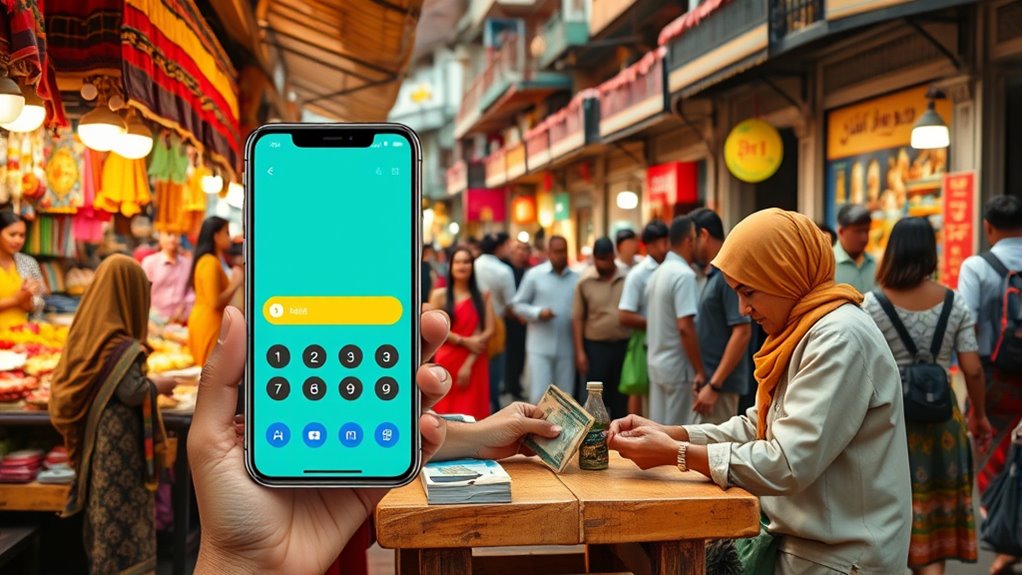

To go global, you need to process payments locally in each market. This involves partnering with regional payment providers, offering local methods like e-wallets or bank transfers, and supporting local currencies. Understanding and complying with country-specific regulations helps you avoid legal issues. Implementing these strategies improves customer experience, boosts trust, and reduces transaction failures. Keep exploring ways to master local payment processes—your path to seamless international commerce starts here.

Get smart everyday buys delivered free with Prime
- Fast, free delivery on millions of items
- Prime Video, Amazon Music and more included
- Member-only deals all year
Key Takeaways
- Implement local payment methods like digital wallets and bank transfers to increase trust and reduce transaction failures.
- Partner with regional payment processors familiar with local regulations to ensure compliance and smooth operations.
- Use currency conversion strategies that offer transparent rates, either real-time or fixed, to enhance customer experience and margins.
- Understand and adhere to local cross-border regulations to avoid legal issues and facilitate seamless transactions.
- Offer payments in local currencies to simplify checkout processes and boost international customer confidence.

As international merchants expand their reach, processing payments locally has become essential for streamlining transactions and improving customer experience. When you operate across borders, you encounter a complex web of cross border regulations that can slow down sales and cause frustration. Different countries have their own rules about how payments are processed, what documentation is required, and how funds are transferred. Navigating these regulations requires a keen understanding of each market’s legal landscape so you can ensure compliance without delaying transactions. Failure to adhere to local rules can result in fines, account holds, or even bans from payment platforms, disrupting your global operations. To avoid these pitfalls, partnering with payment processors familiar with cross border regulations is critical. They can help you design compliant solutions that meet local legal standards, making it easier to accept international payments seamlessly. Understanding the regulatory environment in each market is crucial for maintaining smooth operations and avoiding legal issues. Currency conversion also plays a vital role in processing payments locally. When your customers pay in their local currency, it removes a significant barrier to completing a sale. However, currency conversion introduces its own challenges. You need to decide whether to offer real-time conversion rates or set fixed rates, balancing transparency with profitability. If you don’t handle currency conversion efficiently, your customers might face unexpected fees or unfavorable exchange rates, which can lead to cart abandonment and lost revenue. Using reputable payment gateways that provide transparent currency conversion can help you give your customers clarity and confidence in their purchase. These providers often incorporate competitive exchange rates and minimal fees, ensuring your margins stay healthy while your customers feel they’re getting a fair deal.
Master cross border regulations to streamline international payments and ensure seamless global commerce.
Implementing local payment methods is another key to successful cross-border transactions. Many regions have preferred payment options, from digital wallets to bank transfers, which your customers expect. Offering these local payment methods not only boosts trust but also reduces the risk of failed transactions due to incompatible payment systems. Additionally, understanding the nuances of cross border regulations helps you tailor your payment options so they comply with regional standards, avoiding legal complications and ensuring smooth processing. When you combine local payment methods with efficient currency conversion, you create a frictionless shopping experience that encourages repeat business and builds customer loyalty across markets.
Ultimately, mastering the intricacies of cross border regulations and currency conversion empowers you to process payments locally with confidence. By doing so, you streamline operations, reduce potential legal hiccups, and foster trust with your international customers. This strategic approach enables you to expand globally without the usual headaches associated with cross-border commerce, making your business more adaptable, competitive, and ready for growth.
Frequently Asked Questions
How Do Currency Fluctuations Impact International Payment Processing?
Currency fluctuations can considerably impact your international payment processing by causing exchange rate volatility. When rates shift unpredictably, you might receive less money than expected or face higher costs. To manage this, you should use hedging strategies like forward contracts or options to lock in rates, reducing risks. These tactics help guarantee more stable revenue streams and protect your profit margins amid fluctuating currencies.
What Are the Most Common Local Payment Methods Worldwide?
You’ll find that the most common local payment methods worldwide include regional e-wallets like Alipay and WeChat Pay in China, along with mobile money services such as M-Pesa in Africa. These methods are popular because they offer quick, secure transactions tailored to local preferences. By accepting regional e-wallets and mobile money, you guarantee smoother payments, higher conversion rates, and better customer satisfaction across diverse international markets.
How Do Merchants Handle Cross-Border Fraud Prevention?
To tackle cross-border fraud, you deploy diligent detection and deterrence strategies. You scrutinize suspicious transactions, strengthen security with multi-layered measures, and stay savvy about evolving scams. Using fraud prevention strategies, you monitor patterns, verify identities, and implement real-time alerts. By proactively protecting payments, you prevent pitfalls and preserve profits. Staying vigilant and vigilant, you can confidently combat cross-border fraud and keep transactions trustworthy across territories.
What Are the Legal Considerations for International Payment Processing?
You need to guarantee legal compliance by understanding local laws, including data privacy regulations like GDPR or CCPA. When processing international payments, you’re responsible for adhering to these regulations to avoid fines or penalties. Protect customer data by implementing secure systems and staying updated on legal changes. Always consult local legal experts to navigate complex rules, ensuring your payment processes are compliant and respectful of data privacy across different markets.
How Do Local Taxes Affect International Transaction Settlement?
Ever wondered how local taxes influence your international transactions? They directly impact your settlement amounts, as you must account for tax compliance and regulatory requirements in each market. These taxes can delay processing times or increase costs if not managed carefully. By understanding local tax laws, you guarantee smoother settlements, avoid penalties, and maintain good standing with authorities. Are you prepared to navigate these fiscal complexities in global commerce?
Conclusion
By processing payments locally, you open the potential to boost conversions and customer satisfaction across markets. Did you know that 85% of consumers prefer paying in their native currency? Embracing local payment methods isn’t just smart—it’s essential for global growth. So, adapt your approach, meet customers where they are, and watch your international sales thrive. Staying flexible with local payment options truly sets you apart in today’s competitive global marketplace.
Halloween Picks
halloween
As an affiliate, we earn on qualifying purchases.