
High-yield savings accounts can help cash earn more interest than it might in a standard savings account, while keeping it accessible. My best overall pick is “Investing for Interest 6: My Favorite High-Yield Savings Account” for its focused account recommendation; “My Three Favorite High-Yield Savings Accounts” is a useful alternative for comparing options, while “Getting Started with High-Yield Savings Accounts” is geared toward cautious beginners. The main tradeoffs are often rate versus account access, ease of use, and the rules or fees attached to an account. Rates can change, so a headline yield is only part of the decision. Read on for the full breakdown and help matching an option to your savings goals.

Get smart everyday buys delivered free with Prime
- Fast, free delivery on millions of items
- Prime Video, Amazon Music and more included
- Member-only deals all year
Key Takeaways
- Focused account picks beat broad finance overviews for shoppers ready to compare actual savings options; “Investing for Interest 6” and “My Three Favorite High-Yield Savings Accounts” have the clearest account-selection focus.
- Beginner guidance fills a different need: “Getting Started with High-Yield Savings Accounts” addresses hesitation, while the CDs and money market guide widens the comparison beyond savings accounts.
- Yield claims need context: titles centered on 3% or 4% interest make rate comparison salient, but a rate alone does not show whether access, fees, or changing terms fit a saver.
- Cash management is not the same as investing: dividend-growth and long-term-wealth guides may inform broader planning, but they are less direct choices for someone seeking a straightforward savings account.
- The strongest choice depends on the task: use the account-focused guides to shortlist options, the beginner guides to understand tradeoffs, and the broader wealth guides for context rather than as a substitute for account comparison.
| High-Yield Savings Accounts vs. Standard Savings Accounts: We Should All Love Yield |  | Best for Comparing Account Types | Format: Book | Series: Massive Passive Income Books | Series number: 176 | VIEW LATEST PRICE | See Our Full Breakdown |
| The Magic of 3: High-Yield Savings Accounts Hit 3% Interest |  | Best for a Rate-Focused Introduction | Series: Massive Passive Income Books | Series number: 118 | Main topic: High-yield savings accounts | VIEW LATEST PRICE | See Our Full Breakdown |
| Dividend Growth Investing vs. High-Yield Savings Accounts: How to Get a 4% Yield |  | Best for Comparing Savings With Investing | Series: Superb Investing Book | Series number: 25 | Main comparison: Dividend-growth investing and high-yield savings accounts | VIEW LATEST PRICE | See Our Full Breakdown |
| High-Yield Savings, CDs, and Money Market Accounts: The Complete Beginner’s Guide |  | Best for Beginners Comparing Deposit Options | Format: Book | Series: Money Guide Series | Series number: 69 | VIEW LATEST PRICE | See Our Full Breakdown |
| Investing for Interest 6: My Favorite High-Yield Savings Account |  | Best for a Single-Account Perspective | Format: Book | Series or collection title: Investing for Interest | Series number: 6 | VIEW LATEST PRICE | See Our Full Breakdown |
| What Your Bank Doesn’t Tell You: How to Use High-Yield Savings Accounts, Roth IRAs, 401(k)s, HSAs, and Other Smart Accounts to Build Long-Term Wealth |  | Best for a Broader Wealth-Building Plan | Format: Book | Series: The Long-Term Wealth Series | Series book number: 5 | VIEW LATEST PRICE | See Our Full Breakdown |
| Building Wealth Fast with High-Yield Savings: Financial Security and Wealth Accumulation |  | Best for a Savings-First Wealth Focus | ASIN: B0CK3Q8DTM | Title-stated subject: High-yield savings | Title-stated focus: Financial security and wealth accumulation | VIEW LATEST PRICE | See Our Full Breakdown |
| My Three Favorite High-Yield Savings Accounts: Get Paid While You Save |  | Best for a Shortlist-Oriented Read | Format: Book | Stated account count: Three | Title-stated subject: High-yield savings accounts | VIEW LATEST PRICE | See Our Full Breakdown |
| Getting Started with High-Yield Savings Accounts: Overcoming Your Banking Fears |  | Best for Nervous First-Time Savers | Title-stated subject: Getting started with high-yield savings accounts | Title-stated audience concern: Overcoming banking fears | Series: Diverse Entrepreneurs Book | VIEW LATEST PRICE | See Our Full Breakdown |
| The High-Yield Cash Guide (2026 Edition): How to Choose Savings Accounts and CDs | 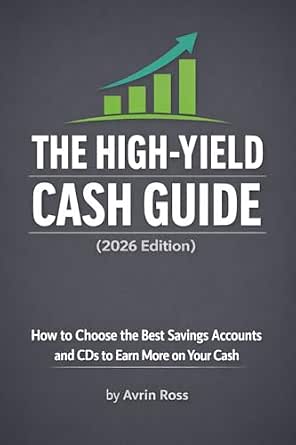 | Best for Comparing Savings Accounts and CDs | Edition: 2026 Edition | Title-stated subject: High-yield cash | Covered products: Savings accounts and CDs | VIEW LATEST PRICE | See Our Full Breakdown |
| high yield savings account | Format | Series | Series number | ASIN |
|---|---|---|---|---|
| High-Yield Savings Accounts vs | Book | Massive Passive Income Books | 176 | — |
| The Magic of 3: High-Yield Sav | Book | Massive Passive Income Books | 118 | — |
| Dividend Growth Investing vs. | Book | Superb Investing Book | 25 | — |
| High-Yield Savings | Book | Money Guide Series | 69 | — |
| Investing for Interest 6: My F | Book | — | 6 | — |
| What Your Bank Doesn’t Tell Yo | Book | The Long-Term Wealth Series | — | B0HCWWTLLB |
| Building Wealth Fast with High | Not provided | Not provided | — | B0CK3Q8DTM |
| My Three Favorite High-Yield S | Book | — | — | B0DG2KJY9Y |
| Getting Started with High-Yiel | Not provided | Diverse Entrepreneurs Book | — | B0C47181PY |
| The High-Yield Cash Guide | Not provided | — | — | B0GPBXWTL6 |
More Details on Our Top Picks
High-Yield Savings Accounts vs. Standard Savings Accounts: We Should All Love Yield
I’d put this book on the list for readers who want to understand the basic distinction between high-yield and standard savings accounts before choosing where to keep cash. Its comparison-led title gives it a clearer savings-account focus than The Magic of 3: High-Yield Savings Accounts Hit 3% Interest, which centers on a particular rate figure. That makes this a more natural starting point for weighing account categories rather than pursuing a target yield. The limitation is the sparse product information: I can’t verify how thoroughly it covers rates, access, fees, or account protections. Readers seeking a wider comparison of deposit options may prefer High-Yield Savings, CDs, and Money Market Accounts, which explicitly covers three account types. This book’s appeal is its narrow comparison; its tradeoff is that the available details don’t show how practical or current its guidance is.
Pros:- Directly compares high-yield and standard savings accounts
- Keeps the subject centered on savings rather than general investing
- Frames savings interest as a way to earn income on cash
- Part of the Massive Passive Income Books series
Cons:- The supplied information does not describe its advice, examples, or level of detail
- No publication or rate-update information is provided to judge how current its guidance is
- Does not indicate coverage of CDs or money market accounts
Best for: Readers deciding whether to move cash from a standard savings account into a high-yield account who want a focused comparison.
Not ideal for: Readers who need verified, current account details or a broad comparison of savings accounts, CDs, and money market accounts.
- Format:Book
- Series:Massive Passive Income Books
- Series number:176
- Main topic:High-yield savings accounts versus standard savings accounts
- Stated focus:Passive income through savings
- Account types named:High-yield savings accounts and standard savings accounts
Our verdict“Choose this for a focused introduction to high-yield versus standard savings, but favor a broader guide if you’re comparing several kinds of deposit accounts.”
The Magic of 3: High-Yield Savings Accounts Hit 3% Interest
The title makes a specific rate figure the hook, so I see this as a rate-focused introduction rather than a broad guide to choosing an account. That focus separates it from High-Yield Savings Accounts vs. Standard Savings Accounts, which sets up a comparison between account types instead. A concrete percentage can help readers recognize why yield matters, but the provided details don’t say whether the book explains how rates change, what account conditions apply, or how to compare offers beyond the headline number. I would not treat the title’s 3% interest as a current-rate promise. Compared with High-Yield Savings, CDs, and Money Market Accounts, this book appears narrower and less useful for comparing different places to hold cash. Its role is best kept modest: an introductory read for someone curious about savings yield, not a stand-alone account-selection resource.
Pros:- Keeps its subject specifically on high-yield savings accounts
- Uses a concrete interest-rate figure to frame the topic
- Offers a focused personal-finance subject rather than a general investing overview
- Part of the Massive Passive Income Books series
Cons:- The supplied information does not establish whether the 3% figure is current or historical
- No details are available about account comparisons, fees, or withdrawal access
- Its narrow rate emphasis may offer less decision support than a multi-account guide
Best for: New savers who want a short, rate-centered introduction to why high-yield savings can earn more interest than ordinary savings.
Not ideal for: Readers choosing an account based on current rates, fees, access rules, or comparisons across savings accounts, CDs, and money market accounts.
- Series:Massive Passive Income Books
- Series number:118
- Main topic:High-yield savings accounts
- Stated rate focus:3% interest
- Format:Book
- Product identifier:B0BP2563G8
Our verdict“Pick this for a rate-centered introduction, not as your sole guide to evaluating current savings-account terms.”
Dividend Growth Investing vs. High-Yield Savings Accounts: How to Get a 4% Yield
This is the lineup’s clearest choice for readers weighing cash savings against dividend-growth investing. Unlike High-Yield Savings Accounts vs. Standard Savings Accounts, it compares a savings account with an investment approach, a distinction that can help readers think about the different roles cash and investments play. The title’s 4% yield target is a point of focus, not evidence that either approach will produce that return; the supplied information does not explain risk, variability, or the method behind the target. That makes this less suitable as a practical account-opening guide than High-Yield Savings, CDs, and Money Market Accounts. I’d choose it for a high-level comparison of yield sources, while readers who need deposit-account terms or a beginner’s account overview should look elsewhere. Its broader investing angle is also its main tradeoff for a savings-focused roundup.
Pros:- Compares high-yield savings with dividend-growth investing
- Makes the difference between cash savings and investing the central topic
- States a specific yield target as the book’s focus
- Offers a comparison angle not covered by the savings-only titles
Cons:- The supplied details do not explain investment risks or the variability of dividend income
- The 4% target is not supported by further information about its assumptions
- No account-selection guidance, fees, or access details are provided
Best for: Savers deciding whether to keep cash in a high-yield account or explore dividend-growth investing as a separate route to yield.
Not ideal for: Readers who want a straightforward guide to opening a savings account or need detailed, current deposit-account terms.
- Series:Superb Investing Book
- Series number:25
- Main comparison:Dividend-growth investing and high-yield savings accounts
- Stated yield focus:4% yield
- Format:Book
- Product identifier:B0FFHJ9ZV4
Our verdict“Choose this if you’re comparing savings yield with dividend investing, but skip it if you need practical guidance on selecting a savings account.”
High-Yield Savings, CDs, and Money Market Accounts: The Complete Beginner’s Guide
For a reader starting from scratch, this is the broadest deposit-account guide in the batch: it names high-yield savings, CDs, and money market accounts rather than concentrating on only one comparison. That makes it a more practical starting point for deciding where cash belongs than The Magic of 3: High-Yield Savings Accounts Hit 3% Interest, whose title centers on a single rate figure. Its beginner focus may also suit readers who want the basic categories explained before comparing providers. The tradeoff is breadth: someone seeking a focused explanation of high-yield versus standard savings may find High-Yield Savings Accounts vs. Standard Savings Accounts more directly targeted. The supplied description doesn’t confirm whether this guide covers changing rates, withdrawal limits, or account-specific conditions, so I’d treat its scope as an advantage while keeping expectations about detail measured.
Pros:- Covers high-yield savings accounts, CDs, and money market accounts
- Explicitly targets beginner readers
- Supports comparison across common ways to hold cash
- Part of the Money Guide Series
Cons:- The supplied description does not confirm how much detail it gives on each account type
- No information is provided about current rates, fees, or account access rules
- Its broad scope may offer less depth on high-yield savings than a focused title
Best for: First-time savers who want to understand how high-yield savings accounts, CDs, and money market accounts differ before choosing a cash option.
Not ideal for: Readers who already understand deposit-account basics and want detailed, current provider comparisons or a narrow focus on savings-account rates.
- Format:Book
- Series:Money Guide Series
- Series number:69
- Audience:Beginners
- Account types covered:High-yield savings accounts, CDs, and money market accounts
- Product identifier:B0HKFL5N6C
Our verdict“Choose this as a beginner’s overview of three deposit-account types, but seek a more detailed source for current account terms.”
Investing for Interest 6: My Favorite High-Yield Savings Account
This title takes the most personal, single-account angle in the batch: it presents an author’s favorite high-yield savings account rather than promising a comparison of account categories or deposit products. That may appeal to readers who want one perspective to consider, but the listing provides no account name, selection criteria, rate information, or explanation of how the recommendation is evaluated. It is less useful for comparing options than High-Yield Savings Accounts vs. Standard Savings Accounts, and it offers less stated breadth than High-Yield Savings, CDs, and Money Market Accounts. I’d treat it as a potentially narrow viewpoint, not a current recommendation to act on: savings terms change, and the supplied information does not show whether the account discussion has been updated. The focused premise is its distinction; the lack of verifiable details is the main reason to choose a more transparent guide first.
Pros:- Focuses on high-yield savings accounts
- Presents a single-account perspective rather than a broad personal-finance topic
- May suit readers seeking a concise recommendation-oriented premise
Cons:- The supplied data does not name the account or provide its terms
- No selection criteria or comparison with alternatives are described
- No publication or update information is provided to judge whether the account perspective remains current
Best for: Readers who want to explore one author’s perspective on choosing a high-yield savings account and are comfortable verifying account details independently.
Not ideal for: Savers who need a current, evidence-backed shortlist, a comparison of multiple accounts, or clear information about rates and account terms.
- Format:Book
- Series or collection title:Investing for Interest
- Series number:6
- Main topic:High-yield savings accounts
- Stated angle:Author’s favorite high-yield savings account
- Product identifier:B09TTS59L7
Our verdict“Consider this only for a single-author viewpoint, and verify any account details before relying on it to choose where to save.”
What Your Bank Doesn’t Tell You: How to Use High-Yield Savings Accounts, Roth IRAs, 401(k)s, HSAs, and Other Smart Accounts to Build Long-Term Wealth
This book stands out for placing high-yield savings alongside Roth IRAs, 401(k)s, and HSAs, making it a broader personal-finance choice than Getting Started with High-Yield Savings Accounts: Overcoming Your Banking Fears, which is framed around account basics and banking concerns. That wider scope may help readers see where cash savings fit among other financial accounts rather than treating savings yield as a complete wealth strategy. The tradeoff is focus: buyers looking only for practical help choosing or opening a savings account may find the multi-account approach less direct. The supplied details do not describe the book’s specific guidance, so I can’t confirm how deeply it explains account comparisons, rates, eligibility, or tax rules. Its place on this list is best for readers seeking a long-term framework, not a narrowly focused account-selection manual.
Pros:- Covers high-yield savings, Roth IRAs, 401(k)s, and HSAs
- Frames accounts as tools for long-term wealth building
- Part of The Long-Term Wealth Series
Cons:- Broad account coverage may leave less room for high-yield savings specifics
- Provided product information does not describe its methods, depth, or account-selection guidance
Best for: Readers who want to understand how high-yield savings can fit alongside retirement and health savings accounts in a long-term financial plan.
Not ideal for: Anyone seeking detailed, current comparisons of savings accounts, account-opening instructions, or a guide focused only on cash savings.
- Format:Book
- Series:The Long-Term Wealth Series
- Series book number:5
- Featured account types:High-yield savings accounts, Roth IRAs, 401(k)s, and HSAs
- Stated focus:Using financial accounts to build long-term wealth
- ASIN:B0HCWWTLLB
Our verdict“Choose this book if you want a wider wealth-building perspective that includes high-yield savings, but choose a focused savings guide if account selection is your main need.”
Building Wealth Fast with High-Yield Savings: Financial Security and Wealth Accumulation
The title puts financial security and wealth accumulation at the center, giving this book a savings-first angle compared with What Your Bank Doesn’t Tell You, which spans savings, retirement, and health accounts. That narrower promise may suit readers who want to focus on cash savings rather than a multi-account strategy. Still, the available information offers no details about the book’s specific advice, format, account-selection criteria, or treatment of changing rates. The word “fast” in the title should not be read as a guaranteed outcome: a savings account’s return depends on its terms and rate, and savings alone are not a promise of rapid wealth growth. I’d place this option below better-specified titles for shoppers who need concrete guidance, while recognizing its clear thematic focus.
Pros:- Directly centers high-yield savings
- Connects saving with financial security
- Frames savings as part of wealth accumulation
Cons:- Provided information does not specify practical steps or account-selection guidance
- No format, series, or other product details are supplied
- The title’s promise of building wealth fast may not match readers seeking cautious, qualified guidance
Best for: Readers who want a book centered on using high-yield savings as part of a financial security and wealth-accumulation plan.
Not ideal for: Buyers who need confirmed account-comparison methods, step-by-step banking instructions, or detailed information about the book before choosing.
- ASIN:B0CK3Q8DTM
- Title-stated subject:High-yield savings
- Title-stated focus:Financial security and wealth accumulation
- Format:Not provided
- Series:Not provided
- Additional product details:Not provided
Our verdict“Consider it for a savings-centered wealth theme, but choose a more fully described guide if you need to verify its practical advice first.”
My Three Favorite High-Yield Savings Accounts: Get Paid While You Save
This book’s title promises a three-account shortlist, which gives it a more comparison-oriented premise than Building Wealth Fast with High-Yield Savings, whose supplied description emphasizes broad financial security and wealth accumulation. That format could appeal to readers who prefer a small set of options to a general discussion of saving. However, the product details don’t identify the accounts, explain the author’s selection criteria, or say whether account terms and rates are kept current. Those gaps matter in a category where rates and account conditions can change. I’d treat this as a potentially focused starting point, not verified current account research. Readers who want help understanding the basics may prefer Getting Started with High-Yield Savings Accounts: Overcoming Your Banking Fears, while shortlist-seekers may find this title’s stated scope more relevant.
Pros:- Title identifies a focused set of three accounts
- Keeps attention on earning interest while saving
- Listed as a book
Cons:- The supplied details do not name the accounts
- No selection criteria or rate-update information is provided
- The product data does not describe its depth or practical instructions
Best for: Readers who want a book organized around a small selection of high-yield savings accounts rather than a broad wealth-building discussion.
Not ideal for: Shoppers who need confirmed current account names, transparent comparison criteria, or rate and fee details before making a choice.
- Format:Book
- Stated account count:Three
- Title-stated subject:High-yield savings accounts
- Title-stated theme:Earning interest while saving
- Account names:Not provided
- ASIN:B0DG2KJY9Y
Our verdict“Pick this for its shortlist premise if that format appeals, but verify the account details independently before acting on any recommendations.”
Getting Started with High-Yield Savings Accounts: Overcoming Your Banking Fears
Among these titles, this is the clearest pick for a first step into high-yield savings: it explicitly targets getting started and addressing banking fears. That makes it more beginner-oriented than My Three Favorite High-Yield Savings Accounts: Get Paid While You Save, which promises a shortlist but does not describe how it handles basic banking concerns. The appeal is emotional as well as practical—the title signals that hesitation about banking is part of the audience’s problem. The limitation is that the supplied details do not spell out the account-opening process, safety topics, or comparisons a reader will find inside. Its place in the roundup rests on its approachable focus, not on confirmed depth. Readers already comfortable comparing accounts may want a more selection-focused guide.
Pros:- Explicitly focuses on getting started with high-yield savings
- Addresses banking fears as part of the beginner experience
- Identified as part of the Diverse Entrepreneurs Book series
Cons:- Provided details do not describe specific account-opening instructions
- No account comparisons or rate information are specified
- The supplied product data offers little information about the book’s depth
Best for: First-time savers who feel uncertain about online banking or opening a high-yield savings account and want an introductory read.
Not ideal for: Experienced savers seeking detailed account comparisons, verified current rates, or advanced cash-management strategies.
- Title-stated subject:Getting started with high-yield savings accounts
- Title-stated audience concern:Overcoming banking fears
- Series:Diverse Entrepreneurs Book
- Series book number:130
- Format:Not provided
- ASIN:B0C47181PY
Our verdict“Choose this if banking uncertainty is your main barrier; experienced shoppers will likely want more detailed account-comparison guidance.”
The High-Yield Cash Guide (2026 Edition): How to Choose Savings Accounts and CDs
This guide has the most explicit cash-product comparison scope in this group: it covers choosing both savings accounts and CDs. That makes it a more direct fit for readers weighing access to their cash against a certificate’s terms than My Three Favorite High-Yield Savings Accounts: Get Paid While You Save, whose title points to savings accounts alone. The 2026 edition label signals a dated edition, but the supplied description does not confirm whether rates, account terms, or issuer details are updated. CDs can also involve access restrictions that differ from a savings account, so readers should look for clear explanations of those tradeoffs. I’d rank this highly for cash-choice breadth, while treating any account-specific recommendations as something to verify against current disclosures.
Pros:- Covers both savings accounts and CDs
- Focuses on choosing among cash-saving options
- Identified as the 2026 edition
Cons:- The provided details do not specify selection criteria or account examples
- No information confirms how often rates or product terms are updated
- Readers seeking savings-account-only guidance may find the CD coverage unnecessary
Best for: Cash savers deciding whether a high-yield savings account or a CD better matches their access needs and time horizon.
Not ideal for: Readers looking only for beginner reassurance or a guide limited to opening and managing a savings account.
- Edition:2026 Edition
- Title-stated subject:High-yield cash
- Covered products:Savings accounts and CDs
- Stated purpose:How to choose savings accounts and CDs
- Format:Not provided
- ASIN:B0GPBXWTL6
Our verdict“Choose this if you are comparing savings accounts with CDs, and verify time-sensitive account details before making a decision.”

How We Picked
I ranked these ten resources by how directly they help someone choose a high-yield savings account, then by how much practical context they add to that decision. Account-focused titles rank highest because they signal direct comparisons or specific account recommendations. Beginner and cash-product guides follow when they clarify account types, access, and tradeoffs. Broader investing and wealth-building titles rank lower for this roundup because their scope extends beyond choosing a savings account.
I also considered whether each title points readers toward buyer-relevant questions: how a rate is presented, what account rules may affect access, how savings accounts compare with CDs or money market accounts, and whether the material suits a new saver. The supplied list contains titles rather than verified account terms or current rates, so I do not treat a yield figure in a title as a confirmed offer or rank any account on unprovided product details. The ordering reflects apparent relevance to the search task, not a claim that a named account has been independently verified.
| high yield savings account | Format | Series | ASIN |
|---|---|---|---|
| High-Yield Savings Accounts vs | Book | Massive Passive Income Books | — |
| The Magic of 3: High-Yield Sav | Book | Massive Passive Income Books | — |
| Dividend Growth Investing vs. | Book | Superb Investing Book | — |
| High-Yield Savings | Book | Money Guide Series | — |
| Investing for Interest 6: My F | Book | — | — |
| What Your Bank Doesn’t Tell Yo | Book | The Long-Term Wealth Series | B0HCWWTLLB |
| Building Wealth Fast with High | Not provided | Not provided | B0CK3Q8DTM |
| My Three Favorite High-Yield S | Book | — | B0DG2KJY9Y |
| Getting Started with High-Yiel | Not provided | Diverse Entrepreneurs Book | B0C47181PY |
| The High-Yield Cash Guide | Not provided | — | B0GPBXWTL6 |
Factors to Consider When Choosing High Yield Savings Accounts
A savings account decision is about more than finding the biggest advertised yield. I’d start by matching the account to the job your cash needs to do, then check the details that affect how much interest you actually keep and how easily you can reach the money.
Match the account to the purpose of the cash
Separate emergency savings and near-term spending money from cash you can leave untouched for a set period. A high-yield savings account generally suits money you may need to access without a fixed maturity date, while a CD may suit funds you can commit for a stated term. A money market account may have different access features, so compare its rules rather than relying on the label. A common mistake is choosing an account for a long-term investing goal when the money may be needed soon. I’d keep the account’s job clear before comparing yields.
Compare how the rate can change
Many savings rates are variable, which means the advertised yield can change after you open the account. A rate mentioned in an article title, old promotion, or comparison page may not match the current offer. Check the current rate directly with the institution and look for any conditions tied to earning it. Think about how you would respond if the rate fell: would you move the money, or value convenience more? For a realistic comparison, estimate interest using the balance you expect to keep and avoid treating a temporary headline as a long-term promise.
Read access and transfer rules before opening
Accessibility depends on more than whether an account is labeled savings. Review how deposits and withdrawals work, how long transfers may take, and whether there are limits or steps that could slow access. This matters most for emergency funds, where a delay can be more consequential than a small yield difference. Keep some cash in a readily usable account if transfers between institutions are not immediate. A useful test is to map the steps from requesting a withdrawal to having funds available for an actual bill.
Check fees, minimums, and rate conditions
Fees and eligibility rules can reduce the value of an account, especially when the balance is modest. Look for minimum opening deposits, balance requirements, monthly charges, and conditions attached to a promotional rate. Read the account disclosures rather than assuming that a familiar bank name means familiar terms. If a requirement would force you to keep more cash in the account than you want, the advertised yield may not be worth the constraint. Compare the net practical benefit after fees and rules, not just the rate printed most prominently.
Verify deposit protection and institution details
Before placing savings with a bank, verify which institution holds the deposit and whether the account is covered by applicable deposit insurance. A financial app or brand may work with a partner bank, so confirm how protection applies to your specific funds and account structure. Check that account ownership records are accurate, particularly if you use joint or beneficiary arrangements. Do not assume that every cash-like product receives the same protection as a bank deposit. This check is especially useful when comparing unfamiliar online providers with established institutions.
Choose a level of convenience you will maintain
The best account on paper may be a poor fit if its interface, customer support, or connection to your everyday banking makes saving cumbersome. Consider whether you want a separate institution to reduce impulse spending or a linked account for easier transfers. Check support channels and account-management tools before committing, especially if you expect to need help with identity checks or transfers. Moving accounts repeatedly for small rate changes can also add administrative work and disrupt your routines. I’d favor a setup you can manage consistently, unless the difference in terms gives you a clear reason to switch.
Frequently Asked Questions
Should I choose the account with the highest advertised rate?
Not automatically. First confirm that the rate is current, available to you, and not dependent on a temporary promotion or balance condition. Then compare fees, withdrawal access, and any minimums that could affect your balance. A slightly lower rate may be a better fit if it comes with clearer terms or easier access for emergency savings. Recheck the rate periodically, since savings yields can change.
How much should I keep in a high-yield savings account instead of a CD?
Keep money in savings if you may need it before a CD’s term ends, such as emergency funds or planned expenses with uncertain timing. A CD can suit cash with a known time horizon if you understand the withdrawal terms and can leave the funds committed. You do not have to choose one product for all your cash: dividing savings by purpose can preserve access while setting aside money that can remain untouched. Compare current terms for both products rather than assuming one will always earn more. The right split depends on your likely cash needs and comfort with restrictions.
Are online high-yield savings accounts safe for emergency funds?
An online account can be suitable if the deposit is held at an appropriately insured institution and the account’s access process fits your needs. Confirm the institution and applicable deposit protection rather than relying on a brand name alone. For emergency money, also check transfer timing, withdrawal procedures, and how to contact support if access is disrupted. You may choose to keep a smaller amount in an account linked to everyday spending for immediate bills. Safety includes practical access as well as deposit protection.
Is it worth switching accounts when another provider offers a higher yield?
It can be worthwhile when the difference is meaningful for your balance and likely to persist, but switching has administrative costs. Compare the expected interest difference with transfer time, account setup, identity checks, and any fees or conditions. A temporary rate lead may disappear before the effort pays off, while a reliable account with straightforward access may be more useful for an emergency fund. Avoid closing the old account until deposits and automatic transfers have moved successfully. Revisit the decision when your balance or savings needs change.
Should I use a high-yield savings account for long-term wealth building?
A high-yield savings account is generally a cash-management tool, not a replacement for investments intended for long-term growth. It can hold emergency reserves or money earmarked for nearer-term goals, while investments may suit goals with longer time horizons and greater tolerance for fluctuations. The roundup’s dividend and wealth-building titles offer broader context, but their subjects should not be confused with a savings account’s purpose. Consider when you need the money and how much fluctuation you can accept before choosing an account type. For personal tax or investment decisions, consult a qualified professional.
Conclusion
For readers who want the most direct starting point, I’d choose “Investing for Interest 6: My Favorite High-Yield Savings Account” as best overall, with the caveat that the title alone does not verify current account terms. Best value for comparison goes to “My Three Favorite High-Yield Savings Accounts,” since its multiple-account framing helps shoppers build a shortlist. For a beginner, “Getting Started with High-Yield Savings Accounts” is the most relevant entry point; “The High-Yield Cash Guide” is a better fit for someone weighing savings against CDs. I’d treat “What Your Bank Doesn’t Tell You” as the best broader planning resource, not a direct account pick, and use the dividend and wealth-building titles for readers exploring a wider financial plan. If you want one simple next step, compare current rates, access rules, fees, and deposit protection for the account-focused options before opening anything.