
To implement BOPIS payments seamlessly, start by choosing a reliable payment gateway that supports quick, secure transactions and multiple payment methods. Integrate fraud prevention tools like real-time monitoring and multi-factor authentication to protect your business and customers. Sync your online and in-store systems for instant updates, ensuring smooth verification at pickup. Focus on transparent communication and secure options to enhance customer trust. Keep these steps in mind, and you’ll discover more ways to optimize your process.
Key Takeaways
- Select a reliable payment gateway that supports BOPIS and integrates smoothly with your existing POS and e-commerce systems.
- Implement robust fraud prevention tools like AVS, real-time monitoring, and multi-factor authentication to secure transactions.
- Synchronize online and in-store systems for real-time updates on payment status, inventory, and order confirmation.
- Offer multiple secure payment options with clear instructions, transparent communication, and reassurance badges to boost customer confidence.
- Test and optimize the checkout process regularly to ensure a seamless, quick, and trustworthy experience for customers.
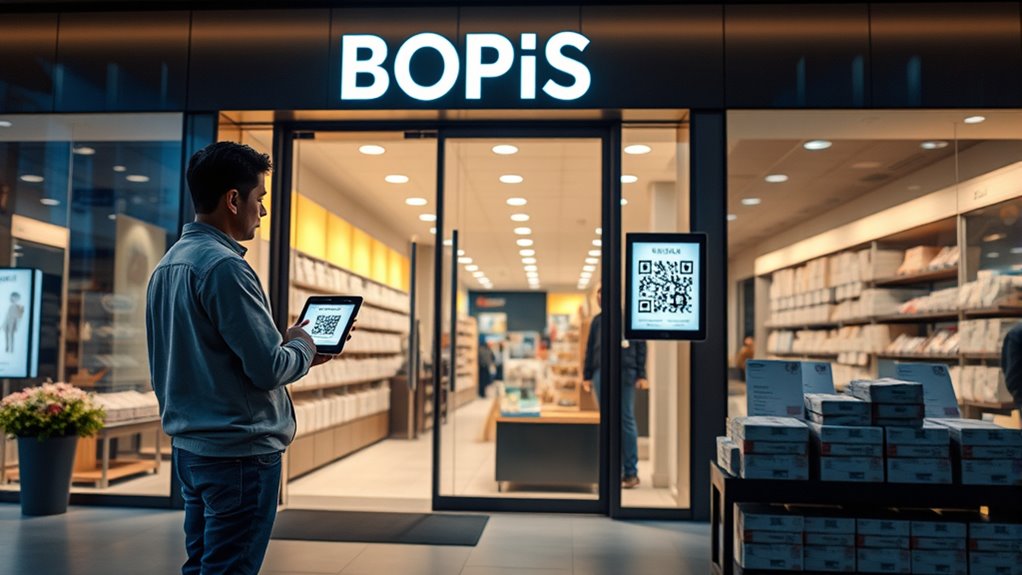
Implementing BOPIS (Buy Online, Pick Up In Store) payments can streamline your retail operations and enhance customer experience. When you set up the payment process for BOPIS, choosing a reliable payment gateway is essential. Your payment gateway acts as the digital bridge between your online storefront, your customers, and your payment processors. It ensures transactions are secure, swift, and seamless, reducing friction for your shoppers. A well-integrated payment gateway can handle various payment methods, from credit cards to digital wallets, offering flexibility and convenience. This not only speeds up the checkout process but also encourages repeat business, as customers appreciate a smooth transaction experience.
Implementing BOPIS payments streamlines operations with secure, flexible, and seamless transactions.
However, a fundamental aspect of implementing BOPIS payments is fraud prevention. As online transactions increase, so does the risk of fraudulent activities. You need to implement robust fraud prevention measures within your payment gateway to protect both your business and your customers. These measures include real-time transaction monitoring, address verification systems (AVS), and multi-factor authentication. Such tools help identify suspicious activities before they can cause harm, reducing chargebacks and financial losses. Additionally, security protocols play a vital role in safeguarding customer data and maintaining trust. By proactively preventing fraud, you build trust with your customers, assuring them that their payment information is secure. This trust encourages them to complete purchases confidently, knowing their data is protected.
Integrating your payment gateway with your existing point-of-sale (POS) system is crucial for a seamless BOPIS experience. When a customer places an order online, the payment gateway should instantly communicate with your POS to reserve the product and process payment. Upon pickup, your staff should be able to verify payment status quickly, which minimizes wait times and improves customer satisfaction. Ensuring that your systems are compatible and synchronized can eliminate common errors like double charges or payment discrepancies. Additionally, offering transparent payment options, including clear receipts and confirmation emails, reassures customers about their purchase.
You should also consider the user experience during the payment process. Simplify checkout by minimizing steps and offering multiple payment options. Clear instructions and prompts reduce confusion and abandonment rates. Furthermore, providing secure payment options and visibly displaying security badges can reassure customers that their payment gateway is safe, further preventing fraud concerns.
Frequently Asked Questions
How Secure Are BOPIS Payment Transactions?
BOPIS payment transactions are quite secure because they leverage contactless security features, reducing risks associated with physical card handling. Advanced fraud prevention tools monitor transactions for suspicious activity, ensuring your customers’ data stays protected. Plus, many systems incorporate encryption and multi-factor authentication, making it difficult for unauthorized users to access sensitive information. Overall, with proper security measures in place, BOPIS payments offer a safe and reliable way to complete purchases.
Can I Use Multiple Payment Methods for a Single BOPIS Order?
Did you know that 60% of shoppers prefer flexible payment options? Yes, you can use multiple payment methods for a single BOPIS order. Offering multi payment options enhances payment method flexibility, making checkout easier and more convenient for your customers. You simply need to integrate your POS system with your payment processors to accept various methods like credit cards, digital wallets, or gift cards, ensuring a smooth, seamless experience.
What Are the Common Challenges Faced During BOPIS Payment Implementation?
You might face challenges like integrating inventory management systems to guarantee real-time stock updates, which prevents overselling. Staff training is vital so employees can handle BOPIS transactions efficiently and address customer inquiries confidently. Technical glitches or delays in payment processing can also disrupt the experience. Addressing these issues proactively, by syncing inventory and providing thorough staff training, helps you deliver a smooth, seamless BOPIS payment process for your customers.
How Do Refunds and Cancellations Work With BOPIS Payments?
Did you know that 70% of customers expect clear return policies and timely notifications? With BOPIS payments, refunds and cancellations are straightforward when you communicate return policies upfront and send customer notifications promptly. When a refund is processed, guarantee it aligns with your store’s policies, and notify the customer immediately. Clear procedures reduce confusion and improve trust, making the BOPIS experience seamless for your customers.
Are There Specific Compliance Requirements for BOPIS Payment Systems?
You need to guarantee your BOPIS payment system meets regulatory standards and prioritizes data privacy. This means complying with industry-specific regulations like PCI DSS for card payments and local data protection laws such as GDPR or CCPA. Regularly review security protocols, encrypt sensitive data, and train staff on privacy best practices. Staying compliant not only protects customer information but also helps you avoid fines and reputational damage.
Conclusion
By seamlessly integrating BOPIS payments, you bridge the gap between online convenience and in-store experience. It’s not just about making transactions easier; it’s about building trust and loyalty. While technology simplifies the process, the real success lies in creating a seamless, personalized experience for your customers. Remember, in this digital age, the smoothest payment process isn’t just a feature—it’s the foundation of lasting relationships and future growth.